RBI Repo Rate Decision: Why RBI Kept Rates at 5.25% Amid Inflation Risks
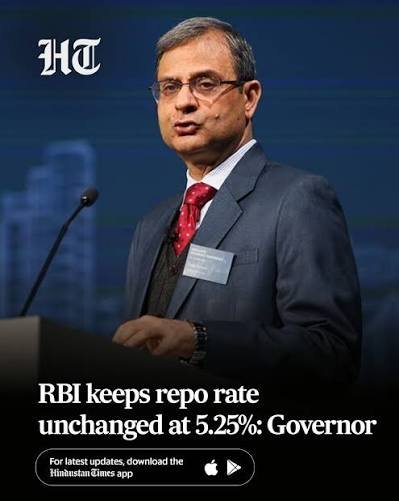
MUMBAI: The Reserve Bank of India has kept its policy repo rate unchanged at 5.25%, with the RBI Monetary Policy Committee maintaining a neutral monetary policy stance at its August 2026 meeting. The decision reflects the central bank’s focus on balancing economic growth with inflation risks amid a volatile global environment.
RBI Repo Rate Decision Keeps Policy Unchanged
The RBI Repo Rate Decision was announced after the three-day MPC meeting held from August 3 to 5. The repo rate remains at 5.25%, while the Standing Deposit Facility rate stays at 5.00% and the Marginal Standing Facility rate at 5.50%, according to the Reserve Bank of India.
The unchanged rate marks a continued pause after the RBI moved into an easing phase. The RBI Monetary Policy Committee has since been assessing whether existing monetary conditions are sufficiently supportive of economic activity without creating fresh inflationary pressure.
The decision also comes against a difficult backdrop for Indian financial markets. Rising crude oil prices, global geopolitical tensions and pressure on the rupee have remained key concerns for investors. Indian equities had already faced heavy selling pressure earlier in September, with the Sensex and Nifty decline highlighting the sensitivity of domestic markets to global developments.
RBI Inflation Forecast Remains A Key Focus
The RBI Inflation Forecast remains central to the policy outlook because food and energy prices can influence household spending as well as broader price pressures.
The central bank has to assess whether inflation is moving sustainably towards its target while ensuring that monetary policy does not unnecessarily weaken domestic demand. That balance has become more significant as international energy prices remain vulnerable to geopolitical developments.
The RBI Monetary Policy Committee also considers domestic economic activity, financial conditions and external risks before deciding whether borrowing costs should be reduced, increased or left unchanged.
What The Rate Decision Means For Borrowers And Markets
For borrowers with loans linked to external benchmarks, the RBI Repo Rate Decision means there is no immediate policy-driven change in the benchmark rate. Existing lending rates can still vary depending on individual bank spreads, loan structures and reset mechanisms.
For investors, the decision provides greater clarity on the near-term interest-rate environment. Bond yields, bank shares and interest-sensitive sectors can react to expectations about the RBI’s next move rather than only the decision announced at a single meeting.
The RBI Inflation Forecast will therefore remain an important indicator for markets. Any sustained increase in inflationary pressure could reduce expectations of further easing, while softer price growth could give policymakers greater room to support economic activity.
Why The Next RBI Decision Matters
The latest RBI Repo Rate Decision leaves the policy rate at 5.25% as markets look ahead to the central bank’s next assessment. The RBI will continue to monitor inflation, economic growth, liquidity conditions, currency movements and global commodity prices.
The RBI Monetary Policy Committee has therefore retained flexibility rather than committing to a predetermined path for future rates.
For borrowers, investors and businesses, the next major signal will come from incoming inflation and growth data. The direction of crude prices and the rupee will also remain important as policymakers assess whether current monetary conditions remain appropriate.