
November 10 or 11? The Calendar Confusion Around Govardhan Puja 2026 Explained
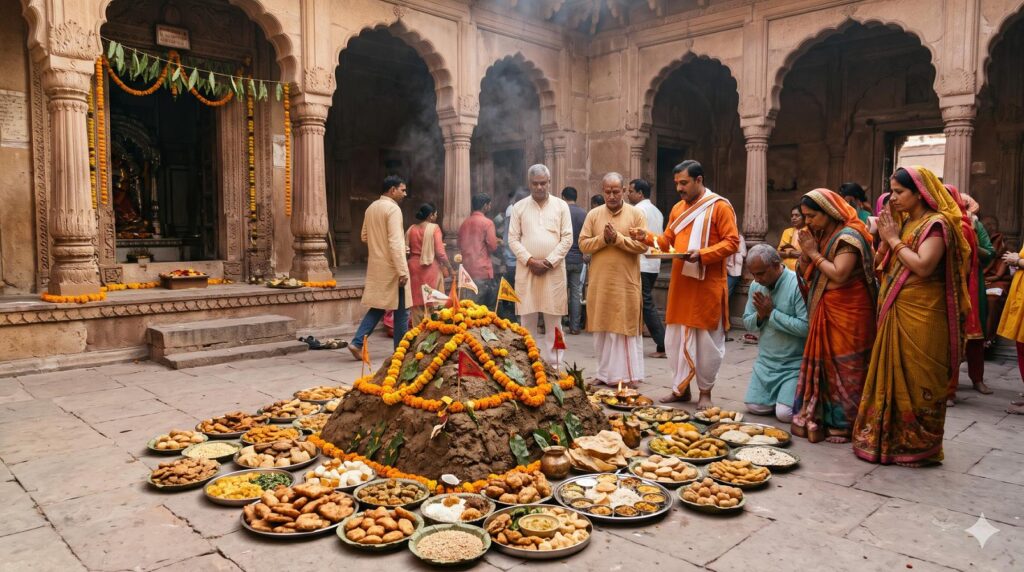
Govardhan Puja will be celebrated on Tuesday, November 10, 2026, according to the sunrise-based Panchang followed in New Delhi. The festival’s date has prompted questions among devotees because the Pratipada Tithi begins on November 9, while November 11 is listed as Bhai Dooj in the 2026 festival calendar.
The distinction lies in the timing of the Hindu lunar calendar. Although Pratipada begins on Monday afternoon, November 9, it continues until Tuesday afternoon, November 10. Since the tithi is present at sunrise on November 10, that is the date identified for Govardhan Puja by Drik Panchang.
The festival, also known as Annakut, is dedicated to Lord Krishna and commemorates the story of his lifting Govardhan Hill to protect the people of Braj and their cattle from torrential rain sent by Lord Indra.
Govardhan Puja 2026: Date and Shubh Muhurat
According to Drik Panchang’s New Delhi calculations, Govardhan Puja will take place on November 10, Tuesday.
The Pratipada Tithi begins at 12:31 PM on November 9 and ends at 2:00 PM on November 10.
The recommended morning puja window in New Delhi is 6:40 AM to 8:50 AM, giving devotees a period of two hours and ten minutes for the observance.
Key dates and timings:
| Event | Date and Time |
|---|---|
| Pratipada Tithi begins | November 9, 12:31 PM |
| Pratipada Tithi ends | November 10, 2:00 PM |
| Govardhan Puja | Tuesday, November 10 |
| Morning Puja Muhurat (New Delhi) | 6:40 AM–8:50 AM |
| Bhai Dooj | Wednesday, November 11 |
These timings are specific to New Delhi. Puja timings can vary by location because sunrise and other Panchang calculations differ across cities. Devotees should consult their local Panchang or follow the guidance of their family priest.
Why Are November 9 and November 11 Being Mentioned?
The different dates appearing in some calendars have created confusion about the correct day for Govardhan Puja.
The main reason is that the Pratipada Tithi does not begin at midnight. It starts at 12:31 PM on November 9, meaning that the morning of November 9 falls under the preceding Amavasya Tithi.
By sunrise on November 10, Pratipada is already in progress. Under the sunrise-based observance used by Drik Panchang for New Delhi, this makes November 10 the appropriate date for the festival.
There is also a discrepancy in published calendars. A 2026 calendar hosted on the website of the Lal Bahadur Shastri National Academy of Administration lists Govardhan Puja on November 9. This differs from the sunrise-based Panchang calculation, which identifies November 10.
November 11, meanwhile, is associated with Bhai Dooj, another important festival in the Diwali celebrations.
The distinction is particularly relevant this year because Diwali falls on November 8, followed by Govardhan Puja on November 10 and Bhai Dooj on November 11.
Why Is Govardhan Puja Celebrated?
Govardhan Puja is rooted in the Hindu tradition associated with Lord Krishna and the people of Braj, a region closely connected with his childhood.
According to the traditional account, the people of Braj prepared to worship Lord Indra, the deity associated with rain. Krishna encouraged them to honour Govardhan Hill, the cattle and the natural surroundings that sustained their community.
Indra became angered and sent heavy rainfall over the region. Krishna then lifted Govardhan Hill and sheltered the people and their cattle beneath it.
The story is remembered as an expression of divine protection, devotion, and humility. Krishna is worshipped on this occasion as Govardhandhari, meaning the one who held Govardhan Hill.
The festival also has a connection with agriculture, cattle, and nature, which play an important role in the traditional livelihood of the Braj region.
Annakut: The Tradition of Offering Food to Krishna
One of the central observances of Govardhan Puja is Annakut, a Sanskrit-derived term commonly understood as a mountain or heap of food.
Devotees prepare numerous vegetarian dishes and arrange them in a mound-like formation as an offering to Lord Krishna. After the religious rituals, the food is distributed among devotees as prasad.
In several households and temples, people also create symbolic representations of Govardhan Hill, often using cow dung, and decorate them with flowers and other offerings.
Worship of cows is another important part of the celebrations. In the Braj region, devotees also undertake Govardhan Parikrama, a circumambulation of the sacred hill in Mathura district.
Temples in Mathura and Vrindavan traditionally hold special celebrations, with Annakut offerings forming an important part of the occasion.
What Comes After Govardhan Puja?
The Diwali festival period continues with Bhai Dooj on Wednesday, November 11, 2026.
The occasion celebrates the relationship between brothers and sisters. Sisters traditionally perform a tilak ceremony for their brothers and pray for their well-being and long life.
For devotees planning their celebrations, the main distinction this year is between the beginning of Pratipada on November 9 and the sunrise-based Govardhan Puja observance on November 10.
The exact puja window should be checked against the local Panchang, particularly for families following regional or temple-specific traditions.




