INDIA-NEPAL AGREEMENT: 10 Major Areas in New Joint Vision Document to Transform Bilateral Relations
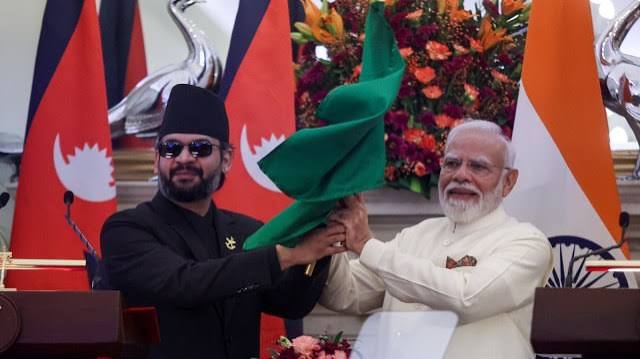
INDIA-NEPAL: The India Nepal agreement has entered a new phase after Prime Minister Narendra Modi and Nepalese Prime Minister Balendra Shah adopted a comprehensive joint vision document on November 23, 2026, aimed at strengthening cooperation across 10 major areas, including trade, infrastructure, energy, technology, education and tourism.
The agreement was announced during Shah’s state visit to India from November 22 to 23. The document, titled Viksit Bharat and Samunnat Nepal: Re-imagining the Partnership, outlines a roadmap for modernising bilateral cooperation and addressing outstanding issues through dialogue.
The announcement represents an important diplomatic development between the neighbouring countries, which share extensive economic, cultural and geographical ties.
According to the joint vision, both governments want to update their partnership to reflect contemporary political, economic and technological realities while maintaining the principles of mutual respect and shared benefits.
10 Pillars Of The India Nepal Agreement
The joint vision document identifies 10 pillars for strengthening cooperation between the two countries.
These include economic development, physical and digital connectivity, energy, water resources, governance, technology, education, sports, tourism, healthcare and agriculture.
The leaders have directed officials to translate these commitments into practical initiatives that deliver measurable benefits to citizens in both countries.
The document is intended to provide a long-term framework rather than simply announce individual infrastructure projects.
1. Trade And Economic Cooperation To Receive Major Push
Economic cooperation is one of the central priorities of the new framework.
India and Nepal have agreed to review existing trade and investment arrangements to create a more comprehensive economic partnership.
The document also proposes establishing cross-border special economic zones and industrial parks focused on export-oriented manufacturing. IT parks are another area identified for cooperation.
The initiative is intended to encourage investment, expand employment opportunities and strengthen commercial connections between the two economies.
The leaders also discussed opening additional transit connectivity and air routes to improve access for businesses and travellers.
2. New Rail, Road And Digital Connectivity Projects
Physical and digital connectivity form another important pillar of the India Nepal agreement.
Both governments have agreed to accelerate ongoing infrastructure projects, including the construction of Integrated Check Posts at Bhairahawa in Nepal and Sunauli in India.
The document also identifies the completion of the remaining sections of two cross-border railway projects:
-
Jayanagar–Bardibas railway line.
-
Jogbani–Biratnagar railway line.
Cooperation on Nepal’s proposed East-West Railway Link is also included.
Another important proposal involves constructing a new petroleum pipeline connecting Siliguri in India with Jhapa in Nepal.
The countries have additionally agreed to build on the existing integration between India’s Unified Payments Interface (UPI) and Nepal’s national payment system to improve cross-border retail payments.
3. Energy Cooperation And Hydropower Development
Energy remains a major component of bilateral relations because Nepal has substantial hydropower potential while India represents an important neighbouring electricity market.
The joint vision calls for accelerating ongoing and planned hydropower and multipurpose water-resource projects.
Both countries have also identified disaster risk reduction, early-warning systems and climate resilience as areas requiring stronger cooperation.
The objective is to protect communities, livelihoods and infrastructure against natural disasters while expanding opportunities for regional energy cooperation.
Water resources and energy have historically been important subjects in bilateral discussions, making their inclusion particularly significant.
4. Technology, Artificial Intelligence And Space Cooperation
Technology has received considerable attention in the new framework.
India and Nepal plan to expand their startup partnership through training, mentorship and institutional cooperation.
The proposals include establishing a Startup Centre of Excellence in Kathmandu and a Digital Nomads and Innovation Hub in Pokhara.
The countries also intend to explore cooperation in artificial intelligence, digital infrastructure and data-centre development.
Space cooperation is another priority. The document identifies satellite development, earth observation, remote sensing for disaster management and technical capacity-building as potential areas of collaboration.
These initiatives could create opportunities for Nepalese technology businesses and researchers while strengthening cooperation with India’s established technology ecosystem.
5. Education, Healthcare And Skill Development
Education and healthcare are included among the major development priorities.
India and Nepal will explore the possibility of opening campuses or branches of reputed Indian higher education institutions in Nepal, beginning with an Indian Institute of Technology (IIT).
The framework also proposes expanding scholarships and training opportunities for Nepalese students in emerging disciplines, including artificial intelligence, technology and law.
Healthcare cooperation includes upgrading Nepal’s National Medical Laboratory and establishing India-Nepal Jan Aushadhi Kendras to improve access to affordable medicines.
The countries also intend to strengthen relationships between leading medical institutions and encourage student and faculty exchanges.
6. Cricket And Sports Infrastructure Receive Attention
Sports cooperation is another notable feature of the agreement.
India will support the establishment of a national cricket academy in Nepal and assist with the development of cricket infrastructure.
Players from Nepal’s provincial cricket teams will also be offered opportunities to train at national training academies in India.
The framework extends beyond cricket, with cooperation in badminton, tennis, shooting and athletics also being considered.
Both countries will explore opportunities to develop modern multi-sports facilities in Nepal.
7. Religious Tourism And Cultural Connections
India and Nepal share longstanding religious and cultural connections, particularly through Hindu and Buddhist traditions.
The joint vision proposes developing religious tourism circuits connecting important destinations in both countries.
These include:
-
Janakpur and Ayodhya through the Ramayana circuit.
-
Lumbini, Bodh Gaya, Sarnath and Kushinagar through the Buddhist circuit.
-
Kathmandu’s Pashupatinath Temple and Varanasi through the Shiv-Shakti circuit.
The two countries also intend to strengthen academic and cultural cooperation between Nalanda University and Lumbini Buddhist University through a proposed Nalanda Centre at LBU.
8. Agriculture And Industrial Development
Agricultural cooperation has also been included in the framework.
India will provide grant assistance for establishing an Agro-Industrial Park in Chitwan, Nepal.
The proposed facility aims to support value addition to Nepalese agricultural products and improve opportunities for agricultural businesses.
The countries will also accelerate implementation of their 2026–2030 agricultural research work plan involving the Indian Council of Agricultural Research and Nepal Agricultural Research Council.
An ICAR Centre of Excellence is also proposed for Nepal.
9. Border Disputes And Outstanding Issues To Be Addressed Through Dialogue
Despite their close relationship, India and Nepal continue to have unresolved issues, particularly concerning certain border areas.
The joint vision states that outstanding matters involving water resources, energy, trade, commerce and boundaries will be addressed through mutual discussion and dialogue.
Another significant development concerns the legal framework governing bilateral relations.
Both leaders agreed that existing agreements, including the 1950 Treaty of Peace and Friendship, could be reviewed with mutual consent to reflect present-day circumstances.
The document does not announce a unilateral revision or replacement of the treaty. Any review would require agreement between the two governments.
Following the announcement, Indian Foreign Secretary Vikram Misri also indicated that the long-pending report of the Eminent Persons Group would not guide the new process. The governments intend to move forward using the newly adopted vision document.
10. Monitoring Mechanism To Track Implementation
One of the important features of the new framework is the proposed monitoring arrangement.
The two prime ministers agreed to activate the High-Level Monitoring Group, led by Nepal’s Foreign Secretary and India’s Ambassador to Nepal.
The group will meet at least once every six months to review progress and support implementation.
This mechanism is intended to ensure that the commitments outlined in the document translate into practical cooperation rather than remaining diplomatic announcements.
India Announces $1.62 Billion Assistance Package For Nepal
Alongside the diplomatic discussions, India announced a development cooperation package worth 24,000 crore Nepalese rupees, approximately $1.62 billion, to support Nepal’s reconstruction and long-term development.
The announcement follows the devastating floods and debris flows that affected Nepal in August 2026.
The disaster caused extensive damage to infrastructure and communities, increasing the country’s reconstruction requirements.
India had provided humanitarian and search-and-rescue assistance following the disaster. Nepal acknowledged India’s support during the November discussions.
The additional financial assistance is expected to support reconstruction, infrastructure development and energy-related projects.
The financial package is separate from the 10-pillar joint vision document, although both developments contribute to the broader bilateral partnership.
What The New Agreement Means For India And Nepal Relations In 2026
The latest India Nepal agreement provides a wider framework for cooperation at a time when both countries are seeking stronger economic and development partnerships.
For Nepal, improved connectivity, investment, energy cooperation and access to Indian educational and technological institutions could support its development priorities.
For India, stronger cooperation with Nepal is important for regional connectivity, economic integration, energy security and stability in South Asia.
The relationship also carries wider geopolitical significance because Nepal maintains important economic and diplomatic relationships with both India and China.
The two countries have therefore emphasised mutual trust, respect and dialogue while outlining their future priorities.
The India Nepal relations 2026 framework also reflects an attempt to address older disagreements while expanding cooperation into newer areas such as artificial intelligence, space technology and digital payments.
However, the success of the initiative will depend on implementation, regular monitoring and the willingness of both governments to resolve outstanding issues.
For now, the joint vision document establishes a new roadmap for India-Nepal cooperation, with its progress expected to be assessed through the proposed six-monthly monitoring mechanism.