
Jensen Huang Resignation: 5 Major Facts Behind Nvidia’s Shocking Leadership Shake-Up
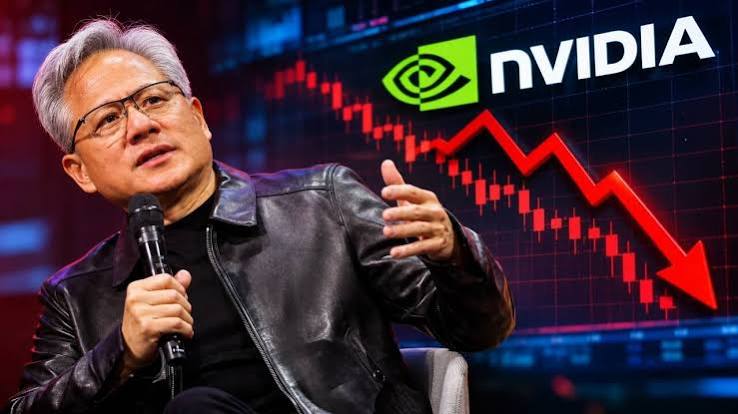
SANTA CLARA, CALIFORNIA: Jensen Huang resignation has triggered a major leadership transition at Nvidia, one of the world’s most influential artificial intelligence and semiconductor companies. The company confirmed on November 12, 2026, that Huang had stepped down as president, chief executive officer and a member of its board, effective immediately. Chief Financial Officer Colette Kress has taken over as interim CEO while the board searches for a permanent successor.
The announcement marks the end of Huang’s 33-year leadership of the company he co-founded in 1993. The Nvidia CEO news has attracted international attention because the company’s processors and computing platforms play a central role in the expansion of artificial intelligence, data centres and high-performance computing.
The leadership change was formally disclosed through a regulatory filing submitted to the US Securities and Exchange Commission. The disclosure confirms that Nvidia’s board accepted Huang’s resignation on November 11, with the transition taking immediate effect.
Jensen Huang Resignation Confirmed In SEC Filing
The company’s regulatory disclosure provides confirmation of the executive departure and the succession arrangement.
According to the SEC, Nvidia’s board accepted the resignation of Jen-Hsun Huang from his positions as president, CEO and board member on November 11.
The filing identifies Colette M. Kress as the executive appointed to serve as interim chief executive officer. She will continue to hold her existing position as executive vice president and chief financial officer during the interim arrangement.
The board has also initiated a search for a permanent CEO. It will consider candidates from both inside and outside the company, meaning Kress’s appointment should not be interpreted as a confirmed permanent succession.
The regulatory disclosure does not specify a reason for Huang’s departure. Consequently, explanations surrounding the circumstances of his exit should be distinguished from the confirmed details of the resignation itself.
Colette Kress Takes Charge As Interim Nvidia CEO
Colette Kress is not a new addition to Nvidia’s senior leadership. She joined the company in September 2013 and has served as its executive vice president and chief financial officer since then.
Her appointment places a long-serving financial executive in charge during a significant period for the semiconductor industry. Kress will retain responsibility for the finance function while overseeing the company’s wider operations as interim CEO.
Before joining Nvidia, Kress spent nearly 25 years working in finance positions at major technology companies, including Cisco and Microsoft.
Her familiarity with Nvidia’s financial operations and business development gives her substantial experience within the organisation. However, the interim appointment does not establish who will eventually lead the company on a permanent basis.
The board’s decision also indicates that Nvidia intends to maintain continuity while the succession process moves forward.
Nvidia Board Appoints Harvey C. Jones As First Chair
The leadership transition also includes a change in the company’s board structure.
Nvidia appointed Harvey C. Jones as its first-ever chair of the board on November 11. Jones has been associated with the company’s board since 1993 and brings more than three decades of experience as an entrepreneur, technology executive and venture investor.
He has also served as managing partner of Square Wave Ventures since 2004. His professional background includes leadership experience at Synopsys, where he served as chief executive and executive chairman.
The appointment gives the board a designated chair as it begins the process of selecting Huang’s permanent replacement.
The combination of an interim CEO appointment and a newly designated board chair represents an important organisational change for a company that has operated under Huang’s leadership for more than three decades.
Why The Nvidia CEO News Matters For The AI Industry
The Nvidia CEO news is significant because the company occupies a central position in the global artificial intelligence ecosystem.
Nvidia develops graphics processing units (GPUs), networking technologies and computing platforms used to train and operate advanced AI systems. Its hardware is widely used by technology companies, cloud service providers, research organisations and businesses investing in large-scale computing infrastructure.
Demand for advanced processors has increased as companies expand their AI capabilities. Nvidia’s position in this market has made its leadership decisions particularly important to investors, technology developers and businesses that depend on its products.
The scale of this dependence is also visible in projects such as SpaceX’s proposed AI supercomputing campuses, which involve substantial investment in computing infrastructure and plans to use Nvidia’s next-generation Vera Rubin processors.
A change at the top of Nvidia therefore attracts attention beyond the company’s own shareholders. Its decisions can influence expectations across the semiconductor supply chain and the wider AI computing market.
What Happens To Nvidia After Jensen Huang’s Exit?
The immediate priority for Nvidia is maintaining operational continuity while its board searches for a permanent chief executive.
Kress will oversee the company during this period, with the existing executive team continuing to support its business operations and technology development.
One important upcoming event is Nvidia’s third-quarter fiscal 2027 financial results announcement, scheduled for November 17, 2026, at approximately 1:20 p.m. Pacific Time. The company had confirmed that the results announcement and subsequent earnings call would proceed as previously scheduled.
Investors are likely to watch the financial results, management communications and succession process for further indications of the company’s direction.
The Jensen Huang resignation also raises questions about how Nvidia will approach its long-term leadership strategy after an extended period under its co-founder. However, the company has not announced a permanent successor, and it remains too early to determine whether the transition will bring any changes to its existing business strategy.
For now, Colette Kress will lead Nvidia on an interim basis as the board evaluates its next leadership appointment. The Jensen Huang resignation marks a historic transition for the semiconductor giant, while the coming weeks will provide a clearer picture of how the company intends to move forward.




