
STRAIT OF HORMUZ TANKER ATTACK: 5 Alarming Facts as Iran Reports Three Oil Tankers on Fire
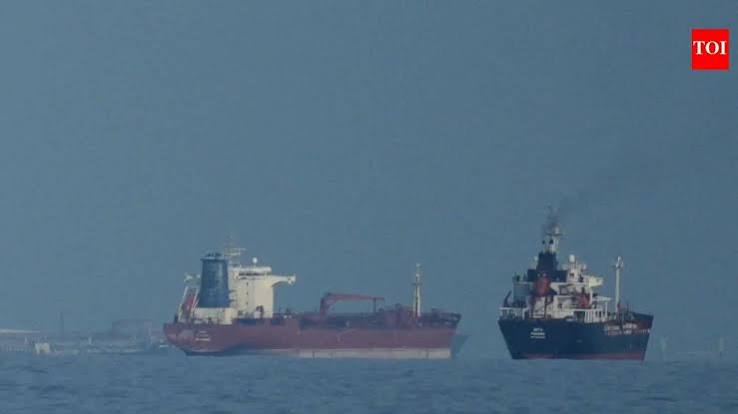
MIDDLE EAST: Strait of Hormuz tanker attack concerns intensified on Tuesday, November 24, after Iran’s Islamic Revolutionary Guard Corps (IRGC) Navy claimed that three oil tankers struck naval mines and caught fire in the strategically important waterway.
The Iranian military said the incidents occurred late Monday, November 23, with two of the vessels reportedly striking mines in the eastern part of the strait. Powerful explosions allegedly triggered fires aboard all three tankers.
The IRGC Navy also claimed that US military air cover failed to prevent the incidents and warned commercial vessels against using routes that Iranian authorities consider unauthorised.
However, the claims have not been independently verified. Iranian authorities have not publicly identified the vessels, their operators or flag states, and no confirmed information about casualties has been provided in the initial announcement.
The latest development adds another layer of uncertainty to maritime security in the Gulf, where tensions over shipping access and freedom of navigation have continued to affect international trade.
1. Iran Reports Three Oil Tankers Hit Naval Mines
According to the Anadolu Agency, the IRGC Navy announced late Monday that three oil tankers had struck naval mines in the Strait of Hormuz.
The military statement said two vessels hit mines in the eastern section of the waterway. The resulting explosions reportedly triggered substantial fires aboard all three tankers.
Iranian authorities described the vessels as violating maritime restrictions and suggested that they had attempted to navigate through routes that were not authorised by Tehran.
The announcement did not provide the names of the ships, their destinations or the companies operating them.
There was also no independently confirmed information about the extent of the damage or whether the vessels remained operational following the reported explosions.
The distinction is important because the reported incidents currently rely on statements from the Iranian military rather than independently verified maritime investigations.
2. IRGC Claims US Military Air Cover Failed To Prevent Explosions
Another significant element of the Iranian announcement concerns the alleged presence of US military protection around the vessels.
The IRGC Navy claimed that American military air cover had failed to prevent the explosions and fires.
It also indicated that it would release footage showing the reported incidents.
However, the Iranian statement does not independently establish the precise nature of the American military involvement or the circumstances surrounding the vessels’ movements.
No independently verified evidence accompanying the initial announcement established the identity of the ships or confirmed the reported US escort arrangements.
The IRGC also issued a warning to vessel owners, commanders and shipping companies against disregarding maritime instructions issued by its naval authorities.
The warning reflects Tehran’s continuing effort to enforce its own restrictions on commercial navigation through the waterway.
For international shipping operators, the competing security instructions and military claims create additional uncertainty over which routes can be used safely.
3. Strait Of Hormuz Shipping Restrictions Raise Security Concerns
The latest Strait of Hormuz tanker attack allegations come amid continuing tensions over maritime access and control of the waterway.
Iran has repeatedly warned commercial vessels against using routes that its military considers unauthorised.
The country announced restrictions on passage through the strait on July 12, following renewed US military strikes against Iran, according to the Anadolu report.
Tehran has maintained that vessels must comply with navigation instructions issued by Iranian authorities when attempting to cross the waterway.
However, these restrictions have created disagreements over freedom of navigation and the security of international commercial shipping.
The Strait of Hormuz connects the Persian Gulf with the Gulf of Oman and provides an important route for oil and liquefied natural gas exports from Gulf-producing countries.
Consequently, any sustained disruption can affect shipping schedules, transportation costs and international energy markets.
The latest developments also follow earlier reported attacks on commercial vessels and other maritime security incidents covered in Reportiva’s previous Strait of Hormuz crisis coverage.
4. Global Oil Supply Faces Another Potential Disruption
The reported incident has renewed attention on the potential economic consequences of continued instability in the Strait of Hormuz.
The waterway is particularly important because a substantial share of internationally traded oil and liquefied natural gas passes through it.
Any prolonged interruption to commercial shipping could complicate deliveries from major Gulf energy producers.
For oil-importing countries, including India, sustained shipping disruption could increase transportation costs and create additional pressure on energy procurement.
However, the latest Iranian announcement does not establish that global oil supplies have suffered a measurable reduction.
The immediate impact will depend on whether the reported incidents are independently confirmed, whether additional vessels face security threats and how shipping companies respond.
Oil markets are also influenced by several other factors, including production decisions, inventories, demand and geopolitical developments elsewhere.
Earlier Reportiva coverage of the Brent crude oil price examined how uncertainty surrounding Middle Eastern shipping routes can influence energy-market sentiment.
The latest Iran oil tankers reports could therefore become another factor monitored by traders and energy companies, particularly if further disruptions are confirmed.
5. Iran-US Tensions Put International Shipping Under Pressure
The latest developments underline the continuing disagreement between Iran and the United States over military operations, maritime security and access to the Strait of Hormuz.
Iran’s Revolutionary Guard has warned that vessels ignoring its navigation instructions could face consequences.
Its latest statement also sought to demonstrate that US military protection would not necessarily prevent incidents involving ships using routes Tehran considers unauthorised.
Nevertheless, the allegation concerning US air cover requires independent confirmation.
The available information does not establish whether American forces were directly escorting all three vessels or whether the reported explosions involved mines in the manner described by Iran.
For international shipping companies, the uncertainty surrounding the Iran oil tankers incident creates additional operational concerns.
Companies must assess vessel safety, crew protection, insurance arrangements and the risks associated with navigating contested maritime areas.
The situation is particularly important for countries that depend heavily on energy imports transported through the Gulf.
India also has significant interests in the region because Indian nationals work aboard commercial vessels operating along these international shipping routes.
The latest Strait of Hormuz latest news will therefore remain important for energy-importing economies and maritime operators as further information emerges.
What Happens Next?
The immediate priority is independent confirmation of the Iranian military’s claims.
Information about the tankers’ identities, ownership, flag states, crew members and the extent of the reported damage will be essential to understanding the incident.
Any footage promised by the IRGC Navy will also require verification to establish when and where it was recorded and whether it corresponds to the reported events.
The United States’ response will be another important development, particularly regarding Iran’s claim that American military air cover failed to prevent the explosions.
For now, the reported fires have added to concerns about commercial shipping security in one of the world’s most strategically important maritime corridors.
The Strait of Hormuz tanker attack allegations also highlight the potential consequences of continued disagreements over maritime access between Iran and the United States.
Until independent evidence becomes available, the reported mine explosions and the circumstances surrounding the three vessels should be treated as claims made by Iran’s military rather than independently confirmed facts.




