
Trump Nvidia CEO Intervention Triggers 5 Major Questions After Jensen Huang’s Dramatic Return
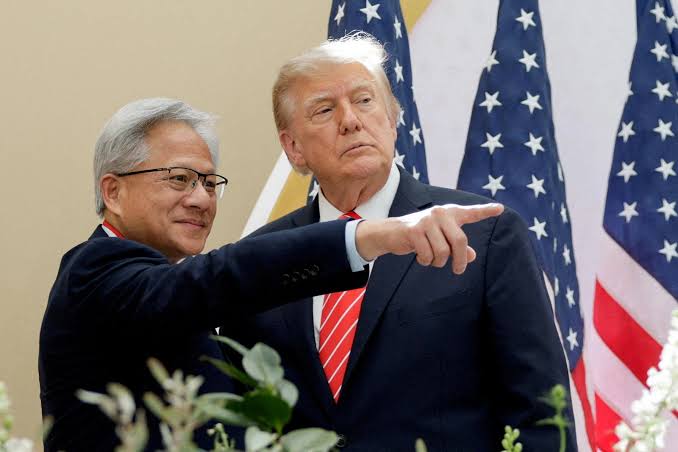
UNITED STATES: The Trump Nvidia CEO controversy has taken an extraordinary turn after Nvidia reinstated co-founder Jensen Huang as its president and chief executive officer on November 23, following an intervention by President Donald Trump and senior US administration officials.
The decision reversed the company’s earlier position against bringing Huang back after his resignation on November 12. Nvidia’s board unanimously approved his reinstatement, effective immediately, following discussions with Huang and input from senior US government officials.
The development has raised important questions about the relationship between Washington and major American technology companies, particularly when corporate leadership decisions intersect with national security and the country’s global artificial intelligence ambitions.
According to Reuters, Trump played an active role in securing Huang’s return after the board had previously rejected the possibility.
1. How Trump Helped Bring Jensen Huang Back To Nvidia
The Jensen Huang Nvidia comeback followed an unusual sequence of events involving the company’s board, investors, technology executives and the White House.
Huang resigned from his positions as Nvidia president, CEO and board member on November 11, with the departure taking effect immediately. The company appointed Chief Financial Officer Colette Kress as interim CEO while beginning the search for a permanent replacement.
Initially, the board showed little interest in reversing its decision.
Trump subsequently expressed support for Huang’s return, arguing that the executive remained important to the American technology industry.
On November 23, the president publicly took credit for helping secure the decision.
He said he had communicated with Nvidia’s directors directly and indirectly and had convinced them to bring Huang back.
Trump described the board’s decision as the correct outcome and presented Huang as an important figure for America’s technological competitiveness.
His involvement went beyond a routine public endorsement, making the episode an unusual example of presidential influence over the leadership of a private technology company.
2. Nvidia Board Reverses Its Earlier Decision
Nvidia’s official announcement confirmed that its board unanimously voted to reinstate Huang as president, chief executive officer and a member of the board.
The announcement was issued from Santa Clara, California, on November 23.
According to the company’s regulatory filing, the reinstatement followed a series of discussions and meetings involving Huang and the board.
Harvey C. Jones, Nvidia’s board chair, said the directors believed Huang was the right person to lead the company and that his return was in the best interests of shareholders, employees, partners and customers.
The board also acknowledged Colette Kress for her work during the interim leadership period.
Kress will continue serving as Nvidia’s executive vice president and chief financial officer.
The decision marked a significant reversal because the board had previously appointed her to lead the company while searching for Huang’s permanent successor.
The Jensen Huang Nvidia comeback therefore represents more than a routine executive appointment. It demonstrates how quickly leadership decisions can change when commercial, political and strategic considerations converge.
3. Why Jensen Huang’s Return Matters To America’s AI Industry
Nvidia occupies a central position in the global artificial intelligence industry.
Its graphics processing units, networking products and computing platforms are widely used by technology companies developing advanced AI models and operating large data centres.
The company’s products are particularly important for training and running computationally demanding artificial intelligence systems.
Huang co-founded Nvidia in 1993 and spent more than three decades building the company into one of the world’s most influential semiconductor businesses.
His leadership has been closely associated with Nvidia’s expansion into AI computing, particularly as demand for advanced processors increased among major technology companies.
This makes the Trump Nvidia CEO episode significant beyond the company’s internal management structure.
Washington has increasingly treated advanced semiconductor technology as a strategic national asset. American leadership in AI depends partly on maintaining access to advanced computing hardware, research capabilities and a competitive domestic technology industry.
Huang’s experience, industry relationships and influence over Nvidia’s technology strategy make his leadership relevant to these broader objectives.
However, the importance of Nvidia to America’s AI industry does not remove the responsibility of its board to make independent corporate decisions.
4. National Security Concerns Remain Under Investigation
One of the most sensitive aspects of the leadership controversy involves allegations surrounding Huang’s personal relationships and a possible foreign intelligence operation.
Reports before his resignation raised questions about his relationship with Alice Huang, a businesswoman associated with Singapore-based technology company Megaspeed.
US intelligence concerns reportedly involved possible connections to Chinese intelligence.
These allegations have not established that Alice Huang was a spy or that Jensen Huang committed an offence.
Nvidia previously announced an independent investigation into reports that its chief executive had been targeted by a foreign intelligence effort.
The company confirmed on November 23 that this investigation would continue despite Huang’s reinstatement.
The board also said it had received input from senior US government officials and was confident that bringing Huang back did not create a national security risk.
Additionally, Nvidia announced the creation of a National Security and Export Control Committee consisting entirely of independent directors.
The company is also beginning a search for a chief compliance officer who will oversee compliance across its operations.
These measures indicate that the company intends to strengthen oversight while continuing to cooperate with government investigations.
For further background, Reportiva previously examined the Megaspeed investigation, which concerns questions surrounding the possible diversion of advanced semiconductor technology.
5. Corporate Governance Questions Follow Trump’s Intervention
The Trump Nvidia CEO controversy has generated questions about the independence of corporate boards and the extent to which political leaders should influence private-sector appointments.
A company’s board normally has responsibility for appointing senior executives, evaluating their performance and protecting shareholders’ interests.
Presidential involvement in such decisions is unusual, particularly when the company operates in an industry closely connected to national security.
Supporters of Huang’s reinstatement can argue that retaining an experienced technology leader benefits Nvidia and America’s competitive position in artificial intelligence.
However, critics may question whether political pressure influenced the board’s decision and whether national security considerations were adequately separated from commercial interests.
The controversy also raises questions about the relationship between government investigations and corporate leadership decisions.
Nvidia has stated that its internal investigation will continue. The company has also committed to cooperating with ongoing government inquiries.
The board’s decision therefore does not amount to a declaration that every allegation surrounding Huang or the company’s activities has been resolved.
What Happens Next For Nvidia And Jensen Huang?
Huang’s return restores the company’s co-founder to its top leadership position after an absence of just 11 days.
His immediate challenge will be to lead Nvidia through a period involving significant demand for AI computing, increasing international semiconductor competition and continuing scrutiny of its business relationships.
The company must also maintain confidence among investors, customers, employees and government authorities.
The controversy comes at a particularly important time for the semiconductor industry, as the United States and China continue competing over advanced chips and artificial intelligence infrastructure.
Reportiva previously covered the wider US-China AI chip war, which provides important context for understanding why Nvidia’s leadership and export-control compliance have attracted government attention.
Another earlier report examining Elon Musk’s support for Jensen Huang documented how prominent technology figures supported his return during the leadership dispute.
Ultimately, the Jensen Huang Nvidia comeback has settled the immediate question of who will lead the semiconductor giant. However, it has opened a larger debate about political influence, corporate independence and the strategic importance of America’s technology industry.
The continuation of Nvidia’s internal investigation and the outcome of government inquiries will remain important developments to watch.




