
UKRAINE LIBYA SHIP ATTACK: 5 Alarming Developments as Italy Warns Against Mediterranean Escalation
EUROPE / LIBYA: The Ukraine Libya ship attack has triggered diplomatic concern in Europe after Ukrainian naval drones struck two Russian vessels near Benghazi, Libya, on November 22. Italy’s Foreign Minister Antonio Tajani raised the issue with his Ukrainian counterpart, Andrii Sybiha, on November 24, warning against the Russia-Ukraine conflict spreading into the Mediterranean.
The operation targeted the Russian Navy corvette Merkury and the cargo vessel MV Angara. Ukrainian President Volodymyr Zelenskyy subsequently confirmed the operation, while Ukraine defended the strikes as an act of self-defence against Russian military aggression.
The development has created a new diplomatic complication for Kyiv because the attack took place in Libyan waters, involving a country already affected by political divisions and competing administrations.
1. Italy Raises Diplomatic Concerns With Ukraine
The latest Italy Ukraine diplomatic tensions emerged after Antonio Tajani contacted Ukrainian Foreign Minister Andrii Sybiha to discuss the attacks near Benghazi.
Italy’s Foreign Ministry said Tajani emphasised the importance of preventing the conflict between Russia and Ukraine from extending into the Mediterranean.
The Italian government also stressed that respecting Libya’s sovereignty was essential.
Tajani expressed concern that the war could move closer to Italy’s geographical neighbourhood, potentially creating further instability in the region.
Italy’s position reflects its concerns about Mediterranean security, particularly because Libya remains politically divided and has experienced years of instability.
The diplomatic exchange does not indicate that Italy has withdrawn its support for Ukraine. Instead, it highlights concerns about the geographical expansion of military operations and their consequences for neighbouring countries.
2. Ukraine Confirms Strikes On Two Russian Vessels
Ukraine confirmed that its forces carried out the naval drone operation on November 22.
President Volodymyr Zelenskyy said seven Ukrainian-made naval drones were deployed during the operation. Ukraine’s Security Service, known as the SBU, said the drones were transported to the designated location aboard a mothership before being launched towards their targets.
The operation involved two Russian vessels:
-
Merkury: A Russian Navy corvette that was struck while docked at the naval facility in Benghazi. Ukrainian officials said the vessel was sunk.
-
MV Angara: A Russian dry cargo vessel that Ukraine claimed was being used to transport military equipment and weapons.
Zelenskyy said the operation achieved its intended objectives and described it as a successful response to Russia’s aggression.
The SBU also released footage showing naval drones approaching and striking the vessels.
According to Reuters, Ukraine defended both the naval vessels and cargo ships transporting military equipment as legitimate military targets.
The Russian Defence Ministry had not publicly commented on the attack at the time of the report.
3. Why The Russian Corvette Merkury Was Targeted
The Russian corvette Merkury was among the most significant targets in the operation.
The vessel had docked at Benghazi to refuel and receive supplies under a cooperation arrangement with the eastern-based Libyan administration.
According to the Institute for the Study of War, the corvette had been accompanying Russian cargo vessels capable of carrying military supplies.
The ship’s presence in Libya therefore attracted attention from Ukrainian military planners, who viewed Russian maritime logistics outside the Black Sea as part of the wider military supply network.
The Merkury was commissioned in 2023 and was among Russia’s newer naval vessels.
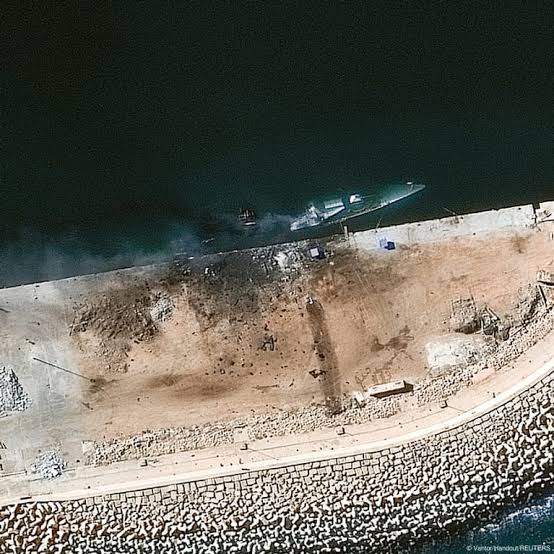
Satellite imagery following the attack showed that the corvette had capsized, with substantial damage visible around its position at the naval facility.
Ukraine said the vessel had been sunk. The damage was also documented in imagery examined by international news organisations.
The Ukraine Libya ship attack represents a significant expansion of the geographical reach of Ukraine’s maritime operations, particularly because the incident occurred far from the principal battlefront.
4. Libya Objects To Becoming Part Of The Russia-Ukraine War
The incident has also created difficulties for Libya, which continues to experience political divisions between rival administrations.
The internationally recognised Government of National Unity, based in Tripoli and led by Prime Minister Abdul Hamid Dbeibah, condemned the Ukrainian operation.
It said Libya should not be drawn into the Russia-Ukraine conflict and opposed the use of its territory, ports and territorial waters as locations for international military confrontations.
Benghazi, where the Merkury was attacked, is controlled by forces associated with military commander Khalifa Haftar and the eastern-based Libyan administration.
The eastern authorities also raised concerns about the possible launch of Ukrainian naval drones from western Libya.
They requested an investigation by the United Nations into allegations that Ukrainian military experts had been deployed in the western part of the country.
These allegations should be distinguished from confirmed facts. The precise launch location of the drones and the circumstances surrounding their deployment have not been independently established.
The eastern administration also announced a joint investigation with Russia following the attack.
The competing responses highlight how the incident has exposed Libya’s complicated political and security environment.
5. Ukraine Defends The Operation As Self-Defence
Andrii Sybiha rejected the suggestion that Ukraine was attempting to expand the conflict into another country.
He argued that Ukraine’s military actions were directed against Russian armed aggression and were not intended to harm Libya or its population.
Sybiha referred to Article 51 of the United Nations Charter, which recognises the inherent right of individual or collective self-defence in the event of an armed attack.
He argued that international law does not restrict the exercise of self-defence exclusively to the territory where the initial aggression takes place.
According to the Ukrainian foreign minister, military assets supporting Russia’s war effort could be considered legitimate targets even when operating outside Ukraine.
However, Ukraine’s legal justification remains its own position. Whether a particular strike complies with international law depends on the circumstances, including the applicable rules on sovereignty, necessity, proportionality and the protection of civilians.
The Italy Ukraine diplomatic tensions therefore involve more than disagreement over military strategy. They also raise questions about the limits of military operations beyond the immediate battlefield.
Mediterranean Security Faces New Uncertainty
The latest incident has renewed concerns about the possibility of the Russia-Ukraine conflict affecting maritime security beyond the Black Sea.
The Mediterranean is an important route for international commercial shipping, energy transportation and military activity. An expansion of hostilities into the region could create additional security challenges for countries bordering its waters.
The operation also follows other Ukrainian attacks against Russian military and logistical infrastructure.
Earlier, Ukraine carried out operations targeting the Crimea Bridge, a strategically important connection between mainland Russia and occupied Crimea.
The latest developments also come amid continuing diplomatic engagement involving Kyiv and countries outside Europe. Ukraine’s discussions with India, including the Zelenskyy-Modi diplomatic engagement, demonstrate its efforts to maintain international support while pursuing its military objectives.
For Italy, the immediate concern is preventing the conflict from creating another area of instability in the Mediterranean.
For Libya, the priority remains protecting its sovereignty and preventing its ports and territorial waters from becoming operational bases for foreign military confrontations.
What Happens Next?
The diplomatic consequences of the Ukraine Libya ship attack will depend partly on how Kyiv responds to concerns raised by Italy and Libya.
Italy has communicated its position directly to Ukraine, while Libya’s competing administrations have called attention to the sovereignty implications of the operation.
Ukraine, meanwhile, maintains that its military actions are justified by its right to defend itself against Russian aggression.
The damage to the Merkury and the strike on the MV Angara demonstrate that the war’s maritime dimension is no longer confined to the immediate Black Sea region.
However, the incident does not establish that a wider Mediterranean military confrontation is inevitable.
The immediate questions concern the investigation into the attack, the diplomatic response from Russia and Libya, and whether European governments will raise further objections to Ukrainian military operations in the region.
For now, Italy’s intervention signals growing concern that the geographical expansion of the Russia-Ukraine war could create additional security risks for the Mediterranean.




