Bird Flu Kerala – 5 Alarming Developments as 26,000 Birds Face Culling in Alappuzha
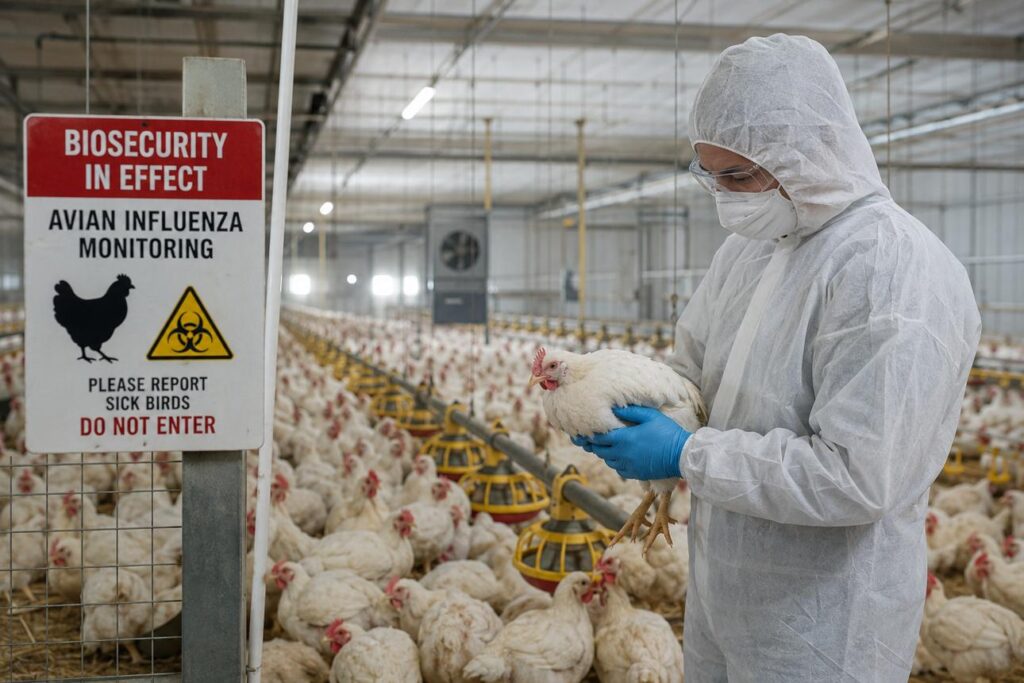
KERALA: Bird Flu Kerala authorities have confirmed avian influenza at two poultry farms in Alappuzha district, prompting preparations to cull approximately 26,000 domestic birds from Wednesday, November 18, 2026. The containment operation will cover affected areas across Ambalappuzha North, Ambalappuzha South and Chennithala panchayats.
The infection was detected among quails and chickens at a farm in Ward 11 of Ambalappuzha North and among ducks and chickens at another farm in Ward 1 of Chennithala panchayat.
Samples collected from the affected farms tested positive at the National Institute of High Security Animal Diseases (NIHSAD) in Bhopal. District authorities have organised six rapid response teams to carry out the culling operation and prevent further transmission.
According to a report by Business Standard, the preliminary estimate places the number of birds likely to be culled at around 26,000.
The development has renewed attention on poultry disease surveillance in Kerala, particularly in Alappuzha, where authorities are implementing containment measures around the affected farms.
Two Poultry Farms Test Positive for Bird Flu
The latest Bird Flu Kerala outbreak involves two separate poultry farms located in different local administrative areas of Alappuzha district.
At the first location, officials detected the infection among quails and chickens at a farm in Ward 11 of Ambalappuzha North. The second affected location is in Ward 1 of Chennithala panchayat, where ducks and chickens tested positive.
Laboratory confirmation came from NIHSAD in Bhopal after samples collected from the farms were examined.
The institute is a national-level facility responsible for diagnosing important animal diseases, including highly pathogenic avian influenza.
The confirmation prompted district authorities to review the situation and organise an emergency response involving animal husbandry, health and local administrative officials.
Importantly, the currently available reports confirm avian influenza but do not specify the viral subtype responsible for these particular infections. Therefore, identifying the outbreak specifically as H5N1 without further laboratory confirmation would be premature.
Around 26,000 Birds to Be Culled Across Three Panchayats
The proposed culling operation will extend beyond the two farms where the infection was detected.
Authorities have estimated that approximately 26,000 domestic birds within a one-kilometre radius of the affected locations may need to be culled. The operation will cover parts of three panchayats:
-
Ambalappuzha North
-
Ambalappuzha South
-
Chennithala
According to preliminary estimates, approximately 10,044 birds in Ambalappuzha North alone will be affected by the operation.
The remaining birds are located across the other designated areas within the one-kilometre containment radius.
The culling is scheduled to begin on Wednesday, November 18. Its primary objective is to reduce the possibility of further transmission among domestic bird populations.
The scale of the operation highlights the potential impact of an outbreak on poultry farmers, particularly those whose livelihoods depend on duck farming, poultry production and related activities.
Six Rapid Response Teams Deployed for Containment
The Animal Husbandry and Health departments have arranged six rapid response teams to conduct the culling operation.
Each team will consist of:
-
One doctor
-
Two livestock inspectors
-
Two attendants
-
Four workers
Two additional teams have also been kept on standby to provide support if required.
Local panchayat representatives, police personnel, revenue officials and employees of local administrative bodies will assist the teams during the operation.
The involvement of multiple departments is intended to coordinate the containment process and ensure that the affected areas are covered systematically.
The operation will involve identifying birds within the designated radius, carrying out the required culling procedures and coordinating with local authorities.
The deployment of additional teams also provides administrative support if the operation requires more personnel than initially anticipated.
A 10-Km Surveillance Zone Declared Around Affected Farms
Alongside the proposed culling, authorities have declared an area within a 10-kilometre radius of the affected farms as a surveillance zone.
The surveillance area will allow officials to monitor surrounding poultry populations and identify possible additional infections.
This distinction is important because the one-kilometre area is associated with the planned culling operation, while the wider 10-kilometre zone is intended for disease surveillance.
The district administration is coordinating preventive measures through the Animal Husbandry, Health, Police, Revenue, Food Safety and other relevant departments.
District Collector Shaji V Nair convened an emergency meeting to review the outbreak and coordinate the response.
The meeting was attended by Deputy Collector (Disaster Management) S Biju and Chief Veterinary Officer Dr P Rajeev, along with representatives of several government departments.
Officials are expected to monitor the situation as containment activities progress.
What Avian Influenza Means for Poultry Farmers
Avian Influenza India remains an important animal-health concern because outbreaks can result in substantial losses for poultry farmers and require extensive containment operations.
Avian influenza, commonly called bird flu, is an infectious viral disease that primarily affects birds. Different strains can vary in their ability to cause severe illness and spread among bird populations.
The disease can affect domestic poultry, including chickens, ducks and quails, as well as wild birds.
Outbreaks in poultry farms can require movement restrictions, surveillance, laboratory testing and the removal of infected or exposed birds, depending on the applicable animal-health control measures.
For farmers, the consequences can extend beyond the immediate loss of birds. Restrictions on poultry movement and interruptions to farm operations can also affect production and income.
However, the confirmation of bird flu in poultry does not automatically mean that people in the surrounding areas have been infected.
People who handle sick or dead birds should avoid direct contact and follow instructions issued by local animal-health authorities. Any suspected bird deaths should be reported to the relevant veterinary department rather than handled without protective measures.
The Kerala government has previously issued technical guidelines covering highly pathogenic avian influenza, including prevention, monitoring and public-health investigations.
Will the Outbreak Affect Poultry Supply and Prices?
The planned removal of approximately 26,000 birds could create concerns among poultry farmers and businesses operating in the affected areas.
However, the actual impact on local poultry supply and prices remains uncertain.
The proposed culling covers birds within designated areas surrounding the infected farms. It does not establish that poultry production across the entire Alappuzha district has been suspended.
The situation will depend on the extent of the containment operation, surveillance findings and any additional restrictions introduced by authorities.
Farmers and poultry businesses will also be watching for information about compensation and assistance for affected livestock owners.
No verified compensation announcement or final assessment of the financial losses was available in the reports reviewed for this article.
What Happens Next?
The immediate priority for district authorities is to begin the scheduled culling operation on November 18 and monitor the surrounding areas for further infections.
The six rapid response teams, supported by two reserve teams, will carry out the containment work across the designated panchayats.
The 10-kilometre surveillance zone will remain important for identifying potential spread beyond the initially affected farms.
For Avian Influenza India, the latest development in Kerala underlines the importance of timely laboratory confirmation, coordinated veterinary responses and continued monitoring of domestic bird populations.
For now, the confirmed outbreak remains limited to two identified poultry farms in Alappuzha district. Whether additional infections emerge will depend on the findings of ongoing surveillance and subsequent testing.