DR Congo Battles Its Deadliest Ebola Outbreak as Death Toll Surpasses 5,300
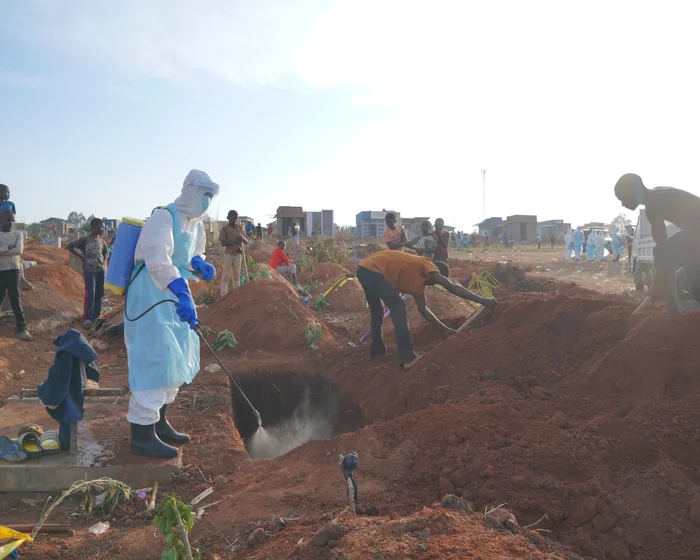
The Democratic Republic of the Congo (DR Congo) has recorded 11,042 confirmed Ebola infections and 5,387 deaths, making the ongoing outbreak the deadliest in the country’s history, according to government health ministry figures released on Tuesday, November 10.
The outbreak, caused by the rare Bundibugyo species of the Ebola virus, was declared in mid-May 2026. It has spread across eight of the country’s 26 provinces, with health authorities struggling to contain transmission in areas affected by armed conflict, limited medical infrastructure and difficulties accessing infected communities.
The latest figures place the outbreak among the two largest and deadliest Ebola epidemics ever recorded, behind only the 2014–2016 West African epidemic.
According to reporting by Reuters and the Associated Press, nearly half of the confirmed infections in the current outbreak have resulted in death.
Ebola Outbreak Spreads Across Eight Provinces
The outbreak has affected eight provinces in DR Congo, with Ituri and North Kivu among the major hotspots.
These regions have faced significant difficulties in controlling transmission. Armed violence has restricted the movement of medical teams, while poor road infrastructure has made it harder to reach remote communities and transport patients to treatment facilities.
The Associated Press reported on Wednesday that renewed violence in Ituri and North Kivu has raised concerns among health authorities about access to infected people.
Attacks on healthcare facilities and medical workers have added another obstacle. Mistrust and misinformation within some communities have also complicated efforts to encourage people to seek medical attention and cooperate with disease-control teams.
Many deaths have occurred outside treatment centres, indicating that some infected people are not receiving medical attention in time.
Bundibugyo Virus Presents Treatment Challenges
The current outbreak is caused by the Bundibugyo virus, a relatively rare species of Ebola virus.
Unlike some other Ebola virus species, Bundibugyo does not have an approved vaccine or specific treatment. This limits the medical options available to healthcare workers dealing with the outbreak.
Ebola is a severe infectious disease that can cause fever, fatigue, vomiting, diarrhoea and internal or external bleeding in some patients. It spreads through direct contact with the blood or bodily fluids of an infected person, or contaminated materials.
The virus does not generally spread through casual contact or simply sharing the same air.
The absence of an approved vaccine specifically for Bundibugyo makes preventive measures particularly important. Early identification of infections, isolation of patients, contact tracing and infection-control procedures remain central to the response.
The World Health Organization (WHO), in its November 6 disease outbreak update, reported 10,668 confirmed cases and 5,198 deaths in DR Congo as of November 3.
The agency said sustained, high-level transmission was continuing across the country. It also highlighted the high proportion of deaths occurring in communities, particularly among young children, as a sign of continuing problems with early detection and timely access to healthcare.
Conflict and Healthcare Shortages Complicate Containment
The response has been affected by a combination of security, infrastructure, and public-health challenges.
Parts of eastern DR Congo have experienced prolonged armed conflict, making it difficult for health workers to operate safely. In some locations, insecurity has restricted access to patients and disrupted the delivery of medical supplies.
A strained healthcare system has further complicated the response.
When infected people cannot reach treatment facilities quickly, the risk of continued transmission increases. Delays in identifying cases can also make contact tracing more difficult, particularly in densely populated communities.
The WHO’s November 6 update offered a clearer picture of the challenge. Of the 512 deaths reported since October 21 in the data available to the agency, 335 occurred in communities and 177 in treatment centres.
That difference points to the importance of identifying infections before patients become severely ill and ensuring that medical services are accessible outside major treatment facilities.
Ebola Cases Reported Beyond DR Congo
The outbreak has also raised concerns beyond Congo’s borders.
Cases associated with the outbreak have been reported in other African countries, including Uganda, Kenya and Nigeria. Medical evacuations involving confirmed cases have also taken place, including transfers to Switzerland and the United Kingdom.
According to the European Centre for Disease Prevention and Control (ECDC), nine confirmed cases and two deaths had been reported in Kenya as of November 9. The cases were linked to the initial imported infection.
Nigeria also reported an Ebola case in October involving an individual with a travel history to Uganda. The patient was subsequently medically evacuated to Switzerland.
The geographical spread across East, Central and West Africa has made cross-border surveillance and coordination important parts of the response.
The WHO has called for continued regional preparedness, including monitoring at points of entry, early case detection and coordination between affected countries.
However, in its November 6 update, the agency advised against imposing travel or trade restrictions on countries experiencing or responding to the outbreak.
Ebola Outbreak Ranks Second Globally
The scale of the current epidemic places it behind the 2014–2016 West African Ebola outbreak, which remains the largest and deadliest recorded.
That epidemic infected more than 28,600 people and killed over 11,000, primarily across Guinea, Liberia and Sierra Leone.
The current DR Congo outbreak has accumulated more than 11,000 confirmed infections and over 5,300 deaths in less than six months since its declaration in May.
Its rapid spread, combined with the challenges of treating the Bundibugyo strain, has made containment particularly difficult.
The outbreak’s final impact will depend on whether health authorities can improve access to affected communities, strengthen surveillance and reduce transmission in the most heavily affected provinces.
For now, the latest government figures indicate that the epidemic remains a major public-health emergency, with community transmission continuing and medical teams facing significant obstacles.
Note on figures: The 11,042 infections and 5,387 deaths cited in this report are from the latest Congolese government figures reported by Reuters and AP. International surveillance updates published earlier used different reporting cut-off dates and lower cumulative totals. These figures should not be treated as simultaneous reporting snapshots.