
Global Technology Outages: 5 Alarming Developments as Apple, Microsoft, Banks and Aviation Face Disruptions
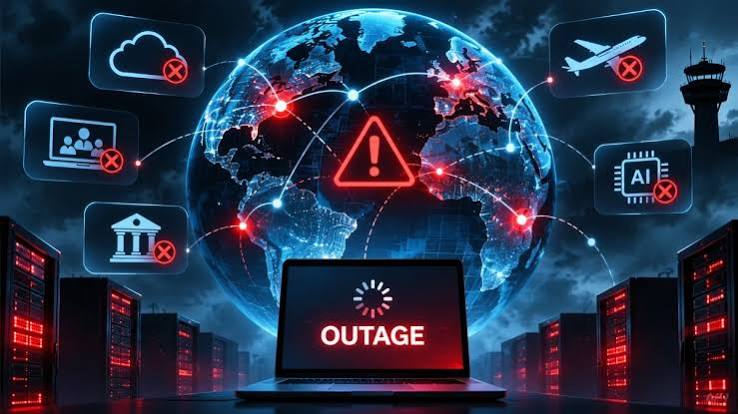
GLOBAL: Global technology outages have affected major technology companies, banking services and aviation infrastructure in the United States, raising concerns about the reliability of essential digital systems. The latest disruption involved Apple, which confirmed that an internal software update caused service problems affecting iCloud, Apple Pay and other products on November 17.
The incident followed separate disruptions involving Microsoft, the Federal Aviation Administration (FAA), United Airlines and major financial institutions. However, US officials have said there is no evidence connecting these incidents or indicating that they resulted from a coordinated cyberattack.
The developments have brought renewed attention to the risks associated with interconnected digital infrastructure, particularly when businesses and public services depend on technology platforms for essential operations.
1. Apple iCloud Outage Affects Multiple Services
The latest Apple iCloud outage affected several services within Apple’s ecosystem on Tuesday, November 17.
Customers reported difficulties accessing iCloud accounts, using Apple Pay and connecting to other Apple services, including the App Store, Apple Music and Apple Support.
Apple subsequently confirmed that an internal update had caused outages affecting its systems. The company said many services had returned to operation and that its technical teams were working to restore the remaining affected systems.
According to Reuters, Downdetector recorded approximately 2,300 reports of Apple Pay problems in the United States around 12:20 p.m. Eastern Time. Reports of iCloud problems peaked at approximately 1,800.
These figures represent user-submitted reports rather than confirmed numbers of affected customers.
Apple also clarified that the disruption was not caused by a cyberattack.
The company’s explanation is significant because the incident occurred during a period when several other major technology and infrastructure disruptions had attracted public attention.
2. Microsoft Outage Previously Disrupted Global Businesses
Another major incident involved Microsoft, whose cloud-based productivity services experienced a significant disruption on November 12 and 13.
The outage affected Outlook, Microsoft Teams, Copilot, SharePoint Online and other Microsoft 365 services across 74 countries and territories.
Users experienced problems accessing email accounts, sending messages and connecting to workplace applications.
Microsoft attributed the disruption to problems affecting its underlying infrastructure, including server availability and authentication and routing processes.
The company subsequently reported improvements after introducing a technical patch designed to improve server stability.
However, the recovery process highlighted the difficulties associated with restoring interconnected cloud services when problems affect their underlying infrastructure.
The disruption also affected organisations relying on Microsoft 365 integrations for everyday business operations.
The earlier Microsoft outage remains an important part of the recent sequence of technology incidents.
3. Banking Disruptions Raise Concerns About Financial Services
Financial institutions also experienced service problems during the same period.
Customers of JPMorgan Chase, Bank of America and other major banks reported difficulties accessing certain banking services on November 16.
The reported problems included disruptions involving deposits and Zelle transfers, affecting customers attempting to complete routine financial transactions.
JPMorgan Chase experienced a software-related problem that disrupted some banking operations.
However, the available information does not establish that every reported banking issue had an identical technical cause.
The incidents demonstrated how problems involving payment infrastructure and financial software can affect customers even when their bank accounts and underlying financial records remain intact.
Banking services increasingly depend on interconnected systems that support authentication, payment processing, transfers and communication between financial institutions.
Consequently, even temporary technical failures can create difficulties for customers and businesses that depend on uninterrupted access to financial services.
There is currently no verified evidence establishing that the banking disruptions were connected to the Apple or Microsoft incidents.
4. FAA Disruption And Airline Technology Problems Affect Aviation
The aviation industry also experienced significant technology-related problems during November.
On November 13, the FAA ordered a nationwide ground stop after communication problems affected multiple Air Route Traffic Control Centers.
The disruption involved telecommunications systems used by air traffic controllers to coordinate aircraft movements.
US Transportation Secretary Sean Duffy subsequently identified a router-related problem associated with telecommunications maintenance work involving the replacement of ageing copper lines with fibre-optic connections.
More than 3,500 flights were grounded during the initial response, according to figures reported by the US Department of Transportation.
The restrictions were introduced as a precautionary safety measure while technicians investigated the problem and restored affected systems.
The incident also raised questions about the reliability of older aviation infrastructure during major technology upgrades.
Separately, United Airlines experienced a technology failure that disrupted its operations.
The aviation problems illustrate how technical failures can extend beyond individual companies and affect passengers, airport operations and wider transportation networks.
The earlier US flight disruption provides additional context about the FAA incident and the telecommunications problems behind the nationwide restrictions.
5. US Officials Reject Claims Of A Coordinated Cyberattack
The timing of these incidents has generated questions about whether the disruptions could be connected.
However, US officials have said there is no evidence indicating that the separate failures were part of a coordinated cyberattack.
Secretary of State Marco Rubio addressed the concerns on November 18 while speaking to reporters in the Philippines.
He said authorities had no evidence connecting the Microsoft disruption, the FAA incident and the banking problems to one another or to malicious actors.
Rubio also sought to reassure the public that the United States was not experiencing a systemic attack.
His remarks are important because the incidents affected several critical sectors within a relatively short period.
However, the absence of evidence linking the incidents does not mean that every technical investigation has been completed.
Apple has identified an internal update as the cause of its disruption, while the FAA has separately examined the telecommunications failure behind its aviation problems.
The technical circumstances of individual incidents must therefore be assessed separately rather than treated as evidence of a single underlying event.
Why The Recent Technology Outages Matter
The recent global technology outages highlight the growing dependence of businesses, governments and consumers on digital infrastructure.
Cloud computing, financial networks, telecommunications and aviation systems increasingly support essential services. When these systems experience technical problems, the consequences can extend beyond the company directly responsible for operating them.
The Apple iCloud outage, for example, affected access to services used for account management, payments and digital storage.
Similarly, the Microsoft disruption demonstrated how a problem affecting cloud infrastructure can interfere with workplace communication and productivity across multiple countries.
Banking and aviation incidents present additional concerns because their systems support financial transactions and public transportation.
For organisations, these developments reinforce the importance of backup infrastructure, alternative communication arrangements, reliable recovery procedures and regular system testing.
Technology companies also face growing expectations to communicate clearly when services become unavailable and provide accurate information about restoration efforts.
As investigations continue, the immediate priority remains ensuring that affected systems operate reliably and that companies can identify and address the technical weaknesses responsible for individual failures.
The recent incidents have not established evidence of a coordinated cyberattack. Nevertheless, they demonstrate how technical problems involving essential digital services can create widespread disruption even without malicious interference.




