
Saudi Yemen Airstrikes: 5 Alarming Developments as Houthi Attacks Latest Escalation Raises Middle East Tensions
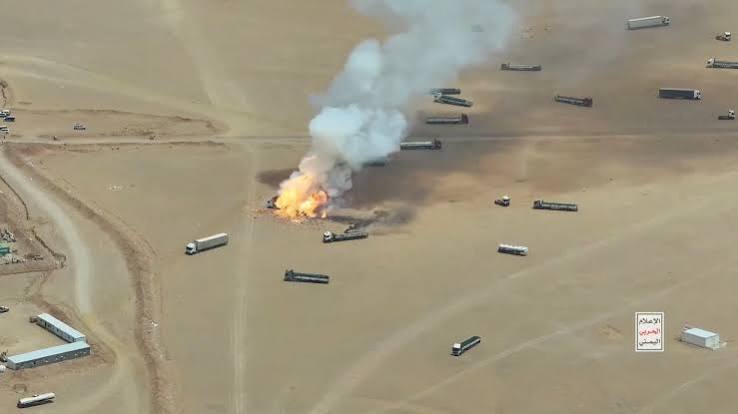
MIDDLE EAST: Saudi Yemen airstrikes have intensified regional security concerns after the Saudi-led coalition announced that it had destroyed 60 Houthi military targets across four governorates in Yemen. The announcement came on Wednesday, November 18, following military operations launched on Tuesday.
The Houthis reported at least 17 deaths and multiple injuries in the strikes, including casualties at factories in Hodeida, Saada and Sanaa. Separately, the coalition said it intercepted a cruise missile launched towards Riyadh, while a commercial vessel operated by the United Arab Emirates’ state-owned oil company was attacked in the Strait of Hormuz.
The developments have added to the growing security challenges across the Middle East, with military operations, missile threats and maritime incidents occurring amid an increasingly unstable regional situation.
Saudi-Led Coalition Announces 60 Targets Destroyed In Yemen
The Saudi-led coalition fighting Yemen’s Iran-backed Houthi movement announced that its forces had destroyed 60 military targets in four Yemeni governorates.
Coalition spokesperson Maj. Gen. Turki al-Malki said the operation covered the capital, Sanaa, along with Amran, Saada and Hodeida.
According to the coalition, the primary objective was to weaken the Houthis’ ballistic missile and drone capabilities while reducing their ability to threaten maritime security.
The targets reportedly included underground tunnels used to store ballistic missiles in mountainous areas. Workshops involved in assembling and storing drones were also among the facilities identified by the coalition.
Al-Malki described the targeted locations as legitimate military objectives. However, the coalition’s claims about the destruction of all 60 targets have not been independently verified.
The latest Saudi Yemen airstrikes represent another major development in the conflict, which has experienced renewed military activity after a period of relative calm.
Houthis Report At Least 17 Deaths And Multiple Injuries
The Houthi-run health ministry reported at least 17 people killed in the coalition’s attacks.
Anees al-Asbahi, spokesperson for the ministry, said one strike hit a sponge factory in Hodeida, killing at least 15 people and injuring another 13.
He also reported that two people were killed and four injured in a separate strike in the Kitaf district of Saada.
In Sanaa, at least nine people were reportedly injured after another strike hit a shoe factory.
These casualty figures were provided by Houthi authorities and have not been independently confirmed.
The reported factory strikes have raised questions about the impact of the military operation on civilian locations and workers. The distinction between the coalition’s stated military targets and the locations identified by Houthi officials remains important because independent verification of the individual strike sites is not available in the initial reporting.
The reported deaths also underline the humanitarian risks associated with the renewed fighting in Yemen.
Saudi Arabia Says It Intercepted Cruise Missile Heading Towards Riyadh
The military developments extended beyond Yemen after the Saudi-led coalition announced that its air defences had intercepted and destroyed a cruise missile launched towards the Riyadh region.
Al-Malki confirmed the interception early Wednesday but did not immediately provide further details about the missile’s trajectory, launch location or intended target.
The announcement followed repeated reports of missile and drone activity involving Saudi territory.
The latest Houthi attacks latest developments have increased concerns about the possibility of further cross-border military incidents, particularly as Saudi Arabia remains directly involved in supporting Yemen’s internationally recognised government.
The interception also illustrates how the conflict can affect security beyond Yemen’s borders.
However, the coalition’s announcement alone does not establish the extent of damage or whether the missile would have reached a populated area had it not been intercepted.
Strait Of Hormuz Vessel Attack Raises Maritime Security Concerns
Separately, maritime security concerns increased after a vessel operated by Abu Dhabi National Oil Company (ADNOC) was attacked while travelling through the Strait of Hormuz on Tuesday.
ADNOC said on Wednesday that one crew member remained unaccounted for, while 11 others were injured. The remaining crew members were evacuated.
The company did not identify the vessel or disclose who was responsible for the attack.
The incident is particularly significant because the Strait of Hormuz is one of the world’s most important maritime passages for international energy supplies.
The waterway connects the Persian Gulf with the Gulf of Oman and the Arabian Sea. It is a major route for oil and gas shipments travelling from Gulf producers to international markets.
The attack follows other reported maritime incidents in the region, including an earlier attack involving a Panama-flagged gas tanker.
These developments are also relevant to the wider Strait of Hormuz tensions, which have raised concerns about commercial shipping and the security of international energy transportation.
Although the vessel incident occurred separately from the Yemen operation, the simultaneous security developments highlight the wider risks facing maritime traffic across the region.
Yemen Conflict Enters Another Dangerous Phase
Yemen’s conflict has remained a major regional security concern since Houthi forces seized Sanaa and other territories in September 2014.
Saudi Arabia led a military coalition that intervened in March 2015 in support of Yemen’s internationally recognised government.
The conflict has involved repeated military operations, cross-border attacks, diplomatic negotiations and international efforts to establish a political settlement.
A period of relative calm began in April 2022, but renewed fighting in July 2026 ended much of that stability.
The latest military developments have also coincided with diplomatic pressure on the Houthis. On November 13, the Gulf Cooperation Council welcomed UN Security Council Resolution 2837, which demanded an immediate and unconditional halt to Houthi military escalation and attacks.
The diplomatic development was covered in Reportiva’s earlier report on the UN resolution demanding an end to Houthi attacks.
The renewed fighting demonstrates the difficulty of achieving lasting stability despite diplomatic initiatives.
International Shipping And Energy Markets Face Uncertainty
The latest Saudi Yemen airstrikes and the separate maritime incident could have consequences beyond the immediate conflict zones.
Military escalation around Yemen raises concerns about the security of the Red Sea and the Bab el-Mandeb Strait, while attacks involving vessels in the Strait of Hormuz create additional risks for international shipping.
Both waterways are strategically important for global trade and energy transportation.
Any prolonged disruption could force shipping companies to reassess routes, insurance arrangements and operational costs. Increased uncertainty could also affect energy-market sentiment, particularly if further attacks threaten commercial vessels or major transportation corridors.
However, the latest incidents alone do not establish that global oil supplies have suffered a specific reduction or that prices will necessarily rise.
The Houthi attacks latest developments therefore require continued monitoring, particularly regarding the response from regional governments and the security of commercial shipping.
For now, the immediate concerns remain the reported civilian casualties in Yemen, the missile interception near Riyadh and the missing crew member following the Strait of Hormuz vessel attack.
Whether these developments lead to further military escalation will depend on the actions of the parties involved in the coming days.




