
Opposition Demands Urgent Probe Into Netanyahu as 5 Alarming Developments Fuel Political Crisis
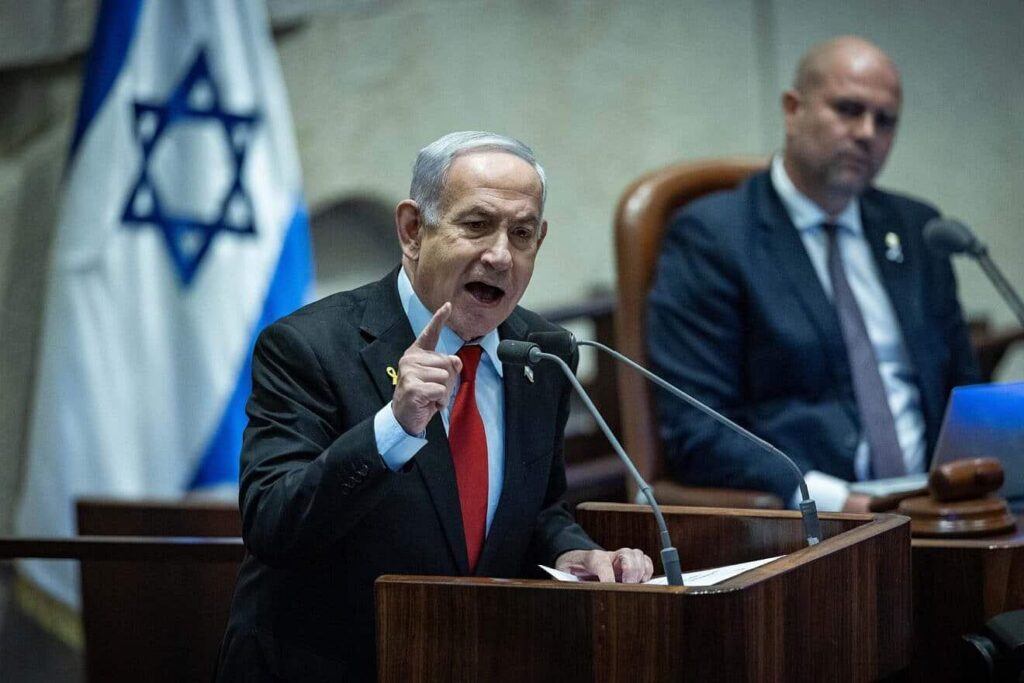
ISRAEL: The Israel Political Crisis has intensified after opposition leaders demanded an independent criminal investigation into allegations that Prime Minister Benjamin Netanyahu’s office attempted to influence the country’s October 27 parliamentary election through police and intelligence channels.
The controversy escalated on November 16 after reports emerged that Netanyahu’s chief of staff, Ido Norden, had supplied police with information that led to the arrest of three members of the Arab-led Ra’am party shortly before voting began.
The arrests were followed by separate allegations that Shin Bet chief David Zini sought permission to monitor Arab lawmakers through telephone surveillance. The reported request was rejected by Attorney General Gali Baharav-Miara.
Opposition politicians have described the developments as an attempted coup against Israeli democracy. However, these remain allegations and political accusations, not established findings of criminal wrongdoing.
According to a detailed report by The Times of Israel, police have announced an internal review, while senior legal officials are considering whether a criminal investigation should be opened.
1. Netanyahu’s Office Faces Allegations Over Election-Day Arrests
The controversy centres on the arrest of three southern Bedouin men associated with the Ra’am party on October 27, the day Israelis voted in the parliamentary election.
Israel’s Channel 12 reported that Norden contacted the police commissioner’s office on October 26 with a complaint concerning alleged vote-buying activities involving Ra’am members.
He reportedly directed police towards an intelligence source who had previously worked at the Prime Minister’s Office.
According to the reporting, the information supplied through this channel contributed to the arrests, which took place hours before polling stations opened.
Police initially alleged that officers had recovered envelopes containing tens of thousands of shekels in cash.
However, the three men were subsequently released without charges or restrictive conditions. The case was reportedly expected to be closed.
The central question now concerns whether the information provided to law enforcement was reliable or deliberately presented to create suspicion around Arab political parties before voting.
Investigators have reportedly been examining whether the allegations were used to generate arrests and strengthen claims that Arab parties were attempting to manipulate the election.
2. Shin Bet Surveillance Allegations Add to the Controversy
A second controversy has emerged around the reported conduct of Israel’s domestic intelligence agency, Shin Bet.
According to media reports, Shin Bet chief David Zini sought permission to wiretap five Arab lawmakers on election day.
The request was reportedly connected to separate suspicions of foreign interference in the Israeli election.
However, Baharav-Miara reportedly rejected the request after concerns were raised about the evidence supporting the proposed surveillance.
The reported decision has raised questions about the limits of intelligence powers and the safeguards governing surveillance of elected representatives.
Importantly, the surveillance allegation and the arrests involving Ra’am members concern separate investigative developments. They should not be treated as proof of a single coordinated operation.
The controversy has also renewed discussion about the political use of surveillance powers, an issue explored in Reportiva’s earlier coverage of the Rahul Gandhi phone-tapping controversy.
3. Yair Lapid And Gadi Eisenkot Demand Accountability
Opposition figures have responded strongly to the reports, arguing that the allegations threaten public confidence in Israel’s democratic institutions.
Former prime minister Yair Lapid described the developments as an attempted coup in a statement posted on social media on November 16.
His comments followed reports suggesting that Netanyahu’s office may have been involved in generating allegations against Arab political representatives before the election.
Gadi Eisenkot, Netanyahu’s main political rival and a former military chief of staff, also demanded accountability.
Eisenkot argued that Netanyahu should not remain prime minister while the allegations surrounding the election are being examined.
Former Shin Bet director and current opposition politician Yoram Cohen also called for an urgent criminal investigation.
In a letter to the attorney general, Cohen argued that the possible use of state law-enforcement powers for political purposes required a thorough, independent and impartial inquiry.
His intervention is particularly significant because of his previous leadership of Israel’s domestic security agency.
4. Israel Police Announces Internal Review
Israel Police Commissioner Daniel Levy announced an internal review of the force’s conduct surrounding the October 27 election.
Deputy Commissioner Yair Hezroni was assigned responsibility for overseeing the examination, which was initially expected to report its findings within a week.
The review was intended to examine organisational, operational and command-related aspects of the allegations.
However, the investigation subsequently entered a more complicated phase.
Attorney General Baharav-Miara and State Attorney Amit Aisman asked police to pause their independent examination while prosecutors considered whether to open a criminal investigation.
The legal officials want coordination between the Attorney General’s Office, the State Attorney’s Office and police before deciding the appropriate investigative process.
The Attorney General’s Office said that all relevant aspects of the matter would be examined.
The distinction is important: an internal police review is not the same as a formal criminal investigation, and neither establishes that the allegations against government officials are true.
5. Likud Rejects Allegations as Political Tensions Increase
Netanyahu’s Likud party has rejected the allegations and criticised the opposition’s response.
The party described accusations against the prime minister’s office as unfounded and suggested that the controversy was being used to obstruct efforts to establish a national unity government.
Ido Norden has also defended his conduct. His lawyers have rejected the allegations reported against him and threatened legal action against Channel 12.
Meanwhile, the political consequences are extending beyond the investigation itself.
Israel’s October 27 election produced no clear parliamentary majority for either Netanyahu’s bloc or the opposition grouping led by Eisenkot. Both sides fell short of the 61 seats required to command a majority in the 120-member Knesset.
The Joint List and Ra’am have indicated support for Eisenkot in the coalition negotiations.
The Israel Political Crisis has therefore developed into a broader dispute involving election legitimacy, intelligence oversight, police accountability and the formation of the next government.
What Happens Next In Israel?
The immediate focus is on the decisions of the attorney general and state attorney regarding a possible criminal investigation.
Authorities will need to establish how the original allegations reached police, whether the information was independently verified and whether officials acted within their legal responsibilities.
The separate surveillance allegations will also require examination, particularly concerning the evidence presented to justify monitoring elected representatives.
For Netanyahu, the controversy adds another political challenge as he faces opposition pressure and uncertainty over the formation of the next government.
The latest Netanyahu Latest News has consequently become a major test of public confidence in Israel’s political and security institutions.
However, the final conclusions will depend on evidence gathered through the appropriate investigative processes. Until then, claims of an attempted coup must remain attributed to the politicians making them rather than presented as an established criminal finding.
The coming decisions by Israel’s legal authorities could determine whether the controversy remains an internal political dispute or develops into a formal investigation involving senior government and security officials.




