Ashok Gehlot’s 5 Strong Remarks on Bhajan Lal Sharma After Congress’s Rural Poll Victory
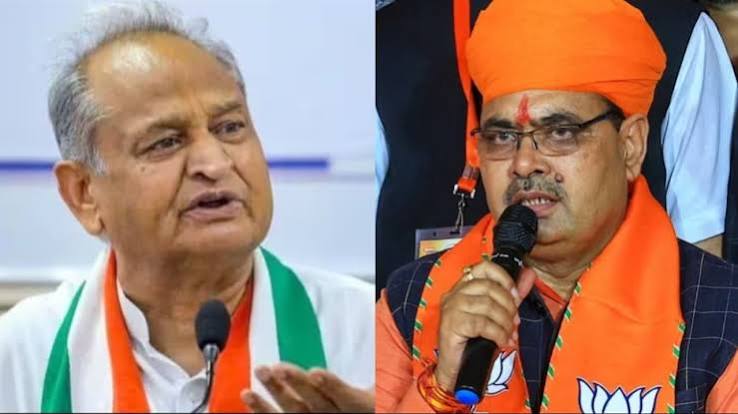
JAIPUR: The Ashok Gehlot interview has triggered fresh political discussion in Rajasthan after the former chief minister suggested that the Congress would benefit if Chief Minister Bhajan Lal Sharma continued in office. Speaking to The Indian Express on November 24, 2026, Gehlot discussed the BJP’s performance in the recent rural elections, the Congress’s prospects, internal party unity and the state’s political leadership.
His remarks came four days after the Congress secured a significant victory in Rajasthan’s Panchayati Raj elections, dealing a setback to the ruling BJP. Gehlot argued that the results reflected dissatisfaction with the state government and predicted that Congress would return to power in the 2028 Assembly elections.
The former chief minister also made a pointed observation about Sharma’s political position, saying that the current BJP leadership suited Congress’s interests.
Why Ashok Gehlot Said Bhajan Lal Sharma Should Remain Chief Minister
One of the most significant remarks in the Ashok Gehlot interview concerned whether Bhajan Lal Sharma’s position had become vulnerable following the BJP’s rural election performance.
Asked about the possibility of a leadership change, Gehlot responded with a remark that attracted considerable political attention.
He said: “Hume toh yahi suit karte hai. Rahe, wahi rahe.”
The statement translates to: “He suits us. Let him stay.”
Gehlot’s response suggested that Congress could see a political advantage in Sharma continuing as Rajasthan’s Chief Minister rather than being replaced by another BJP leader.
The remark was particularly significant because it came after Congress’s strong performance in the rural elections.
Gehlot also referred to the changing perception of Sharma among BJP supporters, suggesting that some who previously backed the Chief Minister might now consider his leadership a political liability.
However, his assessment represents the Congress leader’s political interpretation, not an indication that the BJP has announced any leadership change.
Congress’s Rajasthan Rural Election Victory Puts BJP Under Pressure
The latest Bhajan Lal Sharma news comes against the backdrop of Congress’s strong performance in the November 20 Panchayati Raj elections.
According to election figures reported by The Indian Express, Congress secured a clear majority in at least 23 of Rajasthan’s 37 Zila Parishads, while the BJP managed a majority in six.
Congress also won 3,758 Panchayat Samiti seats compared with the BJP’s 2,213.
In the Zila Parishad elections, Congress secured 794 seats, significantly ahead of the BJP’s 357.
The results represented a major setback for the ruling party in rural Rajasthan.
Congress also performed strongly in areas considered politically important for BJP leaders.
In Bhajan Lal Sharma’s home district of Bharatpur, Congress won 21 of the 31 Zila Parishad seats, while the BJP secured nine.
In Jaipur’s rural areas, Congress won 41 of 57 Zila Parishad seats, compared with 12 for the BJP.
These results strengthened Congress’s argument that the ruling party was facing growing dissatisfaction outside urban centres.
The developments follow the earlier Rajasthan civic poll results, where the BJP had initially maintained an advantage over Congress in the urban local body elections.
Gehlot Accuses Rajasthan Government Of Poor Governance
During the interview, Gehlot criticised the BJP government’s administrative performance under Sharma.
He claimed that people across Rajasthan were increasingly dissatisfied because their grievances were not being addressed and development work was not progressing as expected.
The former Chief Minister also alleged that corruption had increased and suggested that dissatisfaction extended beyond Congress supporters.
Gehlot argued that even some BJP representatives were expressing frustration over difficulties in getting their work completed.
He also criticised the government’s advertisements comparing its performance with the previous Congress administration.
According to Gehlot, the government had repeatedly highlighted comparisons between its first year and the Congress government’s five-year tenure, later extending those comparisons to two and three years.
He argued that such publicity had not been matched by sufficient visible results on the ground.
These allegations are Gehlot’s assessment of the government’s performance. The interview did not independently establish the extent of corruption or public dissatisfaction across the state.
Ashok Gehlot Predicts Congress Victory In 2028
The former Rajasthan Chief Minister expressed confidence that Congress could return to power in the next Assembly elections.
Gehlot predicted a convincing victory for his party in 2028, arguing that public dissatisfaction with the BJP government could translate into electoral support for Congress.
He identified unemployment, rising prices and proposed delimitation as important political issues.
He also referred to the wider national political atmosphere, arguing that opposition parties were gaining support because of concerns about government policies and democratic institutions.
The Bhajan Lal Sharma news has therefore become part of a broader political discussion about the BJP’s position in Rajasthan ahead of the next Assembly elections.
However, the 2028 election remains two years away, and the recent rural results alone cannot determine the outcome of the next state-wide contest.
Gehlot Claims Congress Has Put Internal Differences Behind It
Another important subject discussed during the interview was Congress’s internal organisation.
Rajasthan Congress has experienced prolonged leadership disagreements, particularly involving Ashok Gehlot and Sachin Pilot.
Gehlot, however, claimed that the party had moved beyond its earlier divisions and was now working with greater unity.
He referred to a recent meeting attended by senior Rajasthan Congress leaders, including state Congress president Govind Singh Dotasra, Leader of Opposition Tika Ram Jully and Sachin Pilot.
According to Gehlot, the party approached the recent local body elections with a united approach.
He maintained that Congress would continue working together rather than allowing internal leadership disagreements to weaken its electoral prospects.
His remarks also connect with the wider political debate surrounding Rahul Gandhi’s Columbia University speech, which brought unemployment, electoral transparency and the Opposition’s political strategy into focus.
What Gehlot Said About His Own Political Future
Gehlot’s comments also come amid speculation about his possible political role in Rajasthan’s next Assembly elections.
In a separate interview published on November 22, he said he was not demanding another term as Chief Minister but would be willing to serve if the Congress leadership considered it necessary.
He emphasised that the final decision about the party’s Chief Ministerial candidate would rest with the Congress high command.
This position is important because Gehlot has served as Rajasthan Chief Minister three times and remains one of the Congress party’s most influential leaders in the state.
His latest comments suggest that he wants the party to prioritise electoral success rather than focus prematurely on individual leadership ambitions.
What Happens Next In Rajasthan Politics?
The latest interview has added another dimension to the political contest between Congress and the BJP in Rajasthan.
For Congress, the rural election results provide an opportunity to challenge the ruling party’s position and strengthen its organisation ahead of the 2028 Assembly elections.
For the BJP, the results create pressure to review its performance in rural constituencies and address concerns about local governance.
The immediate focus is also on the formation of local bodies following the Panchayati Raj elections. Elections for Zila Pramukh positions in 37 districts were scheduled for November 25, followed by elections for other local leadership positions through November 28.
Gehlot’s suggestion that Sharma should remain Chief Minister has consequently become a prominent talking point in the state’s political debate.
Whether the BJP retains its present leadership arrangement and whether Congress can convert its rural gains into a statewide electoral advantage will become clearer over the coming months.
For now, the former Chief Minister’s remarks have placed Bhajan Lal Sharma’s leadership and Congress’s political ambitions firmly at the centre of Rajasthan’s political discussion.