JAGAN MOHAN REDDY TEMPLE CONTROVERSY: 5 Key Facts Behind Andhra Pradesh’s Anjaneya Temple Row
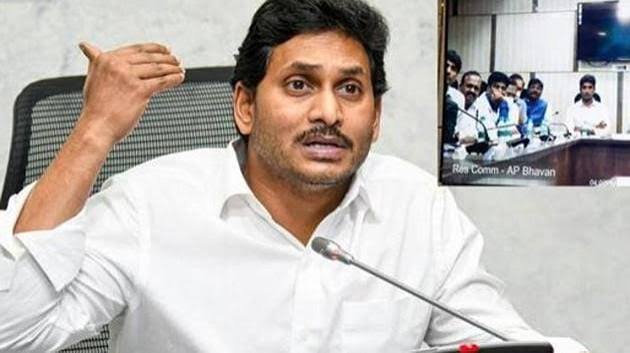
ANDHRA PRADESH: The Jagan Mohan Reddy temple controversy has triggered a fresh political confrontation in Andhra Pradesh after the former chief minister accused the N. Chandrababu Naidu-led government of demolishing the centuries-old Abhaya Anjaneya Swamy temple at Anjaneyapuram in Tirupati district.
YSR Congress Party (YSRCP) president Y.S. Jagan Mohan Reddy criticised the demolition in a social media post on November 23, questioning the government’s commitment to protecting religious and historical structures.
However, the state government has defended the action, saying the temple was relocated following discussions with local residents, devotees, priests and Endowments Department officials to facilitate the expansion of National Highway 716.
The government also said ₹59.3 lakh had been deposited as compensation and 50 cents of nearby land allocated for rebuilding the temple.
The disagreement has brought religious heritage, infrastructure development and political accountability into the centre of a growing debate in the state.
1. Jagan Mohan Reddy Questions Government’s Commitment To Temple Protection
Jagan Mohan Reddy took to X on Monday, November 23, to criticise the demolition of the Abhaya Anjaneya Swamy temple at Anjaneyapuram.
Describing the incident as disturbing, the former chief minister alleged that bulldozers had destroyed a centuries-old religious structure and hurt the sentiments of devotees.
He also questioned whether the Chandrababu Naidu administration’s actions were consistent with its stated commitment to protecting Sanatana Dharma.
Jagan referred to previous controversies involving religious structures in Andhra Pradesh, including the Thousand-Pillared Mandapam at Tirumala, the demolition of temples during the Krishna Pushkaralu in Vijayawada and the dispute involving Kasinayana Jyothi Kshetram in Badvel.
He contrasted the current government’s actions with the previous YSRCP administration’s establishment of the SRIVANI Trust, which he said supported temple construction and restoration.
His remarks intensified the Jagan Mohan Reddy temple controversy, placing the treatment of religious heritage at the centre of the state’s political debate.
2. Why Was The Abhaya Anjaneya Swamy Temple Demolished?
The temple was located at Anjaneyapuram in Renigunta mandal of Tirupati district.
Its removal was connected to the expansion of National Highway 716, which required the acquisition of approximately 10 cents of land associated with the temple.
The government maintained that the relocation was discussed over several months and that an agreement was reached involving local residents, villagers, devotees, priests and officials from the Endowments Department.
According to a government source quoted by Hindustan Times, the decision involved shifting the idols and constructing another temple at a nearby location.
The government said the main idol had been temporarily moved after religious rituals were performed.
It also stated that 50 cents of land had been allocated nearby for reconstruction.
The explanation provides an important distinction between the opposition’s description of the incident as the destruction of a historic religious structure and the government’s position that the action was part of an agreed relocation for highway development.
3. Government Says ₹59.3 Lakh Compensation Was Deposited
Financial compensation has become another important part of the dispute.
According to the government’s account, ₹59.3 lakh was deposited into the temple’s executive officer’s account on August 1, 2026.
The amount was intended as compensation for the land acquired for the highway expansion.
The government also said that 50 cents of nearby land had been allocated for rebuilding the temple.
Officials maintained that the money was deposited into the temple account rather than being paid to any individual.
The compensation explanation is significant because it addresses questions about whether the temple’s removal was accompanied by arrangements for reconstruction.
However, the opposition’s criticism is not limited to financial compensation. Jagan and other YSRCP leaders have questioned whether the authorities adequately explored alternative highway alignments before deciding to remove the structure.
The Anjaneya temple demolition has therefore developed into a wider debate about how infrastructure projects should account for religious and historical sites.
4. Former TTD Chairman Bhumana Karunakar Reddy Also Criticises The Demolition
Former Tirumala Tirupati Devasthanams (TTD) chairman and senior YSRCP leader Bhumana Karunakar Reddy also criticised the government’s decision.
In a video statement, he questioned why the highway alignment could not have been modified to protect the temple.
Karunakar Reddy highlighted the religious and historical significance associated with the Abhaya Anjaneya Swamy temple.
He claimed that the temple was associated with sage Agastya’s wife Lopamudra and that saint-composer Annamacharya had praised the deity in his compositions.
He also attributed the construction of the temple’s gopuram and sacred tank to the Pallava period, claiming they were approximately 1,400 years old.
These historical accounts were presented by the YSRCP leader and should not be treated as independently established archaeological findings.
Karunakar Reddy further questioned the circumstances surrounding the use of earthmoving machinery and the religious procedures followed during the removal.
His intervention added another prominent opposition voice to the Anjaneya temple demolition dispute.
5. Political Debate Intensifies Over Religious Heritage And Development
The controversy has created another political confrontation between the ruling coalition and the YSRCP.
Jagan has questioned the government’s approach towards temple protection, while the administration has defended the decision by pointing to highway construction requirements, consultations and compensation arrangements.
The disagreement also comes amid other political confrontations involving the ruling and opposition parties in different parts of the country.
Recent developments, including the Jagdambika Pal video controversy and the latest Rahul Gandhi-BJP political confrontation, have similarly brought political accountability and competing claims into public debate.
In Andhra Pradesh, however, the immediate issue remains the balance between infrastructure development and the preservation of religious structures.
The government has maintained that arrangements were made for relocating the temple and rebuilding it at another location. The opposition, meanwhile, has questioned whether demolition was necessary and whether alternative arrangements could have protected the original structure.
The available reporting does not independently establish the historical age of the temple or resolve the competing claims about alternative highway alignments.
What Happens Next?
The immediate focus will be on the reconstruction arrangements and the political response to the temple’s removal.
The government’s stated commitment to provide nearby land and compensation will be important in determining how the relocation progresses.
For the YSRCP, the incident has become another opportunity to challenge the Naidu administration over its approach to religious heritage.
The Jagan Mohan Reddy temple controversy is therefore not simply a disagreement over a highway project. It raises wider questions about public consultation, religious sentiments, heritage preservation and the responsibilities of governments when infrastructure development affects places of worship.