Starship Makes History With First Return From Orbit to Its Launch Tower
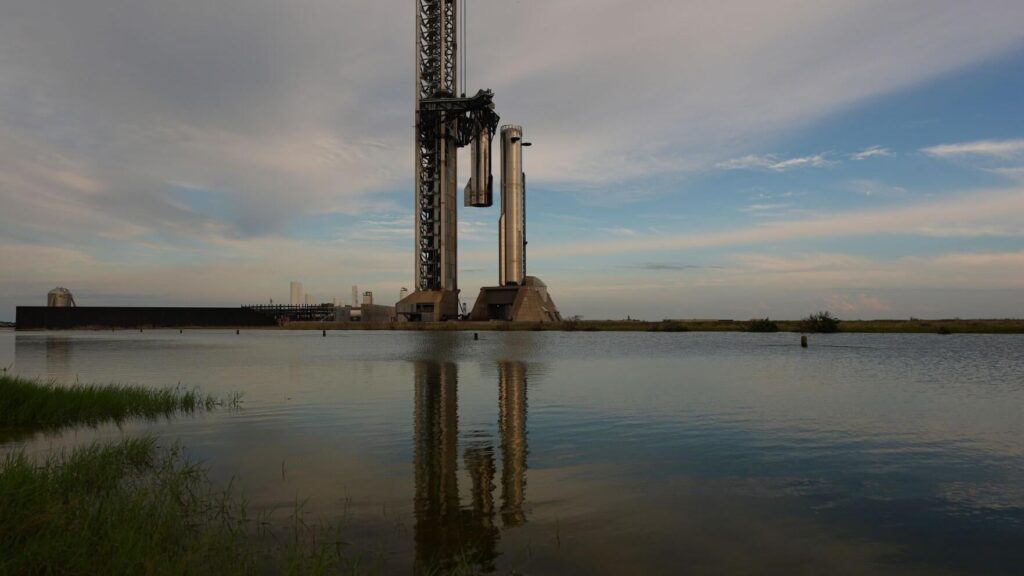
SpaceX has achieved a major milestone in rocket recovery after its Starship spacecraft returned from orbit and was caught by the mechanical arms of its launch tower in South Texas on Saturday, November 14.
The successful landing followed a 22.5-hour mission during which the spacecraft completed 14 orbits of Earth before returning to the same Starbase facility from which it had launched a day earlier. It was the first time SpaceX had caught the Starship upper stage after an orbital flight, marking an important step in the company’s effort to develop a fully reusable launch system.
However, the mission did not deliver the complete recovery SpaceX had planned. The Super Heavy booster, which carried Starship into space, failed to return to the launch tower and was destroyed over the Gulf of Mexico.
The achievement nevertheless gave SpaceX its first successful demonstration of an orbital Starship returning directly to its launch site.
Starship completes its longest mission yet
The mission, designated Starship Flight 15, began on Friday, November 13, from SpaceX’s Starbase launch facility in Texas, near the US-Mexico border.
The 407-foot (124-metre) two-stage rocket lifted off with its Super Heavy booster powering the initial ascent. After the two stages separated, the Starship upper stage continued towards orbit.
The spacecraft reached an altitude of approximately 161 miles (260 kilometres) and deployed 26 Starlink V3 satellites. It then continued circling Earth, completing 14 orbits during a mission lasting approximately 22.5 hours.
According to Reuters, this was the longest Starship mission completed to that point. It also represented only the spacecraft’s second successful journey into Earth orbit.
The flight demonstrated that Starship could remain in orbit for an extended period, deploy its payload and subsequently perform a controlled return to its launch site.
Mechanical arms catch Starship at the Texas launch tower
The most closely watched part of the mission came during the spacecraft’s return to Earth on Saturday.
After travelling across the Pacific Ocean, Starship began its atmospheric reentry. The spacecraft faced temperatures generated by its high-speed passage through the atmosphere, travelling initially at approximately 17,000 miles per hour.
As it approached the Starbase facility, Starship reignited its engines, adjusted its orientation, and moved into a vertical position for the final descent.
SpaceX’s launch tower, equipped with two enormous mechanical arms commonly known as chopsticks, was positioned to catch the descending vehicle.
The spacecraft used two small fittings near its upper section to engage with the tower’s mechanical arms. The arms closed around the vehicle, holding it above the ground after its engines shut down.
The catch was a first for Starship following an orbital mission.
SpaceX mission commentator Dan Huot described the achievement as a breakthrough. Reuters quoted him saying it was the missing link in the company’s efforts to make the spacecraft reusable.
Company engineers began inspecting the spacecraft within hours of its recovery. Elon Musk also shared images and videos of the captured vehicle on X, writing: “Ship 42 looks great!”
The spacecraft’s successful return was particularly important because recovering the upper stage has been one of the major technical challenges in SpaceX’s long-term Starship development programme.
Super Heavy booster fails to complete its return
Despite the successful Starship recovery, the mission encountered a significant problem during the first stage’s attempted return.
SpaceX had planned to recover both components of the rocket during the same mission. The Super Heavy booster was supposed to return to the launch tower shortly after separating from Starship.
However, the booster encountered a problem with its guidance, navigation, and control system during the return sequence.
According to reporting by the Associated Press, SpaceX spokesperson Kate Tice said the booster’s engines stopped firing too soon during its descent. The onboard guidance system detected that the vehicle was not in the correct position to proceed with the planned catch.
The system automatically diverted the booster towards the Gulf of Mexico, where it was destroyed shortly before reaching the water.
The failure prevented SpaceX from achieving its planned first double recovery of the two-stage rocket system.
SpaceX officials said the automated safety response worked as intended. Engineers will need to investigate the underlying problem before the company can demonstrate a successful recovery of both stages during one mission.
The setback did not erase the significance of Starship’s successful orbital return, but it showed that several technical challenges remain.
Why the achievement matters for reusable rockets
SpaceX has spent more than a decade developing Starship as a launch system designed to carry cargo and eventually people beyond Earth.
Its longer-term objective is to recover and reuse both the Super Heavy booster and Starship spacecraft, reducing the need to manufacture new rocket hardware for every mission.
The company’s existing Falcon 9 programme already demonstrates the commercial value of reusable rocket technology. Falcon 9’s first stage routinely returns to Earth after launching satellites and other payloads, while its upper stage is discarded after completing its mission.
Starship is designed to take that approach further by making both stages recoverable.
A successful return of the upper stage from orbit is therefore an important engineering achievement. It demonstrates that the spacecraft can complete the journey from launch to orbit and back to its original launch site.
However, catching the vehicle does not automatically mean it is ready for routine reuse. Its heat shield, which consists of hundreds of protective tiles, still requires further development. SpaceX is working on designs that would reduce the refurbishment required between flights.
The company must also demonstrate that the recovered spacecraft can be inspected, prepared and launched again reliably.
Starship’s role in NASA’s Moon programme
The success also carries implications for NASA’s Artemis programme, which aims to return astronauts to the lunar surface.
NASA selected SpaceX in 2021 for a contract to develop Starship as a human landing system for future Artemis missions. Reuters reported that the space agency has provided $3.2 billion under a contract valued at more than $4 billion.
Starship is expected to play a central role in NASA’s plans to transport astronauts from lunar orbit to the Moon’s surface.
The spacecraft must still demonstrate several critical capabilities before it can support crewed lunar missions. One of the most important is transferring propellant between spacecraft in orbit, allowing Starship to carry sufficient fuel for journeys beyond Earth’s orbit.
NASA is targeting 2028 for crewed lunar missions involving its commercial landing systems, although substantial development and testing remain.
The mission also supports SpaceX’s longer-term ambitions to use Starship for deploying satellites, expanding its Starlink network and eventually transporting people and cargo to Mars.
What happens next?
Starship Flight 15 has established an important recovery milestone, but SpaceX still needs to demonstrate that the complete launch system can return safely and operate again with limited refurbishment.
The immediate technical challenge includes addressing the Super Heavy booster’s failed return attempt and improving Starship’s heat shield for repeated atmospheric reentries.
NASA’s lunar programme also creates additional pressure for the company to demonstrate orbital refuelling, reliable spacecraft operations and the safety systems required for human spaceflight.
For now, the successful catch of Ship 42 gives SpaceX a significant result from a mission that was designed to test the limits of rocket recovery.
The company has demonstrated that its Starship upper stage can travel into orbit and return to the launch tower. Recovering both stages and proving that the spacecraft can fly again remain the next major tests.