
Jordan Church Shooting: 5 Critical Details After 3 Men Receive Death Sentences
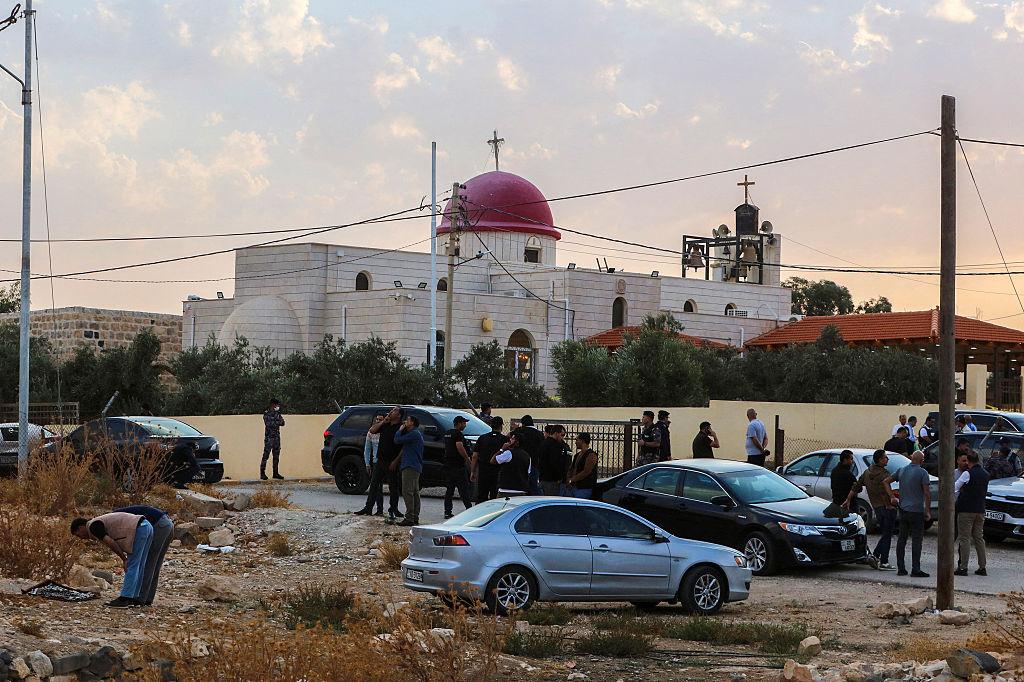
JORDAN: Three men have been sentenced to death by Jordan’s State Security Court for their involvement in a deadly attack on a Greek Orthodox church in the southern Karak Governorate that killed nine people during a funeral procession on October 23, 2026.
The verdict was announced on Sunday, November 15, following investigations into the attack at St. George’s Greek Orthodox Church in the village of Hammoud. The defendants were convicted of multiple terrorism-related offences, including carrying out attacks resulting in deaths, possessing weapons for terrorist purposes and promoting the ideology of a terrorist group.
The ruling represents a major judicial development in the Jordan church shooting case, which targeted members of the country’s Christian community. However, the sentences are subject to automatic review by Jordan’s Court of Cassation and should not yet be considered legally final.
According to the official Jordan News Agency Petra, the court issued the sentences after finding the three defendants guilty of the charges.
Three Men Convicted In Karak Church Attack
Jordan’s State Security Court convicted the three defendants on several serious charges connected to the October attack.
These included carrying out terrorist acts resulting in nine deaths in conspiracy, committing terrorist acts using weapons and ammunition on two counts, possessing weapons and ammunition with terrorist intent, and conspiring to carry out armed terrorist acts.
The court also found them guilty of promoting the ideology of a terrorist group.
One of the three defendants faced an additional conviction for providing funds to finance terrorist activities. The charge was brought under Jordan’s Anti-Money Laundering and Counter-Terrorism Financing Law No. 20 of 2021.
Authorities have not publicly identified the three men in the official announcement.
The convictions establish the court’s findings against the defendants. However, the ruling remains subject to the judicial review process prescribed under Jordanian law.
What Happened During The October 23 Church Shooting?
The Jordan church shooting took place on October 23, 2026, at St. George’s Greek Orthodox Church in Hammoud village, within the Karak Governorate.
The attack occurred during a funeral procession, when gunmen opened fire on people gathered at the church.
Nine people were killed, making the incident one of the deadliest attacks targeting Jordan’s Christian community in recent years.
Several other people were injured. However, the official court announcement by Petra did not provide a specific injury figure, so a definitive number should not be inferred from that statement.
The attack shocked the local community and prompted a major security response. The location of the incident was particularly significant because Karak is home to members of Jordan’s Christian minority, including Greek Orthodox communities.
The incident also raised concerns about the security of religious gatherings and the potential threat of extremist violence in the country.
Security Forces Arrested Three Suspects After An Armed Confrontation
Following the attack, Jordanian security authorities launched extensive searches and investigations to identify those responsible.
The Public Security Directorate announced on October 26 that the three primary suspects had been apprehended inside an abandoned house in Karak.
According to the official account, the suspects refused to surrender and engaged security forces before being arrested.
Their apprehension came three days after the church attack.
The investigation subsequently led to criminal proceedings before the State Security Court. The three defendants were ultimately convicted of several terrorism-related offences connected to the incident.
The October 26 arrests marked an important stage in the investigation, although the subsequent court proceedings were necessary to establish the defendants’ criminal responsibility.
Jordan Death Sentence Remains Subject To Automatic Appeal
The Jordan death sentence ruling does not mean that the executions can immediately be carried out.
Under the judicial procedure described in the official announcement, the State Security Court’s decision is subject to automatic appeal before the Court of Cassation.
This means the verdict must undergo further judicial review, even without relying solely on an appeal initiated by the defendants.
The Court of Cassation’s review is an important part of the legal process because it allows the higher court to examine the ruling under the applicable law.
The official announcement did not specify when the review would be completed or whether the sentences would ultimately be upheld.
It is therefore important to distinguish between the death sentences announced on November 15 and their eventual legal status following the review process.
Attack Raises Concerns Over Religious Security In Jordan
Jordan has a Muslim-majority population and a longstanding Christian community that includes Greek Orthodox congregations.
The attack at St. George’s Greek Orthodox Church brought renewed attention to the safety of religious minorities and the threat posed by extremist violence.
The Jordan church shooting also occurred amid broader security concerns across the Middle East. Jordan has previously faced regional military tensions, including reported missile threats involving American military installations on its territory.
Earlier developments involving missile attacks targeting Jordan illustrate the wider security pressures affecting the kingdom, although those incidents were separate from the church attack and no connection between them has been established.
The latest verdict demonstrates the judicial response to the October violence. The convictions cover multiple terrorism-related offences, while the additional financing conviction against one defendant highlights the financial dimension examined during the proceedings.
The Jordan death sentence decision is therefore a significant development in the investigation, but the automatic appeal process remains an important next step.
For the families of the nine victims and the affected community, the November 15 ruling marks a major stage in the case. The final legal outcome will depend on the review by Jordan’s Court of Cassation.
Further official announcements are expected to clarify the outcome of that process.




