
ASEAN Summit 2026: 7 Critical Issues as Manila Meeting Opens Amid Regional Tensions
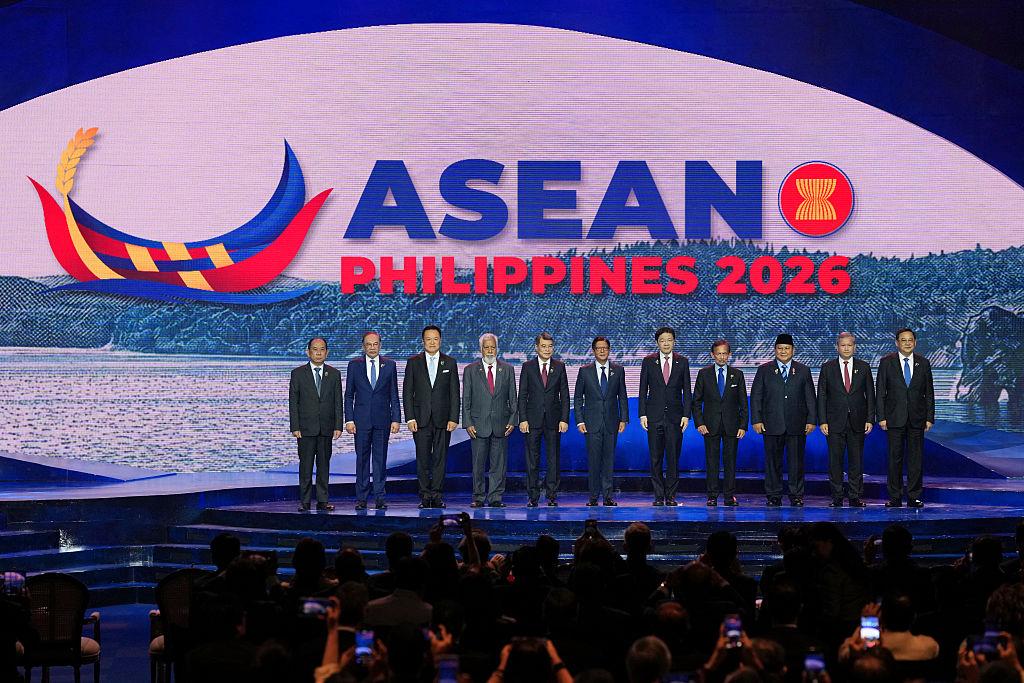
MANILA: ASEAN Summit 2026 opened in the Philippines on Sunday, November 15, bringing Southeast Asian leaders and international representatives together for three days of discussions on regional security, economic cooperation, energy resilience and geopolitical challenges.
The 49th Association of Southeast Asian Nations (ASEAN) Summit and Related Summits are taking place at the Philippine International Convention Center in Pasay City, with Philippine President Ferdinand R. Marcos Jr. chairing the meetings under the country’s 2026 ASEAN presidency.
The summit will run from November 15 to 17, with discussions expected to address the situation in Myanmar, maritime security, transnational crime, food security, migrant workers’ welfare and economic cooperation.
The gathering comes at a time of heightened international uncertainty, including the continuing Middle East crisis, geopolitical competition and concerns about the stability of global energy and supply chains.
According to the Philippine Information Agency, Philippine officials have identified food and energy security, regional stability and the fight against online scams as important issues expected to feature in the discussions.
49th ASEAN Summit Opens In Manila Under Philippine Chairmanship
The Philippines is hosting the Manila ASEAN meeting as the bloc’s chair for 2026, with the theme “Navigating Our Future, Together.”
President Marcos is leading the summit, which brings together representatives from ASEAN member states and international partners.
The opening programme on November 15 includes the formal opening ceremony, followed by plenary and retreat sessions involving ASEAN leaders.
The summit also provides an opportunity for the Philippines to review the progress made during its year-long chairmanship and discuss priorities for regional cooperation.
The related meetings will continue through November 17, when ASEAN leaders are scheduled to engage with major dialogue partners and participate in wider regional forums.
The Philippines is also scheduled to hand over the ASEAN chairmanship to Singapore at the conclusion of the summit.
Myanmar Crisis Remains A Major Regional Security Concern
The political and security situation in Myanmar remains one of the most significant issues facing ASEAN.
The bloc has continued to face difficulties implementing its Five-Point Consensus, which was adopted in April 2021 following the military takeover in Myanmar.
The agreement calls for an immediate end to violence, constructive dialogue among all parties, the appointment of an ASEAN special envoy, humanitarian assistance and a visit by the envoy to Myanmar to meet relevant stakeholders.
However, progress has remained limited, with continuing political instability and violence creating challenges for regional diplomacy.
The ASEAN Summit 2026 provides another opportunity for member states to review the implementation of the agreement and consider possible steps towards reducing tensions.
Myanmar is not participating through its political leadership at the summit. The country is represented by the Director-General of its Foreign Ministry’s ASEAN Affairs Department, according to the Philippine Department of Foreign Affairs.
South China Sea And Maritime Security Under Scrutiny
Maritime security is another important issue surrounding the Manila ASEAN meeting.
Disagreements over territorial claims and maritime activities in the South China Sea have continued to create tensions between China and several Southeast Asian countries, including the Philippines.
The Philippines has repeatedly raised concerns about activities in disputed waters, while China maintains extensive maritime claims that overlap with claims made by other countries.
ASEAN has been pursuing negotiations with China on a Code of Conduct for the South China Sea, intended to establish rules and mechanisms for managing maritime disputes and reducing the risk of confrontation.
The discussions are particularly important for countries that depend on regional waterways for international trade, fishing and energy transportation.
The Philippines has also identified the proposed establishment of an ASEAN Maritime Centre as an important subject for regional cooperation.
The initiative is expected to strengthen coordination on maritime-related issues among member states.
Energy Security And Food Supplies Gain Greater Importance
Energy security has become particularly important for Southeast Asian governments amid disruptions and uncertainty in international energy markets.
The continuing Middle East crisis has raised concerns about the reliability of oil and gas supplies, transportation routes and the potential impact of higher energy costs on regional economies.
Countries across Southeast Asia depend on international energy markets to varying degrees. Any prolonged disruption to supplies or shipping routes could affect electricity generation, manufacturing, transportation and household expenses.
Philippine officials have indicated that leaders are expected to consider additional measures to address energy-related challenges.
Food security is another priority. Governments are expected to discuss ways to strengthen food supply systems, improve regional resilience and reduce vulnerabilities arising from external disruptions.
These concerns give the ASEAN Summit 2026 an economic dimension beyond traditional diplomatic and security discussions.
Global Powers Prepare For Wider Diplomatic Engagements
The summit is also attracting international attention because of the participation of major global partners.
The related meetings scheduled for November 16 and 17 will involve dialogue with countries and organisations including Australia, China, India, Japan, South Korea, New Zealand, Russia, the United Nations and the United States.
The engagement provides an opportunity for ASEAN members to discuss cooperation with countries outside Southeast Asia on trade, security, investment and international developments.
India’s involvement is particularly relevant because New Delhi has maintained close diplomatic and economic engagement with Southeast Asian countries through its Act East Policy.
The wider diplomatic environment also reflects other international negotiations, including India’s diplomatic engagement with Ukraine and discussions involving major global powers.
Meanwhile, continuing international security tensions involving Iran and Bahrain demonstrate the wider challenges facing governments as they assess regional stability and strategic cooperation.
These developments are separate from ASEAN’s agenda but form part of the broader geopolitical environment in which the summit is taking place.
Online Scams And Transnational Crime Also On The Agenda
Beyond geopolitical disagreements, ASEAN leaders are expected to address problems that directly affect people and businesses across the region.
Transnational criminal networks, particularly those associated with online scams, have become an important concern for governments in Southeast Asia.
Fraud operations increasingly use digital platforms, cross-border networks and deceptive recruitment practices to target victims in different countries.
The problem creates challenges for law enforcement because investigations often involve multiple jurisdictions.
Philippine ASEAN spokesperson Dominic Xavier Imperial indicated that discussions on transnational crime and online scams are expected to produce further outcomes.
The issue is important because stronger cooperation between governments could improve information sharing, law enforcement coordination and efforts to protect victims.
Migrant workers’ welfare is another priority identified by the Philippines. Discussions are expected to consider additional measures to protect workers, particularly those vulnerable to exploitation and unsafe employment conditions.
ASEAN Economic Cooperation And Global Supply Chains
Economic cooperation remains central to the bloc’s wider agenda.
ASEAN countries have increasingly positioned themselves as important participants in international manufacturing, technology, logistics and investment networks.
However, geopolitical tensions, trade uncertainty and disruptions to international transportation continue to create risks for businesses operating across borders.
The Manila ASEAN meeting offers an opportunity for governments to strengthen economic coordination and explore cooperation in emerging sectors.
Digital economic development and green energy are among the areas receiving attention under the Philippines’ 2026 chairmanship.
Singapore’s Prime Minister Lawrence Wong has also highlighted the importance of digital and green economies, stronger energy security and regional integration ahead of the summit.
For Southeast Asian economies, improving cooperation in these sectors could support investment, strengthen infrastructure and improve resilience against external economic shocks.
However, the extent of any concrete agreements will depend on the decisions made by participating governments during the meetings.
What Happens Next At The Manila ASEAN Meeting?
The summit will continue through November 17, with several major diplomatic engagements scheduled during the remaining programme.
The November 16 and 17 meetings will include the ASEAN Plus One summits with dialogue partners.
On November 17, President Marcos is scheduled to convene the 29th ASEAN Plus Three Summit, involving ASEAN members alongside China, Japan and South Korea.
The 21st East Asia Summit will also take place, providing a platform for discussions on strategic, political and economic issues affecting the wider region.
The programme is scheduled to conclude with an ASEAN-United States Special Summit before the Philippines formally transfers the ASEAN chairmanship to Singapore.
The ASEAN Summit 2026 is therefore an important opportunity for regional governments to demonstrate whether diplomatic discussions can translate into practical cooperation.
While the immediate agenda covers security, energy, trade and humanitarian concerns, the longer-term significance of the Manila ASEAN meeting will depend on the implementation of decisions and commitments made by participating countries.
For ASEAN, maintaining regional unity while managing differences among member states and major international partners remains one of its biggest challenges.




