Delhi Wakes to Thick Smog as Post-Diwali Pollution Worsens
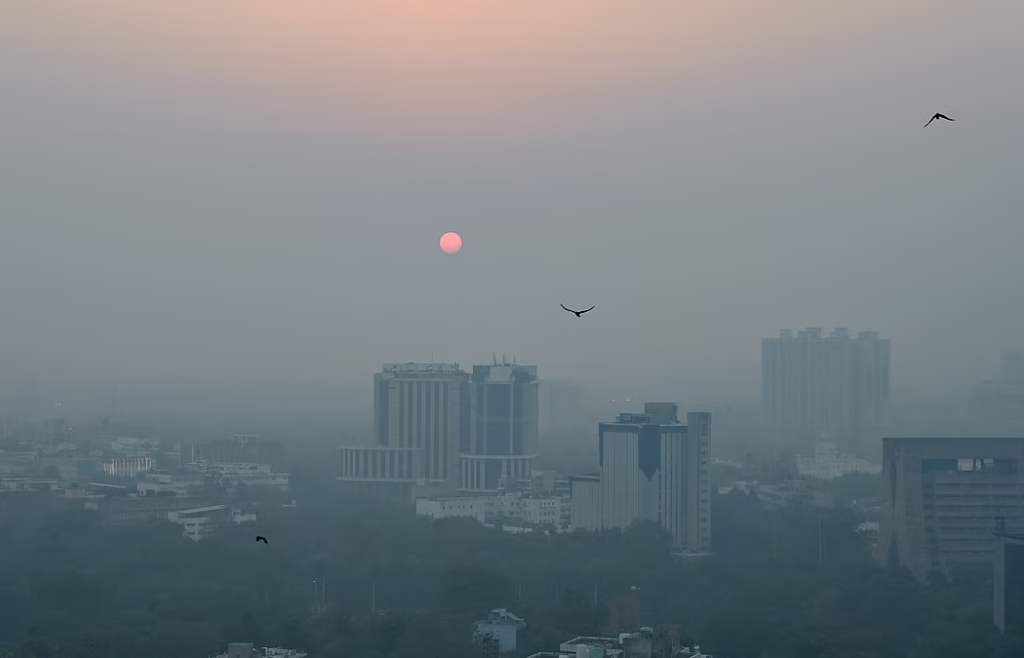
NEW DELHI, November 9, 2026 — Delhi woke to a thick layer of smog on Monday morning after Diwali celebrations brought another round of firecracker emissions into an already heavily polluted atmosphere. The city’s Air Quality Index (AQI) stood at 370 at 9 am, placing it in the ‘very poor’ category, according to data reported by Reuters from the Central Pollution Control Board (CPCB).
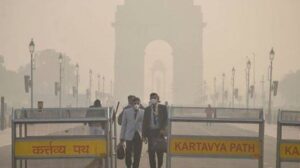
Several neighbourhoods recorded readings above 400, the threshold for the ‘severe’ category. Smog reduced visibility across parts of the capital, including around India Gate, as pollution levels remained elevated following Sunday’s celebrations.
The deterioration followed widespread firecracker use despite restrictions imposed for the festival. The Supreme Court had permitted only certified green firecrackers during specified hours over the Diwali weekend. However, fireworks were reported continuing late into Sunday night, outside the limited periods allowed by the court.
Delhi’s AQI remains in the ‘very poor’ category
The CPCB recorded an AQI of 368 in Delhi at 7 am on Monday, according to a report published by the government’s News On AIR service. Reuters reported a reading of 370 at 9 am.
Both readings placed the capital’s air quality in the ‘very poor’ category, which covers AQI values between 301 and 400 under India’s national classification system. Several monitoring locations had already moved into the ‘severe’ range.
The previous day’s figures showed that pollution was already high before the full effect of the celebrations became apparent.
Delhi’s average AQI settled at 376 on Sunday, compared with 369 on Saturday, according to reporting by Hindustan Times based on CPCB data. At 10 pm on Diwali night, 20 of the 59 monitoring stations reporting data registered readings in the severe category.
Sonia Vihar recorded an AQI of 463, followed by Jahangirpuri at 450. Other areas reporting severe pollution included Burari, Alipur and Punjabi Bagh.
The readings varied across monitoring stations, reflecting differences in local pollution levels. The citywide average therefore does not fully represent conditions in every neighbourhood.
Fireworks continued despite restrictions
The Supreme Court had allowed a limited relaxation of the restrictions on firecrackers for Diwali.
Under the arrangement, only certified green firecrackers could be used in Delhi-NCR on November 7 and 8, between 6 am and 7 am and again between 8 pm and 10 pm. The complete ban was scheduled to return from November 9.
Despite those conditions, firecracker activity continued across several parts of Delhi on Sunday evening. Reuters reported that residents said fireworks were still being set off late into the night.
The Associated Press also reported widespread firecracker use during the celebrations, with smoke and fine particulate matter adding to the existing pollution burden.
The temporary relaxation had been intended to permit a limited form of celebration while restricting the use of conventional firecrackers. Green crackers are designed to produce fewer emissions, but they are not pollution-free. They still release particulate matter and other pollutants into the atmosphere.
The return of the complete ban on November 9 means the permitted window for fireworks has ended.
Firecrackers add to an existing pollution problem
Diwali celebrations contributed to Delhi’s pollution, but they were not the only source of the city’s deteriorating air quality.
The capital faces a recurring pollution problem during the winter months. Vehicle emissions, industrial activity, construction dust, and smoke from agricultural residue burning in neighbouring states all contribute to the concentration of pollutants.
Crop-residue burning in Punjab and Haryana is a particular concern during the post-harvest period. Smoke from agricultural fires can travel towards Delhi, adding to emissions produced within the city.
Weather conditions also influence how quickly pollution disperses. Cooler temperatures, low wind speeds and stagnant atmospheric conditions can trap pollutants close to the ground, allowing smog to accumulate.
The timing of Diwali celebrations therefore added another source of emissions during a period when Delhi was already struggling with poor air quality.
The Associated Press reported that the wider Delhi metropolitan region, home to more than 30 million people, regularly experiences severe pollution during winter.
Authorities face pressure as pollution restrictions continue
Delhi had already introduced pollution-control measures before Diwali. Reuters reported that restrictions under the Graded Response Action Plan (GRAP) were imposed on Friday, November 6, including directions for schools to conduct online classes.
The Commission for Air Quality Management (CAQM) also listed Stage III of GRAP as active in its public information on November 9.
These measures are intended to reduce emissions during periods of worsening air quality. They operate alongside restrictions on construction activity, diesel generators and other pollution sources.
However, the continued deterioration after Diwali illustrates the difficulty of managing pollution when several sources contribute simultaneously.
The Associated Press quoted Shweta Narayan of the Global Climate and Health Alliance, who described the government’s response to the recurring crisis as temporary and reactive. She argued that longer-term measures are needed rather than relying primarily on emergency interventions.
Health concerns rise as smog settles over the capital
The deterioration in air quality has renewed concerns about exposure to fine particulate matter, particularly PM2.5.
These particles are small enough to penetrate deep into the respiratory system. Exposure can aggravate existing respiratory conditions and increase health risks, especially for children, older people and individuals with heart or lung disease.
Residents interviewed by the Associated Press reported throat irritation and itchy eyes as the smog intensified. The agency also documented reduced visibility across parts of the capital.
The health impact can extend beyond the hours when fireworks are being used. Pollutants that accumulate under stagnant weather conditions may remain in the air after celebrations have ended.
A recurring challenge for Delhi
The post-Diwali deterioration has again exposed the limits of short-term restrictions in dealing with Delhi’s seasonal pollution.
Firecracker controls can reduce one source of emissions during the festival, but they cannot address the wider combination of transport pollution, industrial emissions, construction dust and agricultural burning.
The return of the complete firecracker ban on November 9 removes the temporary permission granted for the Diwali weekend. The immediate challenge is whether weather conditions and pollution-control measures will allow air quality to improve over the coming days.
For now, Delhi remains in the very poor category, with several neighbourhoods experiencing severe pollution.
This story may be updated as new official air-quality data and government announcements become available.