Camera Trap Arrests – 5 Key Details as Forest Officials Catch Two Armed Suspects
HIMACHAL PRADESH: Himachal Pradesh forest news has drawn attention after 4G-enabled camera traps helped forest officials apprehend two people allegedly carrying loaded firearms in the Paonta Sahib reserve forest area of Sirmaur district on Sunday night, November 22.
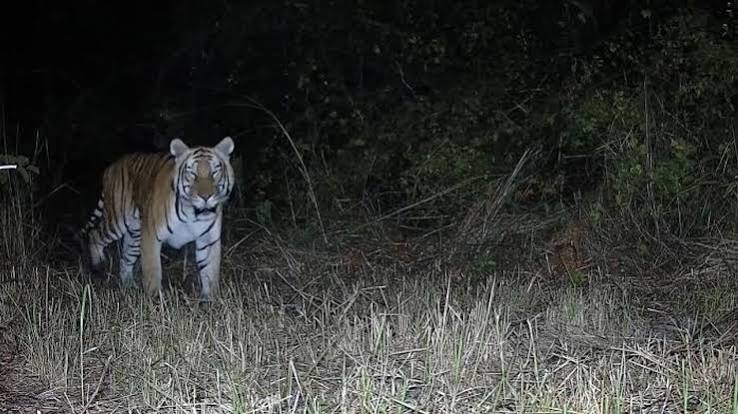
The cameras, originally installed to monitor the movement of a tigress spotted in the region, transmitted real-time images of the suspects to forest personnel. The alerts enabled officials to identify suspicious activity and reach the location, leading to the apprehension of both individuals.
According to The Indian Express, the two suspects included an adult man and his juvenile nephew. Officials also reported that they were carrying equipment allegedly intended for laying traps.
The Forest Department subsequently registered a First Information Report (FIR) under provisions of the Wildlife (Protection) Act, 1972.
The incident has highlighted how technology-based surveillance is becoming an important tool in protecting wildlife habitats and detecting suspected illegal activities in forest areas.
How Camera Traps Helped Forest Officials Catch The Suspects
The operation was made possible by 4G-enabled camera traps installed across the Paonta Sahib forest area.
Unlike conventional camera traps, which generally store photographs and videos for officials to retrieve later, these devices use cellular connectivity to transmit images directly to authorised personnel when movement is detected.
This allows forest officials to monitor selected locations without having to remain physically present near every surveillance point.
In this case, the cameras detected the movement of two individuals inside the forest and transmitted photographs to forest personnel’s mobile phones.
The images alerted officials, who responded to the information and apprehended the suspects.
The camera trap arrests demonstrate how remote surveillance can help forest departments respond more quickly to suspicious activity, particularly in areas where continuous physical monitoring is difficult.
Why Were Camera Traps Installed In Paonta Sahib Forest?
The surveillance system was originally introduced following the sighting of a tigress in the Paonta Sahib forest area in June 2026.
The appearance of the big cat attracted considerable attention because forest officials were investigating whether it could be the same tigress that had remained untraced in Uttarakhand’s Rajaji Tiger Reserve.
A camera trap installed in the Khara block of the Paonta Sahib forest range captured photographic evidence of a tiger on June 14.
The sighting prompted authorities to increase monitoring activities and coordinate with wildlife officials in neighbouring Uttarakhand.
The region’s forest landscape is particularly important because it connects habitats across Himachal Pradesh and neighbouring states.
Additional camera traps were subsequently deployed to monitor wildlife movements and establish a clearer picture of animal activity in the area.
The equipment that helped officials identify the two suspects was therefore part of a wider wildlife-monitoring effort rather than a surveillance operation originally designed to investigate the individuals.
Who Were The Two People Apprehended By Forest Officials?
According to the available reporting, the two individuals were an adult man identified as Dinesh Kumar and his juvenile nephew.
The adult was reported to be a resident of Sarah village and employed as a security guard at the Indian Institute of Management (IIM), Dhaula Kuan.
Forest officials said the individuals were allegedly carrying loaded firearms and equipment used for laying traps.
The presence of these items prompted further action by the Forest Department.
However, the allegations should be distinguished from a proven offence. The apprehension of the suspects and registration of an FIR do not establish guilt.
The legal proceedings and investigation will determine the circumstances surrounding their presence in the forest and the intended use of the equipment they were allegedly carrying.
FIR Registered Under Wildlife Protection Act, 1972
Following the incident, the Forest Department registered an FIR against the apprehended individuals under provisions of the Wildlife (Protection) Act, 1972.
The legislation provides the legal framework for protecting wild animals, birds and plants, while regulating activities that can threaten wildlife and their habitats.
Hunting and certain activities involving protected wildlife are prohibited or restricted under the Act, depending on the applicable provisions and circumstances.
The registration of the FIR means the authorities have initiated legal proceedings in connection with the incident.
However, the exact charges, subsequent investigation findings and any court determination should not be assumed before official confirmation.
The case also highlights the importance of monitoring forest areas where wildlife sightings have increased and where unauthorised human activity could potentially threaten animals.
How Technology Is Changing Wildlife Protection
The Himachal Pradesh forest news incident offers an example of how technology can strengthen conventional forest surveillance.
Forest departments have traditionally depended on patrol teams, informants, physical inspection and camera traps that require personnel to visit individual locations to collect recorded information.
Connected surveillance equipment provides another option by transmitting photographs and alerts remotely.
This can be particularly useful in large forest landscapes, where difficult terrain, vegetation and limited accessibility can make continuous monitoring challenging.
The camera trap arrests also demonstrate that equipment introduced primarily for wildlife monitoring can help officials detect suspicious human movement.
However, camera traps are not a substitute for physical patrols, investigation or legal enforcement. Images need to be assessed by trained personnel, and any suspected offence must be investigated through the appropriate legal process.
The effectiveness of such systems also depends on reliable connectivity, proper equipment placement and timely responses from forest personnel.
What Happens Next?
The apprehension of the two individuals and registration of the FIR mark an important development in the case.
Authorities will need to establish the circumstances surrounding the suspects’ presence in the reserve forest, examine the recovered items and determine whether any wildlife-related offence was committed.
The incident has also renewed attention on the role of modern surveillance in protecting sensitive forest habitats.
For the Forest Department, the immediate priority remains monitoring wildlife movement and preventing activities that could threaten animals in the region.
The successful use of 4G-enabled cameras in this operation demonstrates how real-time alerts can improve the ability of forest personnel to respond to suspicious activity.
As wildlife monitoring continues in Paonta Sahib, technology-assisted surveillance could remain an important part of conservation and forest protection efforts.