Road Sweeper Delays Raise Alarm as 59 Machines Miss Winter Deadline Amid Pollution Crisis
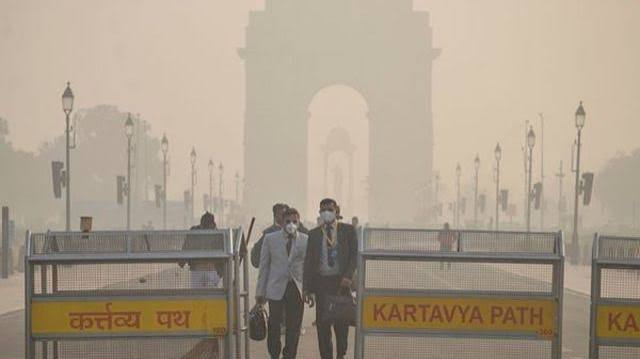
NEW DELHI: Delhi air pollution news has drawn fresh attention to the capital’s pollution-control preparations after an investigation revealed that the delivery of 59 out of 70 newly ordered mechanical road sweepers could be delayed until December 2026 or January 2027.
The Municipal Corporation of Delhi (MCD) had planned to expand its fleet of electric and compressed natural gas (CNG) road-sweeping machines ahead of the winter pollution season. However, shipping disruptions, procurement delays and equipment-related challenges have affected the timeline.
According to an investigation by The Indian Express published on November 24, only 11 of the additional 70 machines are expected to be deployed before December.
The delay has raised concerns because road dust is a significant contributor to Delhi’s particulate pollution, particularly during the winter months when unfavourable weather conditions can prevent pollutants from dispersing.
The development also comes amid renewed government scrutiny of pollution-control preparations across Delhi-NCR.
Delhi Road Sweeping Machines: Why The Delivery Is Delayed
The MCD identified an urgent requirement for additional mechanised road sweepers during a high-level meeting on December 17, 2025.
Officials had identified the need for at least 88 additional machines to improve road-dust management.
However, procurement moved slowly. Tenders covering 70 machines, worth approximately ₹924 crore, were floated on April 2, 2026. Work orders were subsequently issued to three companies on August 24 and 25.
The delivery schedule has now become a concern as the capital enters its peak pollution season.
Of the 70 machines ordered, 59 are expected to arrive in two batches, with deliveries extending into December and January.
MCD Commissioner Sanjeev Khirwar attributed the delay partly to disruptions caused by the West Asia crisis, which affected international shipping schedules.
The contractual deadline for completing the entire procurement is March 2027.
505 Machines Needed, But Delhi Still Faces A Major Shortfall
The scale of the problem becomes clearer when the city’s overall requirements are considered.
In January 2026, the Centre recommended a fleet of 505 mechanical road-sweeping machines for Delhi, based on the length and width of its road network.
At that time, the city had only 76 machines, leaving a shortfall of 429.
The latest MCD figures cited in the investigation show that its existing fleet consists of 66 machines, including 40 large machines and 26 smaller ones.
These figures relate to different reporting periods and administrative coverage, so they should not be treated as directly interchangeable.
The investigation also found that Delhi’s existing machines had covered only around 23% of the city’s motorable roads over the preceding year.
This raises questions about whether the available equipment can provide sufficient coverage during periods of worsening air quality.
The wider Delhi road sweeping machines shortage is therefore not simply a procurement issue. It also concerns the ability of municipal agencies to maintain regular cleaning schedules across the capital.
55 Electric And 15 CNG Machines Included In New Order
The additional procurement includes 55 electric mechanical road sweepers and 15 CNG-powered machines.
Three companies received the contracts:
-
GA Infra Pvt Ltd, in a consortium with VN Engineering.
-
Lion Services Ltd.
-
JS Enviro Services Pvt Ltd.
The machines are being sourced from international manufacturers, including Tenax and Dulevo of Italy and Boschung of Switzerland.
According to the procurement details, the electric machines are intended to improve mechanised cleaning, while the larger CNG-powered models will provide additional capacity for wider roads.
The new equipment also includes improved suction and filtration arrangements designed to collect dust and debris while reducing the risk of particles returning to the atmosphere.
However, adapting imported equipment to Delhi’s road conditions has presented additional challenges.
Officials have indicated that road dust in India varies considerably in composition, including the presence of extremely fine particles. Manufacturers have therefore been asked to make modifications to improve performance on Indian roads.
Government Reviews Pollution-Control Measures
The delays come amid increased scrutiny of pollution-control preparations by the Centre.
On November 19, a high-level government meeting called for the augmentation of mechanised road-sweeping capacity on a war footing.
Authorities were also directed to ensure full utilisation of existing machines, including through double-shift operations during winter.
GPS-enabled monitoring was another important measure discussed to improve oversight of road-cleaning operations.
The wider review followed earlier directions to Delhi and other NCR authorities to strengthen pollution-control implementation rather than rely exclusively on planning and procurement announcements.
These developments place additional responsibility on municipal agencies to demonstrate measurable progress on the ground.
MCD Considers Hiring Additional Machines To Address The Gap
To manage the immediate shortage, the MCD is considering hiring nine additional mechanical road sweepers from a company based in Telangana.
It is also considering extending the operating hours of existing machines from eight to 12 hours daily.
These arrangements could help improve road-cleaning coverage while the remaining machines are delivered.
However, temporary hiring and longer operating schedules may not fully resolve the underlying shortage, particularly when multiple municipal agencies must cover thousands of kilometres of roads.
The effectiveness of these arrangements will depend on the number of machines actually deployed, the roads covered and whether the equipment operates according to prescribed standards.
Why Road Dust Matters For Delhi’s Air Quality
Road dust is an important contributor to particulate pollution in Delhi.
Vehicles travelling over dusty roads can lift settled particles back into the air. Construction activity, uncovered soil, damaged road surfaces and inadequate cleaning can add to the problem.
Fine particulate matter, particularly PM10 and PM2.5, is associated with respiratory and cardiovascular health risks.
Earlier Delhi air pollution developments highlighted the seriousness of the capital’s deteriorating air quality, with several monitoring stations recording severe-category readings.
Mechanised sweeping is intended to reduce the accumulation and resuspension of road dust. However, it is only one component of a wider pollution-control strategy.
The machines cannot independently address emissions from vehicles, industries, construction activities or agricultural residue burning.
What Other Pollution-Control Measures Are Needed?
The road-sweeper procurement issue is part of a larger challenge facing Delhi and neighbouring NCR cities.
The Supreme Court has also examined vehicle emissions and enforcement measures across the region.
Its scrutiny of Delhi’s pollution-control measures has highlighted the need for stronger coordination between Delhi, Haryana, Rajasthan and Uttar Pradesh.
Other important interventions include:
-
Regular mechanised cleaning of major roads and smaller streets.
-
Paving exposed roadside areas to reduce dust generation.
-
Strict monitoring of construction and demolition activities.
-
Enforcement of vehicle-emission standards.
-
Better management of industrial emissions and waste burning.
-
GPS-based monitoring of road-sweeping operations.
The importance of sustained municipal action is also evident from Lucknow’s clean-air initiatives, which include electric mechanised sweepers, road paving and improved waste management.
What Happens Next?
The immediate challenge for the MCD is to ensure that the promised machines reach Delhi and become operational before the contractual deadline.
With only a limited number expected to enter service before December, the remaining procurement schedule will be important for assessing the effectiveness of the city’s winter pollution preparations.
The government has called for faster implementation and better monitoring, but the impact will ultimately depend on actual deployment and regular operation.
The latest Delhi air pollution news highlights a gap between the city’s identified requirements and its available pollution-control infrastructure.
Unless existing machines are used more efficiently and new equipment arrives according to the revised schedule, road-dust management could remain a significant challenge during the winter season.
For residents, the Delhi road sweeping machines delay is another reminder that controlling air pollution requires consistent action throughout the year, rather than emergency measures after air quality has already deteriorated.