UP APO Exam Result 2025 Quashed as Allahabad High Court Orders Fresh Mains Examination
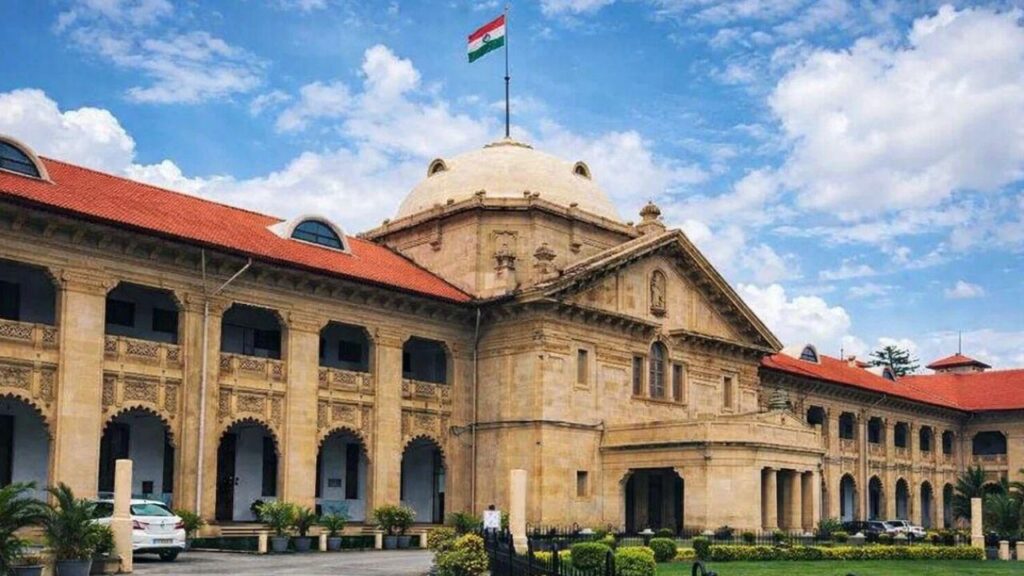
PRAYAGRAJ: The UP APO exam result 2025 has been quashed by the Allahabad High Court, which has directed the Uttar Pradesh Public Service Commission (UPPSC) to revise the preliminary examination results and conduct the Mains examination afresh. The November 26, 2026, ruling concerns the exclusion of meritorious candidates from reserved categories from the open or unreserved category during the recruitment process.
Justice Manish Kumar Nigam delivered the judgment while allowing a petition filed by Pankaj Verma and two other candidates. The court held that candidates belonging to Scheduled Castes (SC) and Other Backward Classes (OBC) who score above the unreserved-category cut-off cannot be excluded from the open category merely because of their social classification.
The decision also invalidates a UPPSC office memorandum issued on January 9, 2020, which restricted the adjustment of meritorious reserved-category candidates into the unreserved pool until the final selection stage.
Why Did The Allahabad High Court Quash The UP APO Preliminary Result?
The controversy arose from the way UPPSC prepared the preliminary examination merit lists for the Assistant Prosecution Officer recruitment.
The recruitment notification was issued on September 16, 2025, for 182 vacancies. These included:
| Category | Vacancies |
|---|---|
| Unreserved | 27 |
| Scheduled Caste | 67 |
| Scheduled Tribe | 9 |
| Other Backward Classes | 61 |
| Economically Weaker Sections | 18 |
| Total | 182 |
The preliminary examination took place on March 22, 2026, and UPPSC declared its results on April 30, 2026.
A total of 2,856 candidates were shortlisted for the Mains examination, representing 15 times the number of advertised vacancies.
However, the petitioners challenged the selection methodology, arguing that reserved-category candidates who had secured marks above the unreserved cut-off were not included in the open-category list.
They argued that the commission’s approach restricted their opportunities despite their performance being sufficient to qualify under the unreserved merit standard.
364 Reserved-Category Candidates Scored Above The Unreserved Cut-Off
One of the most important findings emerged from supplementary affidavits submitted by UPPSC during the court proceedings.
The documents revealed that 321 OBC candidates and 43 SC candidates had scored higher than the last shortlisted candidate in the unreserved category.
Together, these represented 364 candidates who had achieved marks above the relevant unreserved cut-off.
However, the commission did not move these candidates into the open-category pool.
Instead, it retained them within their respective reserved-category lists, following its January 9, 2020, office memorandum.
This arrangement affected the preliminary selection process because an equal number of lower-ranked reserved-category candidates were able to qualify for the Mains examination in their place.
The petitioners argued that this approach effectively treated the unreserved category as a separate reservation exclusively for general-category candidates.
The Allahabad High Court APO verdict addressed this issue by examining whether the commission could restrict the open category in this manner.
Court Says Open Category Must Remain Accessible To All
Justice Manish Kumar Nigam held that the open or unreserved category is not exclusively meant for candidates belonging to the general category.
Instead, it is available to every candidate who qualifies on merit, irrespective of their reserved-category status.
The court observed that excluding a reserved-category candidate who has scored above the general-category cut-off would amount to discrimination.
It referred to Articles 14 and 16 of the Constitution, which guarantee equality before the law and equality of opportunity in public employment.
The judgment explained that the benefit of merit-based selection cannot be denied simply because a candidate belongs to a reserved community.
The court also emphasised that the definition of the open category cannot change between different stages of the same recruitment process.
If reserved-category candidates are eligible for consideration in the open category at the final selection stage, the commission cannot automatically exclude them during the preliminary and written examination stages.
This principle formed the central basis of the Allahabad High Court APO verdict.
UPPSC Office Memorandum Dated January 9, 2020, Struck Down
Another significant part of the judgment concerns the legal validity of UPPSC’s January 9, 2020, office memorandum.
The memorandum restricted the adjustment of meritorious reserved-category candidates into the unreserved pool until the final selection stage.
UPPSC relied on this provision while preparing the preliminary examination merit lists.
However, the High Court held that the commission did not possess the legislative competence to introduce such a reservation-policy directive independently.
The court examined Article 320(4) of the Constitution and the relevant provisions of the Uttar Pradesh Public Services (Reservation for Scheduled Castes, Scheduled Tribes and Other Backward Classes) Act, 1994.
It concluded that the commission could not independently establish a policy restricting the application of merit-based migration between categories without the necessary legal authority.
Consequently, the January 9, 2020, memorandum was struck down.
The ruling also clarified that reservation provisions must operate within the constitutional and statutory framework established by the appropriate legislative and government authorities.
What Did UPPSC And The State Government Argue?
During the proceedings, UPPSC and the Uttar Pradesh government opposed the petitioners’ interpretation.
Their representatives argued that the preliminary examination was only a screening stage intended to shortlist candidates for the next phase.
Since preliminary examination marks were not added to the final merit list, they maintained that the benefit of migration into the unreserved category should apply only during final selection after the interviews.
They also argued that candidates who had participated in the recruitment process under the advertised conditions could not subsequently challenge those conditions.
However, the High Court rejected these submissions.
It held that the open category must remain accessible on merit throughout the selection process rather than becoming restricted to general-category candidates during particular examination stages.
The court also found that the commission could not rely on an office memorandum lacking the required legal foundation to justify the exclusion.
Fresh UP APO Mains Examination Ordered: What Happens Next?
The immediate consequence of the judgment is that the existing preliminary examination result cannot continue to serve as the basis for the recruitment process in its previous form.
The court directed UPPSC to revise the preliminary results by applying the correct principles of merit-based migration.
The commission must then conduct the Mains examination afresh using the revised results and continue the recruitment process accordingly.
The earlier Mains examination was conducted between June 28 and June 30, 2026. Interviews were also underway in October when the High Court had stayed the declaration of the final results through an interim order dated September 28, 2026.
The latest judgment changes the selection process by requiring a fresh examination stage based on the corrected preliminary merit list.
Candidates should therefore await an official notification from UPPSC regarding the revised results, examination schedule and subsequent recruitment arrangements.
The decision is particularly important for candidates preparing for government examinations in Uttar Pradesh, as it addresses how reserved-category merit must be considered during multi-stage recruitment.
Other recruitment developments, including the scrutiny of eligibility documents in the Bihar teacher recruitment case, have also highlighted the importance of applying recruitment and reservation rules correctly.
Similarly, candidates following examination and admission processes can refer to the latest NEET PG 2026 Round 2 result developments for updates on merit lists, category-based allocation and selection procedures.
The legal proceedings also come amid wider judicial scrutiny of administrative decisions in Uttar Pradesh, including the IIT Kanpur professor case, which involved an Allahabad High Court order subsequently challenged before the Supreme Court.
Why The Judgment Matters For Government Job Aspirants
The UP APO exam result 2025 decision establishes an important distinction between reserved-category representation and open-category merit.
An unreserved vacancy is not a position reserved exclusively for candidates from the general category. Candidates from reserved communities can also qualify for these positions if they meet the applicable merit criteria.
The judgment is therefore relevant beyond the immediate APO recruitment dispute.
It highlights the importance of preparing examination merit lists in accordance with constitutional equality principles and applicable reservation laws.
For UPPSC, the next responsibility is to implement the court’s directions and ensure that the revised preliminary results correctly reflect candidates’ merit and category eligibility.
For affected candidates, the fresh Mains examination will provide another opportunity to participate in the recruitment process under the revised selection framework.
The final outcome of the APO recruitment will depend on the commission’s implementation of the judgment and completion of the remaining selection stages.