BANGLADESHI NATIONALS ARRESTED IN INDIA: 5 Major Details as Aligarh Police Seize Aadhaar, PAN and Voter IDs
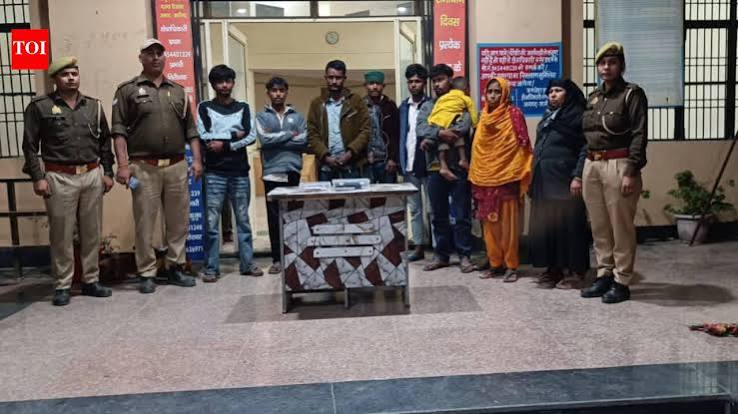
ALIGARH: Bangladeshi nationals arrested in India have come under investigation after Uttar Pradesh Police detained 12 suspected Bangladeshi nationals in Aligarh over allegations of illegal entry and the alleged use of fraudulently obtained Indian identity documents.
The operation was conducted by Rorawar police following intelligence inputs. Police said they recovered Aadhaar cards, PAN cards, voter ID cards, bank-related documents and Employees’ Provident Fund (EPFO) cards from the individuals. Five mobile phones were also seized.
According to Aligarh Senior Superintendent of Police (SSP) Aditya Bansal, an examination of the seized phones revealed calls and messages exchanged with relatives in Bangladesh.
The investigation is now examining how the individuals allegedly entered India, how they obtained Indian identity documents and whether other people helped them acquire the documents or establish their identities.
The arrests have brought renewed attention to document verification, illegal cross-border entry and the investigation of suspected identity fraud in Uttar Pradesh.
1. Twelve Suspected Bangladeshi Nationals Detained In Aligarh
The arrests took place on Wednesday, November 25, following information received by the Local Intelligence Unit (LIU) and local police.
The operation was conducted in Aligarh’s Rorawar police station area. Investigators subsequently questioned the individuals and examined the circumstances surrounding their alleged entry into India.
According to the police account reported by The Times of India, the individuals reportedly originated from the Gaibandha district of Bangladesh and had been living in Aligarh.
Police identified a woman named Amina Begum during the investigation. According to the account provided by investigators, she had allegedly entered India without a passport or visa in 1992 with her husband and family.
Police said information obtained during her questioning helped investigators locate other individuals connected to her family and relatives.
The operation subsequently led to the detention of 12 people.
Authorities are examining their individual backgrounds, residential details and the circumstances under which they allegedly entered the country.
2. Aadhaar, PAN And Voter ID Documents Recovered
One of the most significant aspects of the investigation is the recovery of Indian identity and financial documents.
Police seized several documents from the individuals, including:
-
10 Aadhaar cards.
-
Two PAN cards.
-
One voter ID card.
-
One Ayushman Bharat card.
-
One e-Shram card.
-
One EPFO-related card.
-
Bank-related documents and an ATM card.
-
A ration card.
-
Five mobile phones.
The recovery of these documents has raised questions about how the individuals allegedly obtained Indian identity records despite police claims that they had entered the country illegally.
However, the possession of an identity document alone does not establish how it was obtained or whether it is fraudulent. The authorities are required to verify the records with the departments responsible for issuing them.
Police are examining the documents and investigating whether false names, residential addresses or other information were used during the application process.
The investigation is also examining whether any intermediaries helped the individuals obtain identity documents or open financial accounts.
3. Mobile Phones Under Investigation For Bangladesh Connections
Apart from the identity documents, investigators seized five mobile phones during the operation.
SSP Aditya Bansal said the examination of the devices revealed evidence of calls and messages exchanged with relatives living in Bangladesh.
These communications are among the materials being examined as part of the investigation into the individuals’ backgrounds and alleged cross-border movement.
Police are also trying to establish how the individuals entered India and whether anyone facilitated their movement across the international border.
The presence of communication records with relatives in another country is relevant to the investigation, but it does not independently establish the circumstances of illegal entry.
Investigators will need to examine the available records alongside travel history, identity documents, statements and other evidence.
The authorities are also investigating whether the alleged procurement of Indian documents involved a wider network.
4. Police Investigate How Indian Identity Documents Were Obtained
A major question emerging from the Bangladeshi nationals arrested in India case concerns the process through which the recovered documents were allegedly obtained.
Indian identity documents serve different administrative purposes.
Aadhaar is used as proof of identity and is subject to eligibility requirements. PAN is primarily used for tax-related identification, while voter identification is connected to electoral registration.
The recovery of these documents has therefore prompted investigators to examine whether the application and verification procedures were misused.
Police are checking the authenticity of the recovered documents and seeking information about the addresses and details associated with them.
Investigators are also attempting to identify anyone who may have assisted in preparing or obtaining the documents.
The inquiry is not limited to the individuals detained during the operation. Police are examining whether other people could have helped facilitate the alleged entry or documentation process.
Similar questions about the verification of official documents have emerged in other investigations. An earlier case involving fake domicile certificates in Bihar also highlighted the importance of independently checking documents before granting government benefits or appointments.
However, the two cases involve different circumstances and should not be treated as evidence of a common network.
5. Legal Proceedings And Further Investigation Underway
Police have registered a case against the individuals under relevant provisions of the Bharatiya Nyaya Sanhita (BNS) and the Immigration and Foreigners Act, 2025.
The authorities are proceeding with the legal process while examining the seized documents and electronic evidence.
The investigation is expected to focus on several questions:
-
How did the individuals allegedly enter India?
-
Which routes were used to cross the international border?
-
How were Aadhaar, PAN and voter ID documents obtained?
-
Were false names or addresses used during registration?
-
Did any intermediaries assist in obtaining the documents?
-
Are other individuals involved in the alleged documentation process?
The police are also examining the possibility of identifying additional people connected to the case.
Importantly, the allegations have not yet been established through a final judicial determination. The authenticity of the seized documents and the alleged roles of other individuals remain subject to investigation.
The distinction between detention, arrest, investigation and conviction is important when reporting cases involving alleged illegal immigration.
Why The Case Matters For Identity Verification And Border Security
The illegal immigration India news story has drawn attention to two connected issues: preventing unauthorised cross-border entry and ensuring that identity documents are issued through proper verification procedures.
The recovery of multiple identity and financial documents makes the verification process particularly important. Investigators will need to establish whether the documents were genuine, whether they were obtained through misrepresentation and whether any officials or private intermediaries were involved.
The case also highlights the importance of coordination between local police, intelligence units and government departments responsible for maintaining identity and financial records.
For now, the investigation remains focused on establishing the circumstances of the alleged entry, verifying the seized documents and identifying any individuals who may have facilitated the process.
The outcome will depend on the evidence collected and the findings of the ongoing investigation.