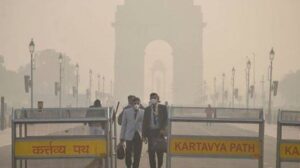
DELHI AIR POLLUTION 2026: 5 Alarming Updates as AQI Crosses 400 in Multiple Areas
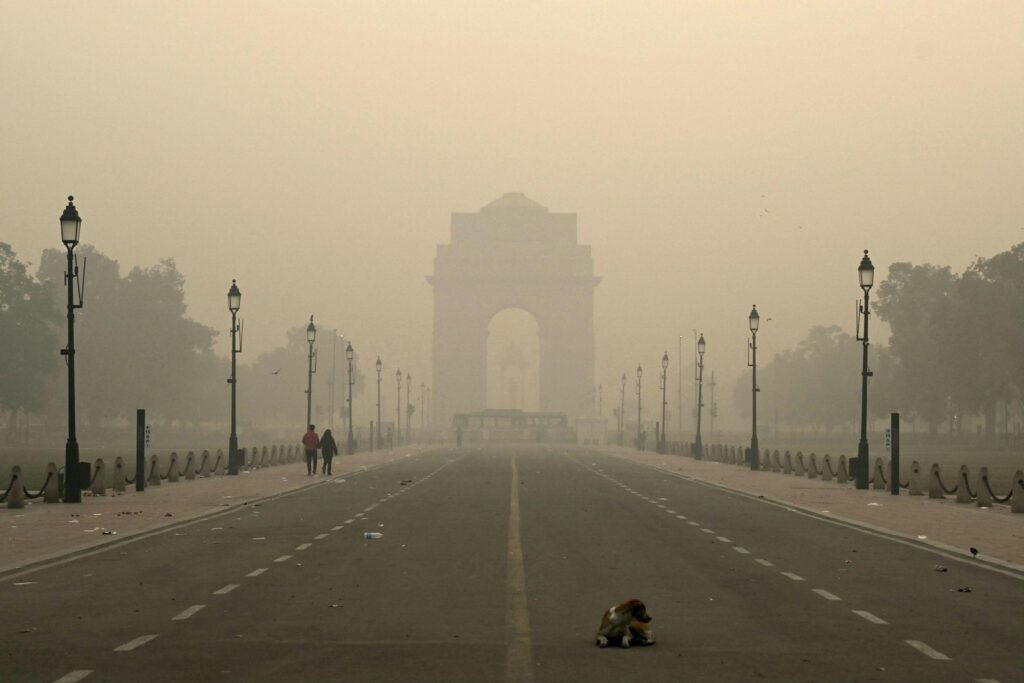
NEW DELHI: Delhi AQI today remained in the ‘very poor’ category on Sunday, November 15, 2026, as pollution levels increased across several parts of the national capital. The city’s overall Air Quality Index (AQI) stood at 350 in the morning, while seven of its 54 monitoring stations recorded readings in the severe category, according to the Sameer app.
IIT Delhi registered the highest reading at 428, followed by ITO at 414. The latest figures have renewed concerns about public health, outdoor activities and the effectiveness of pollution-control measures as winter approaches.
According to The Indian Express, 47 monitoring stations recorded very poor air quality, while the remaining seven entered the severe category.
The deterioration comes after several days of elevated pollution levels in the capital, including a previous episode in which Delhi’s air quality crossed the severe threshold.
Delhi AQI Today: Seven Monitoring Stations Record Severe Pollution
The latest monitoring figures show that pollution levels are not uniform across Delhi.
While the citywide AQI remained at 350, individual monitoring stations recorded significantly higher readings. IIT Delhi topped the list at 428, while ITO recorded 414.
Under India’s national AQI classification, readings between 301 and 400 fall into the very poor category. Values between 401 and 500 are classified as severe.
This distinction is important because the citywide average does not represent the precise pollution exposure experienced by residents in every neighbourhood.
The difference between the overall reading and individual station measurements indicates that some parts of Delhi were experiencing substantially worse air quality than the citywide figure suggested.
The latest readings also demonstrate why residents should pay attention to local monitoring data rather than relying exclusively on Delhi’s overall AQI.
CPCB Data Also Shows High Pollution Levels Across Delhi
The Central Pollution Control Board (CPCB) provides India’s official air-quality monitoring framework, while the Sameer application makes monitoring information accessible to the public.
The readings reported on Sunday showed some differences between the platforms.
According to the reported figures, the Sameer app recorded an overall AQI of 350, while CPCB data placed the citywide reading at approximately 352.
Individual station readings also varied slightly. IIT Delhi recorded 428 on the Sameer app, compared with 425 in CPCB data. ITO registered 414 and 415, respectively.
These differences should not automatically be interpreted as conflicting assessments of the pollution situation. Monitoring updates and reporting times can affect the figures displayed.
Nevertheless, both sets of readings indicated that Delhi was experiencing very poor air quality, with several locations crossing into the severe category.
The latest Delhi air pollution 2026 episode therefore remains a significant concern for residents across the capital.
Delhi Weather Conditions Could Influence Pollution Levels
Weather conditions play an important role in determining how quickly pollutants disperse from the atmosphere.
The India Meteorological Department (IMD) reported a minimum temperature of 18.6 degrees Celsius on Sunday, which was 5.1 degrees below the seasonal average.
The department forecast cloudy conditions with light rain or drizzle, with the maximum temperature expected to reach 27 degrees Celsius.
Relative humidity stood at 91% at 8:30 am.
Changes in wind speed, atmospheric stability, temperature and rainfall can influence pollution concentrations. Weak winds and stagnant atmospheric conditions can prevent pollutants from dispersing efficiently.
Rainfall may help remove some airborne particles, although its effect depends on the intensity and duration of precipitation and wider weather conditions.
However, the available forecast does not establish that rain will necessarily produce a substantial or sustained improvement in Delhi’s air quality.
Why Delhi Air Pollution Becomes Worse During Winter
Delhi experiences recurring pollution episodes during the colder months because several emission sources contribute to the city’s overall pollution burden.
Vehicle exhaust, industrial emissions, construction activities, road dust and waste burning all contribute to deteriorating air quality.
Agricultural residue burning in neighbouring states, particularly Punjab and Haryana, can also add to the pollution burden when smoke travels towards the national capital.
Weather conditions can make the situation more difficult. During periods of weak winds and limited atmospheric mixing, pollutants may accumulate closer to the ground instead of dispersing.
The problem is therefore not caused by one activity or a single source of emissions.
Earlier, Delhi’s post-Diwali pollution crisis highlighted the impact of firecracker emissions on an atmosphere already affected by vehicle pollution, construction dust and other sources.
The November 15 readings show that the wider air-quality problem has continued beyond the immediate post-Diwali period.
Health Concerns Increase as AQI Enters the Severe Category
The latest Delhi AQI today readings have renewed concerns about the health effects of prolonged exposure to polluted air.
Fine particulate matter, particularly PM2.5, is a major public-health concern because these tiny particles can penetrate deep into the lungs and enter the bloodstream.
Exposure to polluted air can aggravate asthma and other respiratory conditions. It is also associated with increased cardiovascular and respiratory health risks.
Children, older adults, pregnant women and people with existing heart or lung conditions are particularly vulnerable to the effects of air pollution.
People may also experience eye irritation, coughing, throat discomfort and breathing difficulties during periods of elevated pollution.
The severity of potential health effects depends on pollution concentration, exposure duration and individual vulnerability.
Residents should follow official health advisories and consider reducing prolonged or strenuous outdoor activities when pollution levels are severe. People experiencing breathing difficulties or other concerning symptoms should seek appropriate medical advice.
Supreme Court Scrutiny Adds Pressure on Pollution-Control Measures
The worsening situation comes amid wider scrutiny of Delhi-NCR’s pollution-control efforts.
The Supreme Court has recently examined vehicle emissions and enforcement measures across the National Capital Region.
As reported in The Reportiva’s earlier coverage of the Supreme Court’s Delhi pollution hearing, the court sought information from Delhi, Haryana, Rajasthan and Uttar Pradesh about vehicle regulations, emission standards and enforcement against non-compliant vehicles.
Vehicular emissions are an important part of the wider pollution discussion, but addressing them alone cannot resolve the capital’s air-quality crisis.
Effective pollution control requires coordination between government agencies and neighbouring states, alongside measures targeting industrial emissions, construction dust, agricultural burning and other pollution sources.
The latest readings underline the challenge facing authorities as the winter pollution season progresses.
What Happens Next as Delhi’s Pollution Remains High?
The immediate concern is whether Delhi’s air quality will improve over the coming days.
The city’s overall AQI of 350 indicates that pollution remains in the very poor category, while seven monitoring stations have already recorded severe conditions.
Weather changes could influence pollution concentrations, but a lasting improvement will require sustained reductions in emissions.
For residents, monitoring local AQI readings and following official advisories remain important during periods of deteriorating air quality.
The Delhi air pollution 2026 situation also highlights the need for long-term measures rather than relying exclusively on temporary restrictions introduced during severe pollution episodes.
With multiple pollution sources affecting the capital simultaneously, the coming weeks will be important for assessing whether existing control measures can deliver meaningful improvements.