Yogi Questions Critics of Diwali Firecrackers, Cites Systemic Corruption
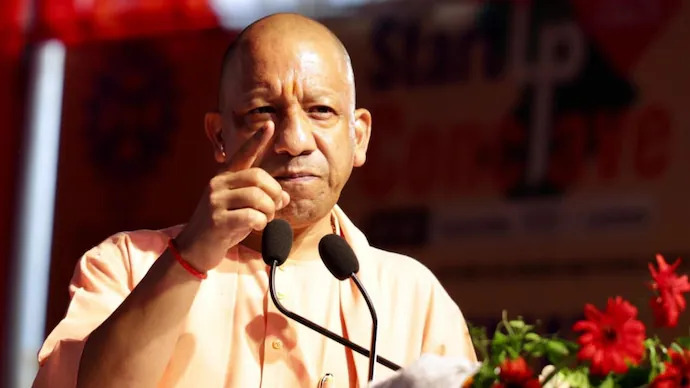
Uttar Pradesh Chief Minister Yogi Adityanath has defended the bursting of firecrackers during Diwali, dismissing concerns over the resulting air pollution and questioning why people who raise environmental concerns do not speak with similar urgency about corruption.
Speaking at a government programme in Lucknow on Wednesday, November 11, Adityanath said the pollution caused by Diwali celebrations would eventually subside. He also defended his government’s decision not to impose restrictions on firecracker use during the festival.
“Some people are saying that pollution has increased because of Diwali. So what if it has increased? It will subside as well. Why are you worried?” he said, as reported by NDTV.
The chief minister’s remarks have brought the debate over firecracker use and air quality back into the political spotlight, particularly in northern India, where pollution levels often deteriorate around Diwali.
Yogi Questions Criticism Over Diwali Firecrackers
Adityanath argued that criticism of firecracker use during a one-day festival was selective, particularly when compared with the lack of public criticism over corruption.
“Those who have polluted the entire system through their corrupt deeds are not questioned. But if the public bursts firecrackers and celebrates with fireworks for one day, suddenly pollution becomes an issue,” he said.
He maintained that people had celebrated Diwali enthusiastically and that his government had deliberately chosen not to restrict the festivities.
The chief minister also referred to his own presence during the fireworks in Ayodhya, where he participated in the Diwali celebrations.
According to reports, Adityanath said the government had encouraged people to celebrate the festival wholeheartedly rather than impose restrictions on traditional festivities.
Remarks Made During Government Programme in Lucknow
The comments came during a government programme at the Indira Gandhi Pratishthan in Lucknow, where the chief minister distributed appointment letters to 1,146 newly selected junior assistants in the Uttar Pradesh Revenue Department.
The programme also included the distribution of financial assistance worth Rs 215 crore to 4,300 beneficiary families under the Mukhyamantri Krishak Durghatna Kalyan Yojana.
The scheme provides financial assistance to families affected by farmers’ accidental deaths or disabilities.
The appointment process was conducted through the Uttar Pradesh Subordinate Services Selection Commission (UPSSSC).
The event brought together two separate government initiatives: recruitment in the Revenue Department and financial support for farming families. Adityanath’s comments on Diwali pollution were made while addressing the gathering.
Air Quality Concerns Continue After Diwali
The chief minister’s remarks come amid renewed concerns over deteriorating air quality following Diwali celebrations.
Lucknow and several other Uttar Pradesh cities experienced a rise in pollution levels around the festival.
According to air quality figures cited by the Hindustan Times from Central Pollution Control Board (CPCB) bulletins, Lucknow’s AQI increased from 207 on November 7 to 233 on November 8 and 245 on November 9. It subsequently fell to 172 on Tuesday as winds helped disperse pollutants.
Other cities also recorded elevated pollution levels around Diwali. The newspaper reported AQI readings of 344 in Ghaziabad, 318 in Noida, 299 in Greater Noida and 295 in Meerut on Diwali.
Under India’s AQI classification, readings between 301 and 400 fall in the ‘Very Poor’ category, while readings between 201 and 300 are classified as ‘Poor’.
The figures provide a picture of the air quality conditions around the festival, although pollution levels can vary considerably between monitoring stations and over different periods of the day.
Debate Over Firecrackers and Public Health
Firecracker use during Diwali has remained a recurring point of disagreement between those defending traditional celebrations and those raising concerns about environmental and public health consequences.
The immediate concern is the release of particulate matter and other pollutants when fireworks are ignited. Their impact can be particularly noticeable when weather conditions limit the dispersal of pollutants.
Adityanath’s argument focused on the temporary nature of festival-related pollution and what he described as selective criticism. However, his remarks did not provide air-quality measurements or scientific evidence to establish how quickly pollution would subside.
The discussion also extends beyond Uttar Pradesh. Delhi and the National Capital Region regularly face serious air-quality challenges during the post-Diwali period, when firecracker emissions add to other existing sources of pollution.
The issue involves more than the duration of celebrations. The concentration of pollutants, exposure levels and prevailing weather conditions all matter when assessing their impact.
Yogi Also Revisits Uttar Pradesh’s Pre-2017 Situation
During the same programme, Adityanath criticised previous governments in Uttar Pradesh, alleging that festivals were frequently accompanied by communal disturbances before the BJP came to power in 2017.
He referred to festivals including Holi, Diwali, Vijayadashami, Janmashtami, Shivratri, Christmas, Eid, Guru Parv and Makar Sankranti while making his argument.
The chief minister claimed that the situation had changed under his government, with festivals being celebrated peacefully across the state.
These remarks were political claims made by the chief minister and should be distinguished from independently established assessments of law and order over the period.
Adityanath’s defence of Diwali firecrackers therefore combined two arguments: opposition to restrictions on festival celebrations and criticism of what he described as selective public concern over pollution.
The immediate question raised by his comments is likely to keep the balance between festival traditions, environmental protection and public health in the public debate.