
France Protests Today: 5 Major Developments as 106,000 Join Fifth Consecutive Weekend of Demonstrations
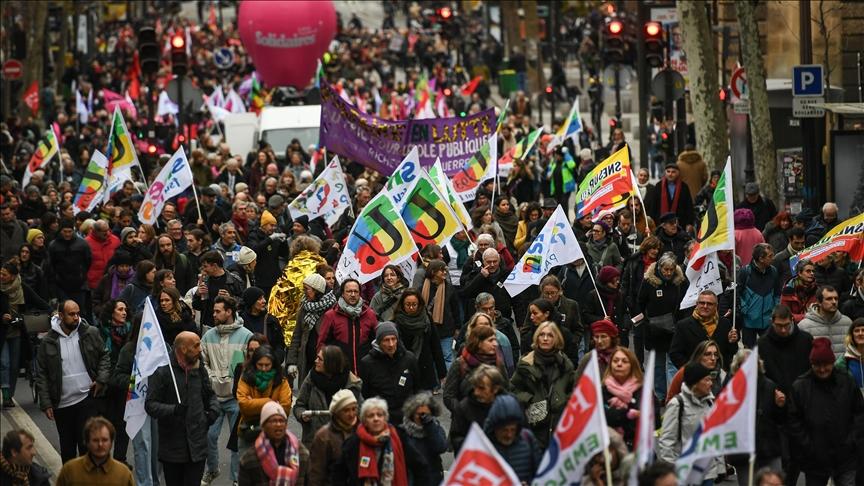
FRANCE: France protests today remain a major political and social development as approximately 106,000 people demonstrated across the country on Saturday, November 14, marking the fifth consecutive weekend of nationwide protests. The demonstrations brought together students, trade unions, Yellow Vest activists and other groups demanding improvements in public services, education, wages and living conditions.
According to figures released by the French Interior Ministry, approximately 24,000 people participated in demonstrations in Paris alone. However, student unions estimated the nationwide turnout at 200,000, including nearly 100,000 in the French capital.
The protests reflected several overlapping grievances, including rising living costs, concerns about deteriorating school facilities, police conduct and a proposed law that could provide additional legal protection to officers using firearms.
The latest demonstrations took place amid continuing pressure on President Emmanuel Macron’s government, which has faced weeks of public mobilisation and criticism over its handling of economic and social issues.
France Demonstrations November 2026 Record Fifth Consecutive Weekend
The November 14 demonstrations marked the fifth consecutive Saturday of nationwide protests, extending a movement that initially gained momentum through student opposition to conditions in public schools.
The movement subsequently expanded, attracting trade unions, Yellow Vest activists and other organisations concerned about household expenses, public services and government policies.
Paris remained one of the main centres of mobilisation, with demonstrators gathering at Place de la République, a prominent location for public demonstrations.
The Interior Ministry’s estimate of 106,000 participants represented a decline compared with the previous Saturday, November 7, when approximately 146,000 people demonstrated nationwide. Attendance in Paris also fell from 46,000 to 24,000, according to official figures.
Student organisations, however, reported considerably higher attendance figures for November 14. Their estimate of 200,000 nationwide illustrates the difference between official and organiser assessments of protest participation.
The demonstrations were also part of a wider period of industrial action. On Thursday, November 5, a separate union-led mobilisation brought more than half a million people onto the streets, according to the reporting by Euronews.
Rising Living Costs And Public Services Remain Central Issues
Economic pressure has remained one of the principal reasons behind the demonstrations.
Protesters have raised concerns about the increasing cost of everyday necessities, declining purchasing power, wages and the condition of public services.
The Yellow Vest movement, known in France as Gilets Jaunes, has again become a visible presence in the protests. The movement originally emerged in 2018 following public anger over fuel prices and broader concerns about household finances.
Its participation in the current demonstrations has brought renewed attention to economic dissatisfaction and demands for government action.
Trade unions have also criticised the government’s proposed 0.6% minimum wage increase, arguing that the adjustment does not adequately address workers’ financial pressures.
Union representatives have rejected the proposed increase as insufficient and called for further action.
The economic demands have therefore become an important part of the wider movement, connecting student concerns with the demands of workers and other sections of society.
School Conditions And Education Funding Fuel Student Protests
Education remains another major issue driving the demonstrations.
The initial mobilisation involved students protesting against teacher shortages, inadequate school facilities and concerns about the quality of public education.
Student representatives have highlighted problems affecting everyday learning conditions, including insufficient teaching staff and deteriorating school infrastructure.
Marius Mesnil, co-secretary-general of the Union Syndicale Lycéenne, highlighted the need for functioning classrooms, adequate facilities and better opportunities for students pursuing higher education.
The participation of high-school and university students has given the movement a wider social dimension.
Education unions have joined the demonstrations, demanding better funding and improvements to public institutions.
These concerns have also contributed to school blockades and strikes across the country, extending the disruption beyond weekend demonstrations.
Proposed Police Law Becomes Another Major Source Of Opposition
A proposed police firearms law has emerged as another significant point of disagreement during the latest protests.
The proposed legislation would provide police officers and gendarmes with additional legal protection when using firearms while carrying out their duties.
Supporters argue that the measure would offer greater legal safeguards to law enforcement personnel and address concerns about officers being automatically treated as guilty when they use firearms.
However, student groups and trade unions have criticised the proposal, arguing that it could weaken accountability in cases involving alleged police misconduct.
Sabrine Kharbach, a spokesperson for the Student Union, expressed concern that the proposed legislation could create a presumption of lawful conduct when an officer fires a weapon.
Opponents believe this could make it more difficult to investigate allegations of excessive force and obtain accountability.
The disagreement has added another dimension to France protests today, with demonstrators raising questions about policing, civil liberties and the relationship between law enforcement agencies and the public.
The proposed legislation was expected to face a parliamentary vote the following week, making it an important issue in the continuing political debate.
Protests Continue Despite Lower Turnout And Police Deployment
Although the November 14 demonstrations attracted fewer participants than the previous weekend, mobilisation continued across several French cities.
Paris remained a major gathering point, while other demonstrations took place in cities including Lyon, Marseille, Toulouse, Bordeaux and Nantes.
The overall atmosphere was reported to be largely peaceful, although some incidents involving demonstrators and police were reported.
Authorities also reported police use of tear gas in several locations, including Paris, Bordeaux and Nantes. In some places, fireworks were used by protesters during confrontations with security personnel.
The French Interior Ministry reported 219 people detained nationwide during Saturday’s demonstrations. Paris prosecutors separately recorded 45 arrests in the capital.
These figures indicate that the protests continued to require a significant security response, despite the lower national turnout.
The government has faced criticism from some protesters and organisations over police conduct, while authorities have highlighted the need to maintain public order during large demonstrations.
Trade Unions Announce Another Day Of Action
The demonstrations are expected to remain an important issue in the coming days, with trade unions calling for another nationwide day of strike action on Tuesday, November 17.
The announcement followed the rejection of the government’s proposed minimum wage increase, with union representatives demanding stronger measures to address workers’ concerns.
The proposed police legislation is also expected to remain a major point of disagreement as parliamentary discussions continue.
For the government, the challenge involves addressing demands relating to wages, education, public services and policing while managing the country’s wider economic and budgetary pressures.
The latest France demonstrations November 2026 have brought together groups with different priorities, but their participation reflects a common demand for changes to policies affecting their everyday lives.
The decline in official attendance compared with the previous weekend does not mean the underlying disagreements have been resolved. With another day of industrial action planned, the coming week could provide a further indication of whether the government can reduce tensions through policy measures and negotiations.
For now, the fifth consecutive weekend of demonstrations has kept public dissatisfaction, education funding, purchasing power and police accountability at the centre of France’s political debate.




