
Iran Bahrain Attack: 5 Critical Developments as US Intercepts Fresh Drone Strike on Military Base
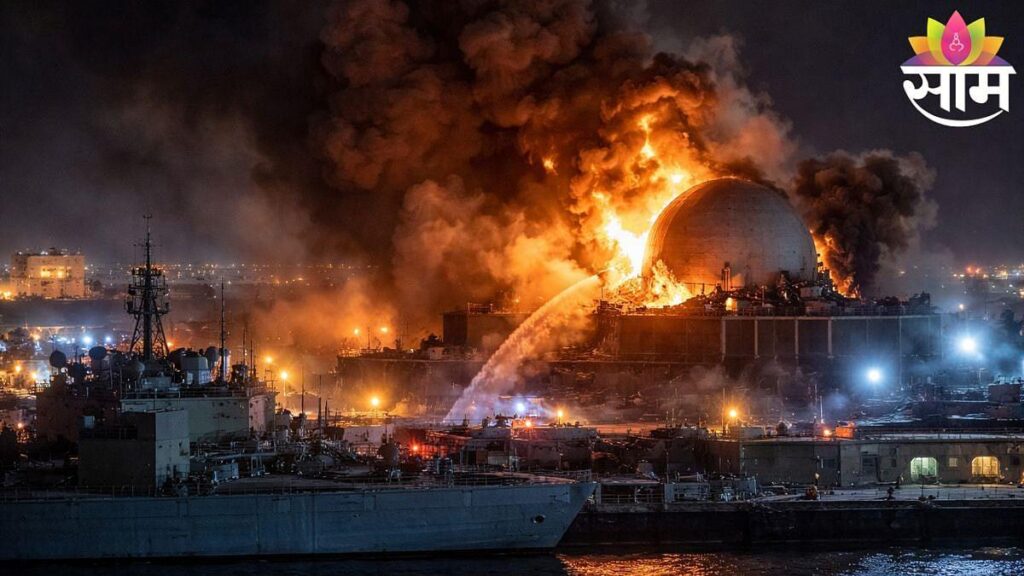
BAHRAIN: The Iran Bahrain Attack escalated on Tuesday, November 17, after Iran’s Islamic Revolutionary Guard Corps (IRGC) launched multiple drones towards a US military radar installation at Sheikh Isa Air Base in Bahrain. Bahrain and the United States confirmed that the incoming drones were intercepted before reaching their intended targets.
The latest incident marks another escalation in the confrontation between Tehran and Washington, with Iran claiming that its operation targeted American military infrastructure in retaliation for alleged US violations of Iranian airspace.
However, the United States rejected Iran’s claim of a successful strike. US Central Command (CENTCOM) said the drones were intercepted without causing damage to American equipment or injuries to American personnel.
The latest US Military Base Bahrain incident comes after two earlier reported episodes involving Iranian drones and American military radar facilities in the country within five days.
Iran Bahrain Attack Targets US Radar Installation
Iran’s Revolutionary Guards announced that their forces had carried out a drone operation targeting a US military radar system at Sheikh Isa Air Base in Bahrain.
The IRGC described the operation as a response to what it called continued violations of Iranian airspace by American military drones.
According to the Iranian military statement, the operation involved combat drones directed towards a radar installation operated by US forces.
The attack was significant because Bahrain hosts important American military facilities, including the headquarters of the US Navy’s Fifth Fleet.
However, Iran’s announcement did not establish that the radar system had been destroyed or damaged.
The US military subsequently rejected the claim that the operation had successfully hit American equipment.
US Central Command Confirms Drone Interception
US Central Command confirmed that multiple Iranian one-way attack drones had been launched towards Bahrain on Tuesday.
In a statement published on X, CENTCOM said the incoming drones had been intercepted.
The command stated that the operation caused no damage to US equipment and no injuries to American personnel.
CENTCOM also said American forces and their regional partners remained highly vigilant.
The statement directly contradicted the Iranian account of a successful attack on the radar installation.
Bahrain’s military also confirmed that its air defence systems had intercepted Iranian aerial attacks before they could reach their intended targets.
According to a report published by Reuters, Bahrain had issued a security warning earlier on Tuesday, asking citizens and residents to move to the nearest safe location because of an unspecified threat.
The authorities subsequently announced that the threat had passed.
No casualties or damage were reported in connection with Tuesday’s interception.
Bahrain Faces Third Reported Iranian Drone Operation In Five Days
Tuesday’s incident followed two earlier episodes involving Iranian drone operations targeting American military infrastructure in Bahrain.
On Friday, November 13, Iran’s Revolutionary Guards claimed to have targeted a US early-warning radar installation in Bahrain.
The US military rejected the claim that the radar had been struck.
CENTCOM said American forces intercepted two Iranian attack drones and confirmed that neither US equipment nor personnel had suffered damage or injuries.
A second incident was reported on Sunday, November 15.
Iran’s Revolutionary Guards claimed that six drones had been launched towards a US air-defence radar system at the Al-Rifaa helicopter base in Bahrain.
Tehran described the operation as retaliation for what it called hostile American actions.
Bahrain’s military subsequently said its air defence systems had intercepted several Iranian aerial attacks before they reached their intended targets.
The latest operation at Sheikh Isa Air Base on Tuesday therefore represents another reported episode in a series of drone-related confrontations involving Iran and American military installations in Bahrain.
Although Iran has repeatedly claimed to have targeted US radar infrastructure, those claims should not be confused with independently established damage to the facilities.
Why The US Military Base Bahrain Is Strategically Important
Bahrain occupies an important position in American military operations across the Persian Gulf.
The country hosts the US Navy’s Fifth Fleet, which is responsible for American naval operations across a broad maritime region, including the Persian Gulf, Red Sea, Arabian Sea and parts of the Indian Ocean.
Its location also places Bahrain close to the Strait of Hormuz, one of the world’s most strategically important maritime shipping routes.
The waterway connects the Persian Gulf with the Gulf of Oman and the wider Arabian Sea. It is particularly important for international oil and gas transportation.
Any sustained military confrontation involving Bahrain could therefore create wider security concerns beyond the immediate dispute between Washington and Tehran.
The presence of American military installations in the country also makes Bahrain an important part of the wider US security arrangement in the Gulf.
For Iran, American military facilities across the region have become a central issue in its confrontation with Washington.
Iran US Conflict Continues Despite Diplomatic Efforts
The latest Iran Bahrain Attack comes amid continuing tensions surrounding the wider US-Israeli conflict with Iran, which began on February 28, 2026.
The confrontation has affected several parts of the Middle East, with military operations and retaliatory attacks extending beyond Iranian territory.
Diplomatic efforts to reduce tensions have continued, but disagreements between Washington and Tehran remain unresolved.
The Strait of Hormuz has emerged as a particularly sensitive issue, with maritime security and freedom of navigation forming important parts of the wider dispute.
The latest drone operations in Bahrain add another challenge to those diplomatic efforts.
Earlier developments in the conflict have also raised questions about military targeting and civilian protection, including the findings concerning the February strike on a school in Minab, Iran, covered in our report on the UN investigation into the Iran school strike.
Is The Latest Attack A Sign Of Wider Military Escalation?
The repeated targeting claims involving American military facilities in Bahrain have increased concerns about a possible expansion of the confrontation.
However, Tuesday’s interception does not establish that a wider military escalation is inevitable.
The available information confirms that Iran launched drones towards Bahrain, that the IRGC claimed to have targeted a US radar installation, and that American and Bahraini authorities reported intercepting the incoming attacks.
There is no verified evidence that the radar system at Sheikh Isa Air Base was destroyed in Tuesday’s operation.
Similarly, claims circulating about a destroyed $300 million radar installation have not been substantiated by the available official statements.
The immediate situation remains focused on military interception and heightened security rather than a confirmed successful strike on American equipment.
For Bahrain, the priority remains protecting its territory and military infrastructure. For Washington, the latest incident reinforces the security challenges facing American forces operating across the Gulf.
The coming days will be important in determining whether the repeated drone operations lead to further military exchanges or whether diplomatic efforts can prevent another escalation in the region.




