SAVARKAR LEGAL NOTICE: 5 Major Developments as Sonia Gandhi Faces Fresh Book Controversy
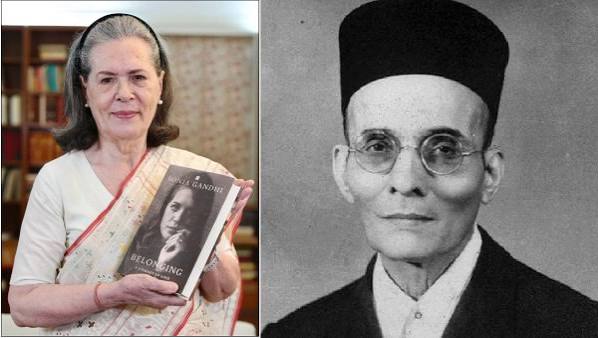
NEW DELHI: Savarkar legal notice controversy has intensified after Satyaki Savarkar, the grandnephew of Vinayak Damodar Savarkar, sent a legal notice to Congress leader Sonia Gandhi over references to the Hindutva ideologue in her recently published memoir, Belonging: A Journey of Love.
The notice, issued through advocate Sangram Kolhatkar, seeks an unconditional apology, a public clarification and corrections to statements appearing on pages 201 and 443 of the book.
According to The Indian Express, the notice challenges the portrayal of Savarkar’s role in India’s freedom struggle and his political ideology, alleging that the references create a misleading impression about his historical legacy.
The development has added a legal dimension to the political controversy surrounding Sonia Gandhi’s memoir, which has already attracted criticism from sections of the Shiv Sena in Maharashtra.
What Is The Savarkar Legal Notice About?
The Savarkar legal notice concerns two passages in Sonia Gandhi’s book, Belonging: A Journey of Love, published by HarperCollins Publishers India.
Satyaki Savarkar has objected to statements on pages 201 and 443, arguing that they misrepresent his ancestor’s historical role and political philosophy.
The first disputed passage refers to Savarkar and other senior RSS ideologues in the context of mercy petitions submitted during British rule. It also refers to alleged collaboration with British authorities by members of the organisation.
The notice argues that the passage creates an impression that Vinayak Damodar Savarkar was involved in informing against Indian freedom fighters or collaborating with British authorities against them.
Satyaki Savarkar disputes this interpretation and maintains that the circumstances surrounding Savarkar’s imprisonment and petitions must be examined within their historical context.
The second objection concerns a description of Savarkar’s political vision and Hindutva ideology.
The notice argues that the passage presents his political philosophy as one in which Hindus are supreme, describing this as an oversimplification and misrepresentation of his ideological position.
Why Satyaki Savarkar Has Demanded An Apology
The notice seeks several corrective measures from Sonia Gandhi.
These include:
-
An unequivocal and unconditional written apology for the disputed statements.
-
A public clarification explaining their historical basis, context and intended meaning.
-
Acknowledgement and correction of any factual inaccuracies or misleading implications.
-
Appropriate changes to subsequent editions, reprints and electronic versions of the memoir, in consultation with the publisher.
The notice gives Sonia Gandhi 15 days from its receipt to comply with the demands.
It also warns that failure or refusal to meet the demands could lead Satyaki Savarkar to initiate appropriate legal proceedings before a competent court or authority.
Importantly, the notice represents the allegations and demands made by Savarkar’s family. It does not establish that a court has found the disputed statements defamatory or historically inaccurate.
What The Notice Says About Savarkar’s Imprisonment
A significant part of the objection concerns Savarkar’s imprisonment under British colonial rule.
The notice argues that references to his mercy petitions should not be examined independently of the circumstances surrounding his incarceration.
Vinayak Damodar Savarkar endured prolonged imprisonment, including incarceration at the Cellular Jail in the Andaman Islands.
According to the notice, references to petitions submitted during this period, without adequately explaining the historical circumstances, could create an incomplete impression of his political activities and his experience under British rule.
The family has also referred to several actions taken during former Prime Minister Indira Gandhi’s tenure.
These include the issuance of a commemorative postage stamp honouring Savarkar, Indira Gandhi’s reported personal contribution of ₹11,000 towards the Swatantryaveer Savarkar Rashtriya Smarak, and a biographical documentary commissioned by the Films Division in 1983 to mark his birth centenary.
The notice cites these developments as evidence of official and personal recognition of Savarkar’s historical standing.
It asks Sonia Gandhi to explain how the disputed passages can be reconciled with these historical records.
Sonia Gandhi’s Book Already Faces Political Opposition
The legal development follows an earlier political controversy over references to Savarkar in the memoir.
On November 19, the Shiv Sena faction led by Maharashtra Deputy Chief Minister Eknath Shinde demanded the withdrawal of the disputed passages and raised objections to the book’s circulation in Maharashtra.
The controversy also generated tensions involving the Shiv Sena (UBT), led by Uddhav Thackeray, which has previously defended Savarkar despite its political association with the Congress.
The disagreement has revived an existing ideological divide within the Opposition Maha Vikas Aghadi alliance.
The controversy surrounding the memoir has also drawn attention to the broader political differences between the Congress and parties that regard Savarkar as an important figure in India’s political history.
The latest Sonia Gandhi news therefore involves more than a disagreement over the contents of a book. It has brought historical interpretation, political ideology and potential legal action into the same debate.
Why The Controversy Matters For Congress And Maharashtra Politics
Savarkar remains a significant and politically contested figure in Maharashtra and national politics.
The Congress has historically criticised his political ideology, while the BJP and sections of the Shiv Sena have frequently highlighted his contribution to Hindutva politics and his role in India’s freedom movement.
These competing interpretations have repeatedly influenced political exchanges between the parties.
The present dispute has also revived questions about the political relationship between the Congress and the Shiv Sena (UBT).
Earlier developments, including Rahul Gandhi’s Columbia University speech, have demonstrated how disagreements involving Congress leaders can develop into wider political confrontations.
Similarly, the Supreme Court proceedings involving Sanjay Raut illustrate the continuing importance of legal accountability and public statements in politically sensitive disputes.
However, the present matter is distinct because it involves a legal notice concerning statements published in a book rather than an ongoing contempt proceeding.
What Happens Next In The Sonia Gandhi News Controversy?
The immediate next step depends on Sonia Gandhi’s response to the legal notice.
The 15-day period specified in the notice begins from its receipt. It is therefore important not to treat November 24, the date of the news reports, as the confirmed starting date of the deadline.
Satyaki Savarkar has indicated that legal proceedings may follow if the demands are not addressed.
The notice also involves HarperCollins Publishers India because the requested corrections concern subsequent editions, reprints and electronic versions of the memoir.
As of November 24, no publicly confirmed response from Sonia Gandhi or HarperCollins addressing the notice’s demands had been reported in the coverage reviewed.
No court has yet ruled on the allegations raised in the notice.
The Savarkar legal notice dispute could therefore develop into a larger legal confrontation if the parties fail to reach an understanding.
For now, the Sonia Gandhi news development centres on the family’s demand for an apology, clarification and corrections to the memoir.
The eventual outcome will depend on the response from Sonia Gandhi and the publisher, and whether Satyaki Savarkar decides to pursue the threatened legal action.