Musk Opens the Door to Jensen Huang as Nvidia Faces Leadership Uncertainty
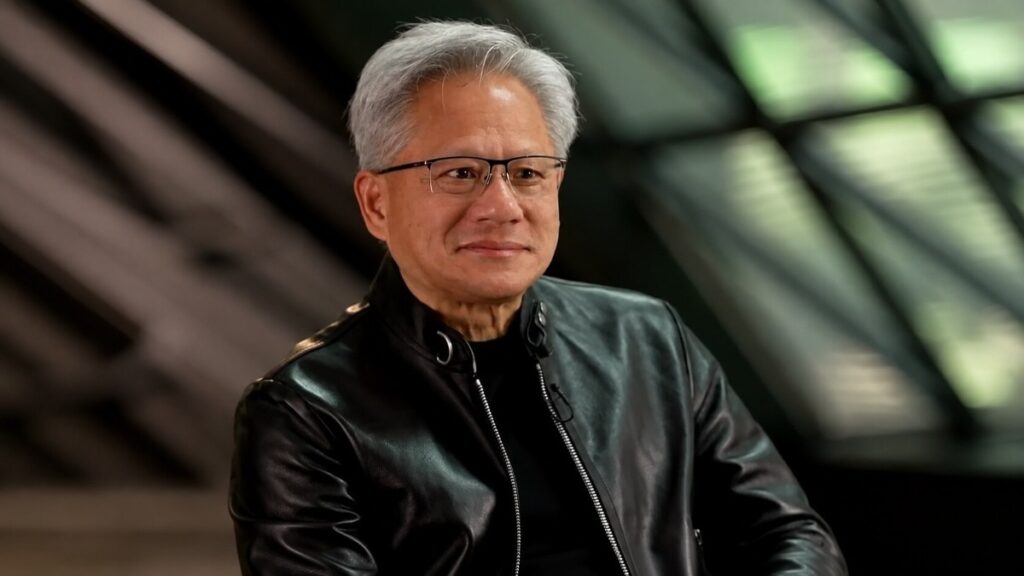
Elon Musk has publicly indicated that he would welcome the opportunity to hire Nvidia chief executive Jensen Huang, responding to a social media post urging him to bring the semiconductor executive into one of his companies.
“That would be an honor,” Musk wrote on X on November 12, replying to a post from the financial commentary account ZeroHedge that said, “Elon please hire Jensen.”
That would be an honor
— Elon Musk (@elonmusk) November 12, 2026
The brief exchange attracted attention as Huang’s position at Nvidia faces growing uncertainty. Reuters reported that the company’s board met on Wednesday, November 11, to consider whether to remove its co-founder and longtime chief executive, citing a person familiar with the matter.
Musk’s response was an expression of interest, not a formal employment offer. Neither Tesla nor SpaceX has announced plans to recruit Huang.
Nvidia board faces a decision over Jensen Huang
The leadership uncertainty follows reports concerning Huang’s personal relationships and questions about whether he was targeted by a foreign intelligence operation.
On November 11, Reuters reported that Nvidia’s board had met to consider Huang’s future. The report followed a Wall Street Journal article claiming that directors were preparing to remove him.
Nvidia had not publicly confirmed an ouster plan at the time of those reports.
The situation marks a change from November 8, when Nvidia’s board issued a statement expressing confidence in Huang and his leadership team.
In that statement, the company announced an independent investigation into reports that its founder and CEO had been the target of a foreign intelligence effort. The investigation is being overseen by a committee of independent directors with assistance from outside legal counsel.
The board said it had no reason to believe that national security or Nvidia’s confidential information had been compromised, while confirming that Huang supported the review and would cooperate.
Allegations involving a businesswoman and an Nvidia executive
The controversy initially centred on Huang’s reported relationship with Alice Huang, a senior executive associated with Singapore-based data centre company Megaspeed.
US intelligence officials reportedly suspected that Alice Huang had links to China’s Ministry of State Security and may have been involved in efforts to obtain information about Nvidia.
These allegations have not been established as proven wrongdoing by Jensen Huang or Alice Huang.
Reuters reported that the investigation followed concerns about whether Huang had been targeted by a foreign intelligence operation. The news agency also reported that China had denied the allegations and that it could not reach Alice Huang for comment.
Huang acknowledged being unfaithful to his wife in a memo to Nvidia employees over the weekend, taking “full responsibility” without providing details about the relationship.
A separate report by The New York Times, citing five people who had worked at Nvidia, alleged that Huang had also been involved in a relationship with Kimberly Powell, the company’s vice president of healthcare, who reportedly worked under him.
Reuters said it could not independently verify that second report. Nvidia and Powell did not immediately respond to requests for comment.
The distinction matters: the reported personal relationships, the intelligence allegations and any potential corporate-security implications are separate issues. The existence of an internal investigation does not establish that Nvidia’s information was compromised.
Why Musk’s response has attracted attention
Musk’s comment carries particular interest because Nvidia is an important supplier to several companies pursuing large-scale artificial intelligence projects.
Tesla relies on Nvidia’s processors for parts of its AI computing infrastructure. Musk’s other ventures, including xAI and SpaceX, are also involved in building or developing computing infrastructure for artificial intelligence applications.
Huang’s experience in semiconductor technology, AI processors and large-scale computing has made him one of the most influential executives in the technology industry.
He co-founded Nvidia in 1993 and has led the company through its expansion from a graphics-chip manufacturer into a major supplier of processors used in artificial intelligence data centres.
Musk and Huang have also appeared together at high-profile business and political events. Both travelled with US President Donald Trump to Beijing in May 2026 for talks with Chinese President Xi Jinping, according to NDTV Profit.
However, Musk’s short response on X does not establish that the two executives have discussed a possible working arrangement.
Nvidia’s leadership uncertainty has unsettled investors
The questions surrounding Huang’s position have also affected Nvidia’s market performance.
Reuters reported on November 11 that Nvidia shares fell around 7% in early Frankfurt trading following reports about the board’s deliberations. The company’s market value had declined by approximately $600 billion since the board announced its investigation, according to the news agency’s reporting.
Analysts have raised concerns about the consequences of losing Huang, who has played a central role in Nvidia’s product strategy, technology development and relationships with major customers.
Reuters also reported that Huang, 63, has no obvious successor. Nvidia’s board has reportedly been working with an outside firm to identify potential replacements.
Chief Financial Officer Colette Kress has been mentioned as a possible interim leader, while Ian Buck, who oversees Nvidia’s data centre business, has also emerged in discussions about succession.
Neither has been formally announced as Huang’s replacement.
The company’s leadership uncertainty is particularly relevant because Nvidia’s quarterly financial results are scheduled for November 17. Investors will be watching both its business performance and any further information about the board’s investigation.
What happens next?
The immediate question is whether Nvidia’s board will retain Huang after completing its review or pursue a leadership change.
The board’s November 8 statement expressed confidence in the CEO, but subsequent reports of its deliberations suggest that his position is facing closer scrutiny.
For now, Musk’s response has added an unexpected dimension to the story, but it has not changed Huang’s formal position at Nvidia.
There has been no confirmed announcement that Huang is leaving the semiconductor company, accepting another position, or negotiating an employment arrangement with Musk.
The outcome of Nvidia’s internal investigation and any subsequent decision by its directors will determine the next stage of the leadership dispute.