Anand Mohan Supreme Court Verdict: 5 Major Developments as Early Release Is Cancelled, Surrender Ordered
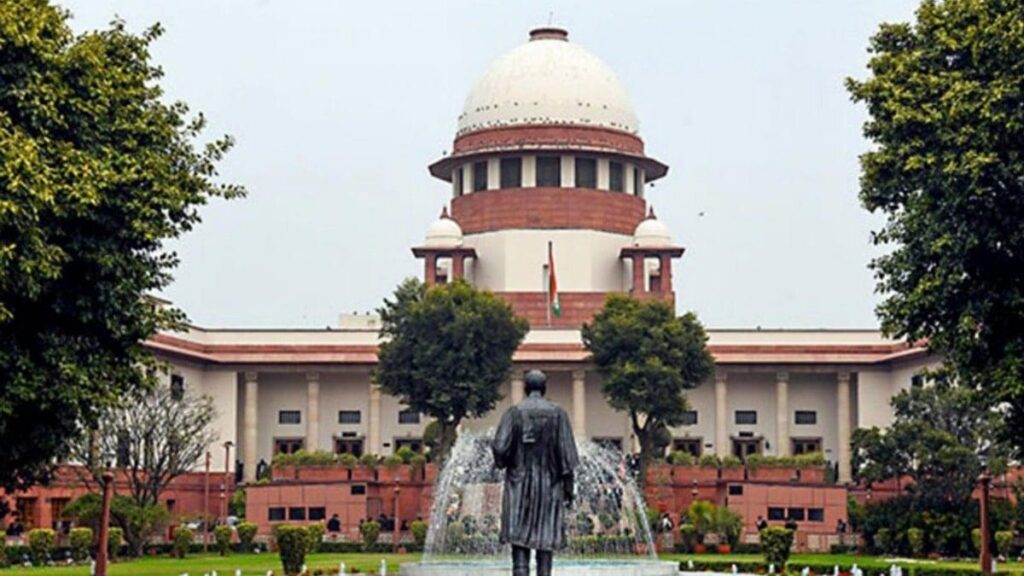
NEW DELHI: The Anand Mohan Supreme Court verdict has overturned the Bihar government’s decision to grant premature release to former MP Anand Mohan in the 1994 murder of Gopalganj District Magistrate G. Krishnaiah. On November 26, 2026, the Supreme Court directed Mohan to surrender within one month after declaring the 2023 amendment to Bihar’s remission policy unconstitutional.
A bench comprising Justice Dipankar Datta and Justice Sheel Nagu delivered the judgment on a petition filed by Uma Krishnaiah, the widow of the slain IAS officer. The court also held that the victim’s family must receive an opportunity to be heard before a decision on remission is taken, although its objection cannot operate as an absolute veto.
The ruling brings a significant development in a legal dispute that began after the Bihar government amended its prison rules in April 2023, enabling Mohan’s premature release.
According to The Indian Express, the Supreme Court has directed him to surrender within one month.
1. Supreme Court Cancels Anand Mohan’s Premature Release
The central issue before the Supreme Court concerned the legality of the Bihar government’s decision to grant remission to Anand Mohan.
Mohan was serving a life sentence for his involvement in the killing of G. Krishnaiah, who was serving as the Gopalganj district magistrate when he was attacked by a mob in December 1994.
The Bihar government granted him remission in April 2023, allowing him to walk out of prison on April 24, 2023, after approximately 14 years of actual imprisonment.
The decision followed an amendment to Rule 481(1)(a) of the Bihar Prison Manual, 2012. The amendment removed the existing restriction that prevented prisoners convicted of murdering public servants on duty from being considered for premature release.
Uma Krishnaiah challenged both the amendment and the consequential remission granted to Mohan.
The Supreme Court has now set aside the government’s decision, finding that the amendment was unconstitutional.
The Anand Mohan Supreme Court verdict makes clear that state governments cannot introduce changes to remission policies without a rational and legitimate public purpose.
2. Why The April 2023 Bihar Remission Amendment Was Struck Down
Before the amendment, Bihar’s remission policy restricted premature release for individuals convicted of murdering public servants while they were performing their official duties.
The April 2023 amendment removed that restriction, making such prisoners eligible for consideration under the state’s remission framework.
The change became particularly controversial because Mohan’s release followed shortly after the amendment.
Uma Krishnaiah argued that the government had altered its policy in circumstances that benefited a particular prisoner. Her petition questioned the legality of the amendment and the process through which the remission was granted.
The Supreme Court found that the state had failed to demonstrate a rational and legitimate public purpose for the sudden policy change.
The bench held that the amendment violated Articles 14 and 21 of the Constitution, which protect equality before the law and the right to life and personal liberty.
The court considered the amendment an unjustified departure from the existing remission framework.
Its ruling is significant beyond the individual case because remission policies must operate within constitutional limits and cannot be changed arbitrarily.
3. Victim’s Family Must Receive An Opportunity To Be Heard
Another important aspect of the judgment concerns the participation of victims’ families in remission proceedings.
Uma Krishnaiah had challenged the premature release of the man convicted in her husband’s murder and sought judicial intervention against the Bihar government’s decision.
The Supreme Court recognised that victims or their families must have an opportunity to present their concerns before the competent authority decides whether a prisoner should receive remission.
However, the court also clarified an important limitation: the victim’s objection cannot function as a veto over the government’s decision.
In other words, authorities must consider the victim’s submissions fairly, but the final decision must still be made according to the applicable law and relevant considerations.
This aspect of the ruling adds to the continuing legal discussion about victims’ participation in criminal justice proceedings.
The issue also connects with the earlier Bilkis Bano remission case, in which the Supreme Court overturned the Gujarat government’s remission orders in January 2024.
Both cases have brought scrutiny to the exercise of state governments’ remission powers and the legal safeguards surrounding the release of prisoners convicted of serious offences.
4. Anand Mohan Ordered To Surrender Within One Month
Following the decision to set aside the remission granted by Bihar, the Supreme Court directed Anand Mohan to surrender within one month.
The direction means that he must return to custody rather than continue enjoying the benefit of the premature release order that has now been quashed.
The Anand Mohan surrender order is an immediate consequence of the court’s decision and restores the position that existed before the disputed remission was granted.
The one-month deadline is particularly important because the court has not permanently ruled out the possibility of a fresh remission consideration.
The state government remains free to initiate a fresh process under the applicable earlier policy, provided it follows the legal requirements established by the judgment.
That process must include giving Uma Krishnaiah an opportunity to be heard.
The fresh consideration, if initiated, will therefore have to follow the policy framework that existed before the April 2023 amendment.
5. Anand Mohan’s 1994 Conviction And The Long Legal Battle
The case dates back to December 5, 1994, when G. Krishnaiah, the then District Magistrate of Gopalganj, was attacked and killed by a mob in Bihar.
Krishnaiah, an IAS officer originally from Andhra Pradesh (now Telangana), was travelling through Muzaffarpur when his vehicle encountered a procession connected with the killing of gangster Chhotan Shukla.
Anand Mohan, who was then a politician in Bihar, was convicted in connection with the incident.
A trial court sentenced him to death in 2007. However, the Patna High Court commuted the death sentence to life imprisonment in 2008.
The Supreme Court upheld the life sentence in July 2012.
Mohan remained in prison until the Bihar government’s remission decision in April 2023.
His release subsequently became the subject of a legal challenge by Krishnaiah’s widow, who questioned the amendment to the prison manual and the circumstances surrounding the decision.
The Supreme Court’s November 26 judgment has now provided a major development in that challenge.
The Anand Mohan Supreme Court verdict also brings renewed attention to the circumstances in which life imprisonment can be reduced through state remission policies.
Can Bihar Government Consider Anand Mohan For Remission Again?
The Supreme Court’s decision does not necessarily prevent the Bihar government from considering a fresh remission application.
However, any new consideration must follow the applicable policy that existed before the April 2023 amendment.
The government will also have to comply with the procedural safeguards identified by the court, including providing an opportunity of hearing to the victim’s family.
This means that the Anand Mohan surrender order and the possibility of fresh remission are separate issues.
First, Mohan must comply with the court’s direction to surrender within one month. Subsequently, the competent authorities may consider whether a fresh remission process is legally permissible under the earlier framework.
Such consideration would not automatically guarantee his release.
The authorities would have to examine his eligibility under the applicable rules and take a decision in accordance with the Supreme Court’s directions.
What The Judgment Means For Remission Policies In India
The judgment has wider implications for the administration of criminal justice in India.
State governments have constitutional and statutory powers relating to remission and the administration of prisons. However, those powers are not unlimited.
Changes to remission policies must comply with constitutional principles and cannot be arbitrary or designed to provide an unjustified benefit in individual cases.
The Supreme Court’s intervention also highlights the importance of transparency when authorities consider applications for premature release.
Relevant information about a prisoner’s conduct, criminal background and eligibility must be properly examined before a decision is taken.
The ruling further reinforces the importance of considering victims’ concerns during remission proceedings without transferring the final decision-making authority to the victim.
For now, the immediate consequence is clear: Anand Mohan must surrender within the period prescribed by the Supreme Court, while any fresh consideration of remission will have to follow the earlier policy and the safeguards established by the judgment.