SHIKHAR AGRAWAL IAS CASE: 5 Major Developments as Rajasthan Officer Moves Supreme Court Over Corruption Probe

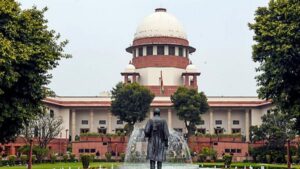
RAJASTHAN: The Shikhar Agrawal IAS case has taken a fresh legal turn after senior Rajasthan-cadre IAS officer Shikhar Agrawal approached the Supreme Court on November 24, 2026, seeking a stay on the Anti-Corruption Bureau’s (ACB) investigation against him over alleged corruption involving luxury villa purchases and benefits granted to a private company.
The move follows the Rajasthan High Court’s November 19 decision to defer consideration of his request for interim protection until the state government files its response. The state has already filed a caveat in the Supreme Court, indicating that it wants an opportunity to present its arguments before any interim relief is granted.
Agrawal is challenging the government’s approval for an investigation under Section 17A of the Prevention of Corruption Act, 1988. He has alleged that the approval was granted hastily without proper consideration of the relevant facts and circumstances.
The allegations remain under investigation. Neither the Supreme Court nor the Rajasthan High Court has established his guilt.
1. Shikhar Agrawal Approaches Supreme Court For Relief
The latest development came on November 24 when Agrawal moved the Supreme Court seeking protection against the ongoing corruption investigation.
The officer’s petition challenges the Rajasthan government’s decision to authorise an investigation against him and follows his unsuccessful attempt to obtain immediate interim relief from the Rajasthan High Court.
Agrawal has questioned the legality of the approval granted under Section 17A of the Prevention of Corruption Act.
His contention is that the government acted in undue haste and did not properly consider the relevant circumstances before authorising the investigation.
The Supreme Court petition comes after the Rajasthan High Court declined to consider his request for immediate protection without first receiving the state government’s response.
The latest development was reported by The Indian Express on November 24.
2. What Are The Allegations Against The IAS Officer?
The Rajasthan corruption investigation centres on alleged financial irregularities involving properties purchased by Agrawal and his family members from Goyal Fashions Private Limited, which operates resorts under the Ananta brand.
According to the allegations outlined in the ACB case, Agrawal and his family members purchased as many as 64 villas across Udaipur, Alwar and Jaipur between October 2023 and October 2026.
Investigators are examining whether the properties were acquired at substantially reduced prices in exchange for alleged official favours extended to the company.
The allegations also concern benefits the company reportedly received during Agrawal’s tenure in important government positions.
These include his earlier service as Udaipur District Collector, his tenure at the Rajasthan State Pollution Control Board and his position as Additional Chief Secretary in the Industries Department.
The ACB is also examining an alleged customised financial package issued to the company under the Rajasthan Investment Promotion Scheme 2019.
Importantly, these are allegations contained in the investigation and FIR, not findings of guilt established by a court.
3. Why Did The Rajasthan Government Approve The Investigation?
The controversy intensified in October 2026 after reports emerged concerning property transactions involving Agrawal and his family.
On October 28, the Rajasthan government placed the senior IAS officer on Awaiting Posting Order (APO).
Two days later, on October 30, the state government approved an ACB investigation under Section 17A of the Prevention of Corruption Act.
Agrawal’s wife, IPS officer Prashakha Mathur, was also placed on APO on October 31, citing administrative reasons. Both officers subsequently received show-cause notices from the Department of Personnel concerning their immovable property declarations.
The ACB examined information relating to the alleged property transactions and benefits extended to the private company.
The investigation eventually led to the registration of an FIR against Agrawal and directors of Goyal Fashions Private Limited on November 18.
The Rajasthan corruption investigation therefore moved from preliminary scrutiny and government approval to a formal criminal investigation.
4. Rajasthan High Court Previously Deferred Interim Protection
Before approaching the Supreme Court, Agrawal had challenged the state government’s approval before the Rajasthan High Court.
The matter was heard by Justice Anil Kumar Upman on November 19, 2026.
Agrawal’s legal team argued that the approval under Section 17A contained several procedural irregularities and had been granted without proper consideration of the relevant facts.
The High Court observed that these objections could be examined only after the state government submitted its response.
Consequently, the court directed the state to file its reply within three weeks and scheduled the next hearing for December 18, 2026.
The court deferred consideration of interim protection rather than delivering a final decision on the legality of the investigation.
This distinction is important because the investigation was not stayed by the November 19 order.
The proceedings also add to the recent attention surrounding Rajasthan High Court decisions, including its intervention in the Jaipur demolition drive.
5. Rajasthan Government Files Caveat In Supreme Court
Another important development is the Rajasthan government’s decision to file a caveat before the Supreme Court.
A caveat is a legal filing through which a party requests that it be heard before a court passes an order that could affect its interests.
In this case, the state government wants an opportunity to present its position before the Supreme Court considers granting interim relief to Agrawal.
The filing indicates that the state is prepared to contest his request for protection against the ACB investigation.
The development is particularly significant because the officer is challenging the very approval that enabled the investigation to proceed.
The Supreme Court will have to consider the legal grounds raised in his petition alongside the state’s response.
The broader importance of the proceedings can be understood alongside other recent Supreme Court legal disputes, where questions concerning judicial intervention and the interpretation of legal protections have also attracted attention.
What Is Section 17A Of The Prevention Of Corruption Act?
Section 17A of the Prevention of Corruption Act, 1988, provides a procedural safeguard for public servants in certain cases involving decisions or recommendations made while performing official duties.
Under this provision, a police officer generally requires prior approval from the appropriate government or competent authority before conducting an enquiry, inquiry or investigation into an alleged offence relating to such official decisions or recommendations.
The provision also contains statutory exceptions, including certain situations involving arrests on the spot for accepting or attempting to accept an undue advantage.
In Agrawal’s case, the central legal dispute concerns whether the Rajasthan government followed the required procedure while granting approval for the ACB investigation.
His challenge does not automatically invalidate the approval. That question remains subject to judicial examination.
The case has also attracted attention because it involves allegations concerning the relationship between public officials, private companies and government-approved financial incentives.
What Happens Next In The Shikhar Agrawal IAS Case?
The immediate development is Agrawal’s move to the Supreme Court seeking a stay on the investigation.
The Rajasthan government has filed a caveat, while the Rajasthan High Court proceedings remain scheduled for December 18, 2026.
As of November 24, no Supreme Court order granting the requested protection has been established in the available reporting.
The ACB investigation concerns alleged property transactions, official favours and financial benefits involving Goyal Fashions Private Limited.
However, the allegations must not be treated as proven criminal conduct. Agrawal has challenged the legality of the investigation approval, and the courts have yet to decide the merits of his objections.
The Shikhar Agrawal IAS case could become an important legal test concerning procedural safeguards available to public servants under the Prevention of Corruption Act.
For now, the focus remains on the Supreme Court proceedings and the state’s response to the officer’s request for interim protection.