Delhi AQI Today: 5 Alarming Facts From the Supreme Court Delhi Pollution Hearing
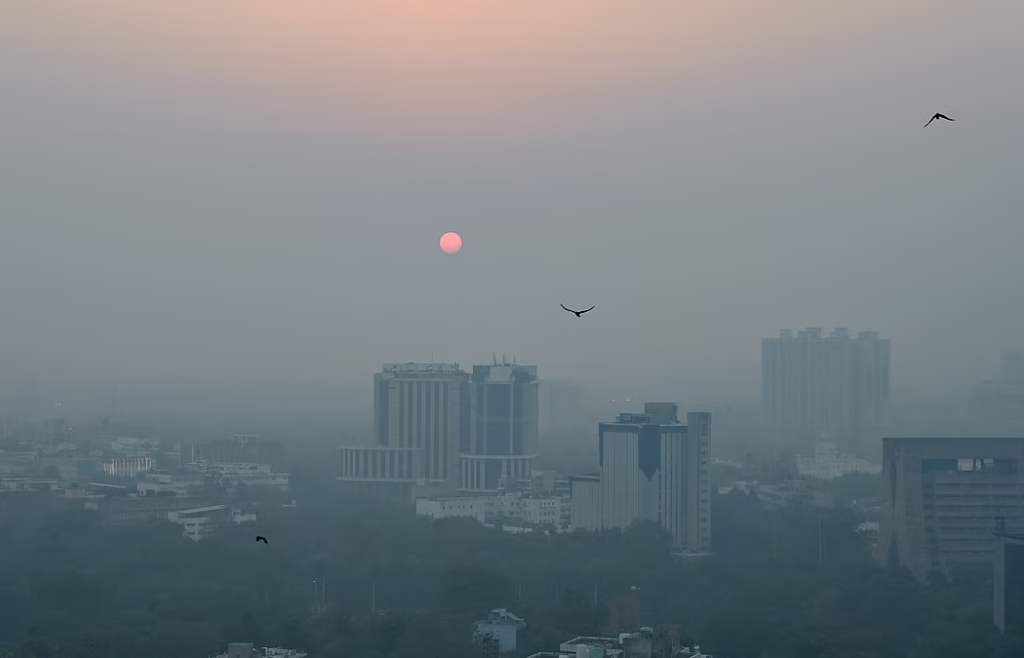
NEW DELHI: Delhi AQI today remains a major concern after Diwali celebrations pushed pollution levels sharply higher, while the Supreme Court has opened a stronger judicial focus on vehicle emissions across the capital and the wider National Capital Region. The two developments have placed immediate pressure on authorities to improve enforcement as winter pollution intensifies.
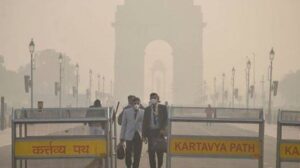
At 9 a.m. on November 9, Delhi recorded an AQI of 370, classified as “very poor” under India’s national air-quality system. Several areas recorded readings above 400, which falls into the “severe” category, according to Reuters.
Delhi AQI Today Shows Severe Pollution In Several Areas
The latest Delhi AQI today reading came after widespread fireworks during Diwali despite restrictions imposed by the Supreme Court. The court had allowed only certified low-polluting firecrackers during limited hours on November 7 and 8.
Fireworks continued in several parts of the city outside the permitted period, adding particulate pollution to an atmosphere already affected by vehicle emissions, construction activity, industrial sources and crop-residue burning.
The deterioration follows an earlier post-Diwali pollution report, which recorded Delhi’s AQI at 370 at 9 a.m. on November 9 and noted that several monitoring locations had entered the severe category.
Supreme Court Delhi Pollution Hearing Targets Vehicles
The Supreme Court Delhi pollution proceedings have now moved beyond the immediate Diwali firecracker issue. In an order released on November 8, the court directed Delhi, Haryana, Rajasthan and Uttar Pradesh to provide detailed information on how they regulate vehicles moving through Delhi-NCR.
The three-judge bench, led by Chief Justice of India Surya Kant and including Justices Joymalya Bagchi and V. Mohana, asked authorities to explain how they enforce emission standards, check Pollution Under Control certificates and prevent non-compliant, overage and end-of-life vehicles from operating.
The court also asked for details of vehicles inspected, challaned, denied entry or otherwise dealt with for violations.
Vehicle Emissions Come Under Fresh Scrutiny
The Supreme Court Delhi pollution focus comes after data presented to the court showed a sharp increase in pollution linked to vehicles. A Commission for Air Quality Management assessment cited in the proceedings identified vehicular emissions as the largest single source of Delhi-NCR’s air pollution, accounting for 23% in winter and 19% in summer.
The court said the issue required “urgent and immediate intervention” and highlighted the large number of commercial and private vehicles moving between Delhi and neighbouring states.
The court has scheduled a separate hearing on vehicular emissions for November 23. Other pollution-related matters, including crop-residue burning, firecrackers, construction and industrial pollution, will also be examined later in November.
Delhi Pollution Has Multiple Sources
The Delhi AQI today figure should not be attributed to Diwali fireworks alone. Air pollution in the capital is affected by several factors that become more difficult to control during winter.
Vehicle exhaust, construction and road dust, industrial emissions and agricultural fires can all add to the pollution load. Weather also matters. Cooler temperatures, weak winds and stagnant atmospheric conditions can prevent pollutants from dispersing.
That means the Supreme Court Delhi pollution proceedings are addressing a wider problem rather than a single source.
What Happens Next In Delhi?
The immediate concern is whether Delhi’s air quality improves after the Diwali pollution spike. The complete firecracker ban returned on November 9, while pollution-control measures under the Graded Response Action Plan remain in force.
For residents, the Delhi AQI today reading is a warning that the city’s seasonal pollution crisis remains serious even after the festival ends. The Supreme Court Delhi pollution hearings could now determine whether stronger enforcement of vehicle rules becomes a central part of the government’s response.