Kulgam Encounter: 5 Crucial Details Behind Lashkar Commander Lateef Bhat’s Killing
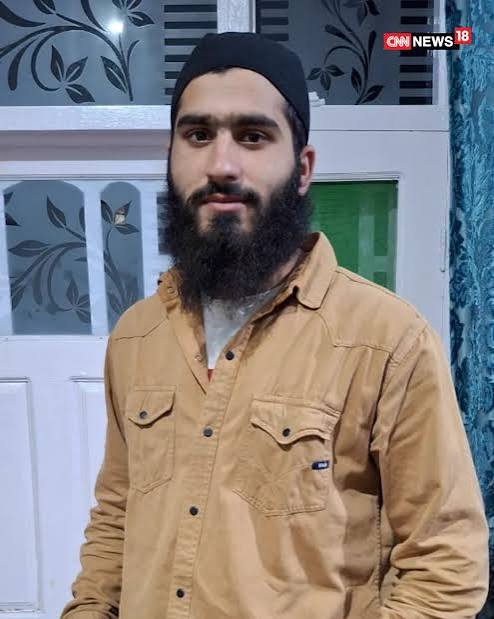
KULGAM: The Kulgam encounter ended on Wednesday, November 18, with security forces killing Mohammad Lateef Bhat, a wanted Lashkar-e-Taiba (LeT) commander, following an extensive search operation in Jammu and Kashmir’s Kulgam district. The operation took place in Zangalpora village in the Devsar area, where Bhat had reportedly taken shelter inside a mosque after escaping an earlier encounter.
Jammu and Kashmir Police, the Central Reserve Police Force (CRPF) and other security personnel participated in the operation. Officials linked Bhat to the November 11 attack on a CRPF checkpoint in Kulgam that left three personnel injured.
The operation followed nearly a week of searches and security deployments across the district. Bhat’s alleged associate, Umar Nisar Dar, had already been killed in a separate encounter on November 16.
According to a report by the Times of India, security forces tracked Bhat through intelligence inputs, surveillance and an expanding search operation before locating him again.
November 11 CRPF Attack Triggered The Security Operation
The sequence of events began on November 11, when two armed attackers opened fire on a CRPF checkpoint in the Akhran area near Mir Bazar in Kulgam district.
The attack took place at approximately 2:15 pm, when the assailants fired at personnel deployed at the checkpoint before escaping into the surrounding area.
Three CRPF personnel sustained injuries in the incident. They were identified as Head Constable Somveer Singh and Constables Rakesh Dass and Santosh Chandru.
The injured personnel were initially shifted to a hospital in Anantnag for treatment. One of them sustained injuries to the abdomen and spine and required further medical attention.
Following the attack, security forces launched a large-scale search operation to identify and locate those responsible.
Investigators subsequently examined CCTV footage and other intelligence inputs to establish the movements of the suspected attackers before and after the incident.
Authorities suspected Bhat and his associate Umar Nisar Dar of conducting reconnaissance at several locations before the November 11 attack.
Umar Nisar Dar Was Killed Before The Final Operation
The search for the suspected attackers continued over the following days, with security forces increasing surveillance and conducting operations across several parts of Kulgam.
On November 16, security personnel intercepted Bhat and Dar near the Laroo bypass area, leading to another encounter.
Dar was killed during the operation, but Bhat managed to escape the security cordon.
His escape prompted security agencies to intensify their efforts to establish his whereabouts.
Investigators reportedly examined CCTV footage showing the movements of the two suspected operatives at locations including Mir Bazar, Akhran, Hablish and Kilam on November 10, a day before the CRPF checkpoint attack.
Officials suspected that the footage could help establish their movements and possible reconnaissance activities before the firing incident.
The search operation subsequently expanded, with security personnel conducting searches across multiple villages and using surveillance equipment and intelligence networks to trace Bhat.
Security Forces Locate Bhat Inside A Mosque
The decisive phase of the Kulgam encounter began early Wednesday morning after security forces received intelligence about Bhat’s presence in Zangalpora village in the Devsar area.
A joint team of Jammu and Kashmir Police and other security personnel established a cordon around the location.
Officials said Bhat had taken shelter inside a mosque, creating additional challenges for the forces conducting the operation.
Security personnel reportedly made repeated attempts to persuade him to surrender rather than allowing the situation to escalate into a prolonged exchange of fire.
Kulgam Senior Superintendent of Police Anayat Ali Chowdhary also attempted to communicate with Bhat through a video call. The commanding officer of the Army’s 9 Rashtriya Rifles was also involved in efforts to convince him to surrender.
According to officials, these attempts continued for several hours. However, Bhat refused to surrender.
Authorities Exercised Restraint To Protect The Religious Structure
The presence of Bhat inside the mosque required security personnel to take additional precautions during the operation.
Police officials said the forces attempted to avoid damaging the religious structure while dealing with the armed suspect.
SSP Anayat Ali Chowdhary said security personnel followed standard operating procedures and exercised restraint throughout the operation.
Officials also indicated that they were prepared to allow additional time for surrender efforts rather than immediately escalating the situation.
Reports said security forces eventually used tear gas to force Bhat out of the building after their attempts to persuade him to surrender failed.
An exchange of fire followed, resulting in Bhat’s death.
Officials subsequently confirmed that the mosque had not sustained damage during the operation.
Lateef Bhat Was Linked To Several Attacks In South Kashmir
The killing of Bhat was considered significant by security agencies because of his alleged involvement in several attacks in the region.
Officials described him as a wanted Lashkar-e-Taiba operative who had been active in South Kashmir.
Investigators suspected his involvement in the November 11 firing attack on CRPF personnel. He was also linked by authorities to earlier incidents, including the July 22 killing of a Jammu and Kashmir Police head constable and the July 31 killing of two migrant workers from Chhattisgarh in Kulgam.
These allegations formed part of the security agencies’ investigation into his activities. However, the allegations should be distinguished from findings established through a judicial process.
Authorities also described Bhat as the last known active local Lashkar-e-Taiba commander operating in the Kashmir Valley.
The claim reflects the assessment of security officials and does not independently establish the status of every militant operating in the region.
CRPF Chief Reacts After The Operation
The operation also drew attention after CRPF Director General G.P. Singh posted a message on social media following Bhat’s killing.
He wrote, “Congratulations, guys. Some dishes are best served cold, even in cold weather.”
The message attracted attention because of its timing following the operation in Kulgam.
The killing came seven days after the November 11 attack that injured three CRPF personnel, bringing an end to the immediate search for the suspects identified by investigators.
What The Kulgam Operation Means For Security In Kashmir
The Lateef Bhat killed operation marks another significant development in the ongoing counter-terrorism efforts in South Kashmir.
The sequence of events, beginning with the November 11 attack and ending with the November 18 encounter, highlights the role of intelligence gathering, surveillance and coordinated operations involving multiple security agencies.
However, the wider security situation remains an important concern for authorities, particularly in areas where militant activity and attacks against security personnel have prompted repeated search operations.
The investigation into the CRPF attack and the suspected support network behind it remains an important part of the security response.
For now, the Kulgam encounter has concluded with the death of Bhat, whom officials identified as a key Lashkar-e-Taiba operative. Security agencies will continue examining the evidence gathered during the investigation to establish the full circumstances surrounding the November 11 attack and identify any other individuals involved.