Indian Space Industry: 5 Major Gaganyaan Mission Updates as Prasanth Nair Makes Powerful Pitch
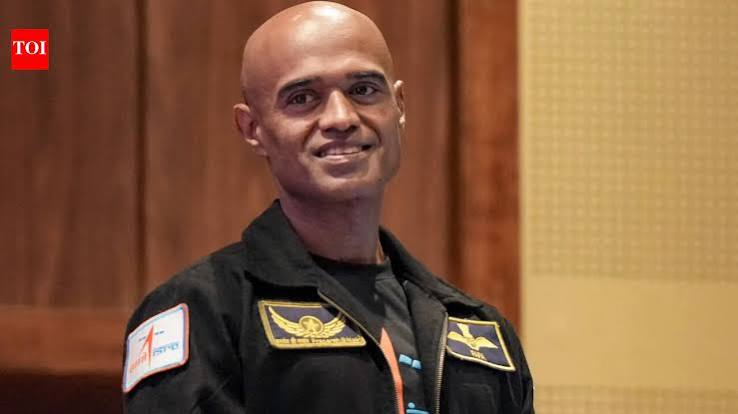
NEW DELHI: The Indian space industry could see greater participation from some of the country’s biggest business groups if a proposal made by Gaganyaan astronaut-designate Air Commodore Prasanth Balakrishnan Nair gains support. Speaking at the India International Space Conclave on Monday, November 23, Nair urged major industrial groups, including the Ambanis, Adanis, Mahindras and Tatas, to consider forming a consortium to develop private human spaceflight capabilities.
His proposal comes as India continues preparations for its Gaganyaan human spaceflight programme, with uncrewed test missions, astronaut safety procedures and emergency recovery systems forming important parts of the preparations.
Nair also pointed to SpaceX’s Crew Dragon programme as an example of what private companies could achieve through collaboration and investment.
1. Prasanth Nair Calls For Ambani, Adani And Tata Consortium
Air Commodore Prasanth Balakrishnan Nair called on India’s major industrial houses to work together rather than approach ambitious space projects independently.
Speaking on the sidelines of the India International Space Conclave, he proposed bringing the Ambani, Adani, Mahindra and Tata business groups together through a consortium capable of undertaking private human spaceflight missions.
According to The Indian Express, Nair cited SpaceX’s Crew Dragon programme as an example of private-sector participation in human spaceflight.
He expressed his hope that India could become the second country after the United States to undertake such missions.
However, his remarks were a proposal and an appeal to industry leaders, not an announcement that these business groups had agreed to establish a consortium or invest in a joint project.
The suggestion nevertheless highlights the potential role of large Indian companies in developing advanced spacecraft, launch technologies and supporting infrastructure.
2. SpaceX’s Crew Dragon Provides A Model For Private Spaceflight
Nair’s reference to SpaceX reflects the growing importance of private companies in the international space sector.
SpaceX developed its Crew Dragon spacecraft to transport astronauts to and from the International Space Station under NASA’s Commercial Crew Program.
The programme demonstrated how government agencies and private companies can collaborate on complex human spaceflight projects.
Nair suggested that Indian businesses could explore a similar approach by combining their financial resources, engineering capabilities and technological expertise.
A successful private-sector initiative could eventually expand India’s capabilities beyond government-led missions.
For the Indian space industry, the proposal also raises questions about the investment required to develop reusable launch systems, crew transportation vehicles, life-support technologies and astronaut recovery infrastructure.
However, establishing such capabilities would require substantial technical development, testing, regulatory coordination and long-term funding.
3. Gaganyaan Mission Update: First Uncrewed Flight Expected In 2027
A major part of Nair’s discussion concerned the preparations for India’s first human spaceflight programme.
The latest Gaganyaan mission update indicates that the first uncrewed flight is likely to take place in 2027, according to the report.
Nair explained that an uncrewed mission would demonstrate the complete process, from the spacecraft’s launch to its descent and recovery from the ocean, without carrying a human astronaut.
He also explained that the life-support system would not be fully activated during this initial demonstration because no human crew would be aboard.
The flight is intended to validate the systems, procedures and coordination required before India attempts a crewed mission.
At least two additional uncrewed flights are also likely before the first human spaceflight attempt.
These missions will provide opportunities to assess the spacecraft and identify technical issues that need to be addressed before astronauts travel aboard it.
4. Astronaut Safety And Emergency Recovery Remain Key Priorities
Nair also discussed the work being carried out to prepare astronauts for different stages of the mission.
The preparations extend beyond astronaut training and spacecraft development. They include procedures for communication between astronauts and mission control, emergency evacuation from the launch pad and responses to unexpected situations during flight.
The team is also developing protocols for emergency descent and the recovery of astronauts from the ocean after the spacecraft returns to Earth.
These procedures are important because human spaceflight requires coordination between multiple organisations and specialised teams.
Nair explained that India is developing an ecosystem for human spaceflight rather than relying on an already established system.
The work involves studying international best practices and adapting available technologies to India’s spacecraft, launch infrastructure and technical requirements.
One challenge is access to specialised technologies. Nair noted that countries do not necessarily share sensitive systems, including human-spaceflight life-support technology.
Consequently, India must develop and validate several capabilities domestically.
5. Four Astronaut-Designates Are Preparing For India’s First Human Spaceflight
Air Commodore Prasanth Balakrishnan Nair is one of four officers selected as astronaut-designates for the Gaganyaan programme.
The other three are Group Captains Ajit Krishnan, Angad Pratap and Shubhanshu Shukla.
All four officers have undergone astronaut training as part of India’s preparations for human spaceflight.
Their work involves understanding spacecraft operations, mission procedures, emergency responses and the requirements of operating in space.
Nair also highlighted that astronaut training and technology development are progressing together.
This is particularly important because India is developing its human-spaceflight systems domestically rather than relying on a ready-made spacecraft and established operational infrastructure.
The Gaganyaan mission update therefore covers more than the launch schedule. It also involves the development of safety procedures, communication systems, crew recovery arrangements and coordination between different agencies.
What The Proposal Could Mean For India’s Space Sector
Nair’s proposal comes at a time when India is seeking to expand private participation in space technology.
The government has already taken steps to increase the involvement of private companies in satellite manufacturing, launch vehicles and other space-related activities.
Organisations such as IN-SPACe have been established to facilitate greater private-sector participation and support the development of India’s commercial space ecosystem.
Private companies have also started developing launch vehicles, satellite technologies and other capabilities that were previously dominated by government organisations.
A consortium involving major industrial groups could potentially bring additional financial resources and engineering capabilities into more ambitious projects.
However, the proposal does not establish that Ambani, Adani or Tata companies are entering private human spaceflight development. Their participation would depend on future investment decisions and technical partnerships.
For the Indian space industry, the larger opportunity lies in building an ecosystem where government institutions, established industrial groups, startups and research organisations can work together.
If such partnerships materialise, they could contribute to India’s longer-term ambitions in commercial space transportation and advanced spacecraft development.
For now, Gaganyaan remains the immediate priority, with uncrewed demonstrations and astronaut safety preparations forming essential steps towards India’s first crewed mission.
Nair’s remarks have added another dimension to that ambition by calling for private companies to consider a larger role in the country’s future human spaceflight capabilities.