PSLV-N1 Launch Delay Pushes Private Rocket’s Maiden Flight to 2027, 5-Rocket Programme Faces Fresh Setback
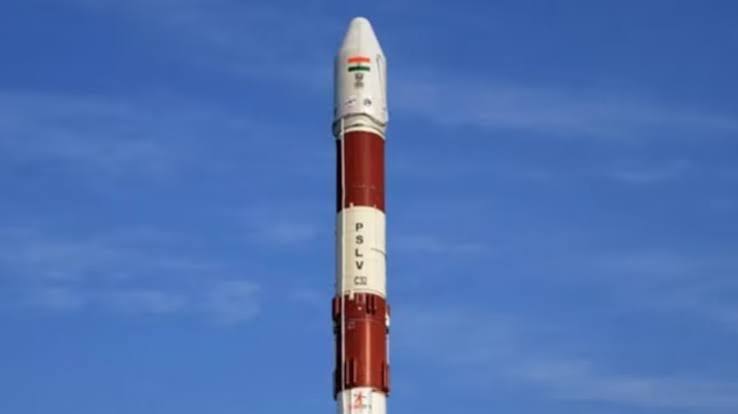
INDIA: The PSLV N1 launch delay has pushed the maiden flight of India’s first industry-built Polar Satellite Launch Vehicle towards early 2027, extending the timeline of an important programme aimed at increasing private-sector participation in the country’s space industry.
The rocket, manufactured by a consortium led by Hindustan Aeronautics Limited (HAL) and Larsen & Toubro (L&T), was originally expected to fly earlier. It is planned to carry the Indian Space Research Organisation’s (ISRO) EOS-10 Earth-observation satellite.
The latest postponement involves payload coordination and the availability of a suitable launch window, according to L&T senior executive A. T. Ramchandani, who discussed the programme at the India International Space Conclave.
The development is significant for the Indian private space sector, as PSLV-N1 represents a shift from private companies primarily supplying components to industry taking responsibility for manufacturing complete launch vehicles.
PSLV N1 Launch Delay: What Happened?
The maiden flight of PSLV-N1 is now expected in early 2027 rather than the previously anticipated 2026 schedule.
According to The Indian Express, Ramchandani identified several factors behind the postponement, including coordination with the satellite payload and the availability of a suitable launch window.
The vehicle itself is reported to be ready. However, completing rocket manufacturing does not automatically mean that a launch can proceed.
The satellite must also be prepared for the mission, launch operations must be coordinated, and an appropriate launch window must be available.
The distinction between manufacturing readiness and launch readiness is important when assessing the latest postponement.
HAL And L&T Consortium Has Contract For Five Rockets
The PSLV N1 launch delay also highlights the extended timeline of India’s industry-led rocket manufacturing programme.
In 2022, a consortium led by HAL and L&T received a contract to manufacture five PSLV rockets.
Under the original schedule reported by The Indian Express, the first vehicle was expected to be manufactured within two years, with the remaining rockets scheduled for delivery at six-month intervals.
This meant the first delivery was expected in 2024, while all five vehicles were initially expected to be delivered by 2026.
The programme has subsequently moved beyond that original timeline.
The arrangement is significant because it expands the responsibilities of private industry in India’s established launch-vehicle programme.
Previously, ISRO developed and manufactured its PSLV rockets with support from industrial suppliers. The new arrangement gives the consortium responsibility for the complete manufacturing process for the contracted vehicles.
For the Indian private space sector, this represents an important industrial transition, although the first successful launch will be a crucial demonstration of the model.
Why ISRO Is Taking A Cautious Approach
Apart from payload coordination and launch-window availability, recent PSLV failures have added another dimension to the programme’s timeline.
ISRO experienced two consecutive unsuccessful PSLV missions:
-
PSLV-C61: May 18, 2025.
-
PSLV-C62: January 12, 2026.
Both missions encountered anomalies in the rocket’s third stage, resulting in the failure to complete their intended satellite deployment.
According to the Indian Express report, ISRO maintains that the causes of the two failures were different.
The report also cited sources who said certain component suppliers had been changed following recommendations from the respective failure assessment committee. The recommended changes had reportedly been implemented in PSLV vehicles.
Sources further indicated that ISRO may wait for a successful flight of its own PSLV before clearing the privately manufactured vehicle for launch.
However, this explanation comes from unnamed sources and should not be treated as a formally announced ISRO launch-clearance policy.
The distinction matters because the agency has not publicly confirmed that this is the official reason for the latest postponement.
Why The PSLV Programme Is Important For India
The Polar Satellite Launch Vehicle has played a central role in India’s satellite-launch capabilities.
According to figures cited by The Indian Express, PSLV has powered 65 of ISRO’s 107 launches. Four of those missions have been unsuccessful, including the first PSLV flight in 1993 and a 2017 mission affected by a heat-shield deployment failure.
The launch vehicle has supported a wide range of Indian and international satellite missions.
Its continued importance makes reliability a major consideration for the agency as it expands industrial participation in manufacturing.
The recent failures have also brought attention to the availability of specialised components required for space missions.
At the India International Space Conclave, Ramchandani called for a dedicated Space Components Mission to strengthen domestic capabilities in space-grade electronics, sensors, propulsion systems, materials and mechanisms.
His argument was that manufacturing and assembling rockets in India would not deliver complete technological independence if critical components continued to depend heavily on imports.
This is an important consideration for the Indian private space sector, particularly as domestic companies take on increasingly complex responsibilities.
PSLV-N1 Will Carry The EOS-10 Earth-Observation Satellite
The maiden PSLV-N1 mission is planned to carry ISRO’s EOS-10 Earth-observation satellite.
Earth-observation spacecraft provide information that can support applications such as environmental monitoring, land-use assessment, agricultural planning and resource management.
However, the satellite’s intended deployment will depend on the successful completion of the launch mission.
The PSLV N1 launch delay therefore affects not only the rocket manufacturing schedule but also the timing of the associated satellite mission.
ISRO has not announced a confirmed launch date for PSLV-N1. Early 2027 remains the reported expectation rather than a formally confirmed date.
India has continued developing its Earth-observation capabilities through other missions, including the previously reported EOS-5 Earth-observation satellite mission.
The agency’s wider launch programme also includes developments connected with human spaceflight, including propulsion testing for the Gaganyaan programme.
What The Delay Means For India’s Private Space Industry
The postponement comes at a significant stage in India’s space-sector development.
The government has been encouraging greater private participation in satellite manufacturing, launch services, component development and other space-related activities.
The HAL-L&T consortium’s PSLV contract is an example of this changing approach.
Rather than relying entirely on ISRO for the manufacturing of operational launch vehicles, the programme aims to establish industrial capacity to produce complete rockets.
A successful PSLV-N1 mission would provide an important demonstration of the consortium’s ability to manufacture a launch vehicle that can meet ISRO’s operational requirements.
It could also help establish a foundation for subsequent vehicles under the five-rocket contract.
Nevertheless, the programme’s progress will depend on more than manufacturing completion. Payload readiness, technical qualification, launch approvals and mission reliability will remain essential.
For now, the Indian private space sector faces an important milestone in early 2027, when PSLV-N1 is expected to make its maiden flight.
The next major development to watch is an official confirmation of the launch schedule and the readiness of the EOS-10 payload.