Mehbooba Mufti News – 5 Key Developments After Police Stop PDP Leader Near Sheshnag Lake
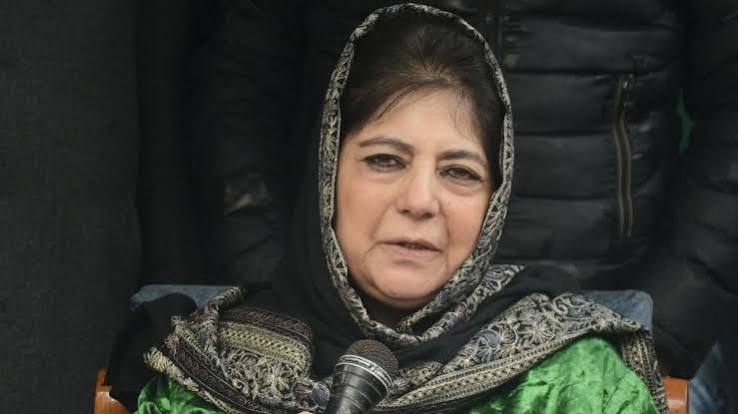
JAMMU AND KASHMIR: Mehbooba Mufti news gained attention on Tuesday, November 24, after Jammu and Kashmir Police stopped the Peoples Democratic Party (PDP) president and former chief minister from proceeding towards Sheshnag Lake in south Kashmir’s Anantnag district. Mufti was accompanied by two PDP legislators, Waheed-ur-Rehman Para and Aga Muntazir Mehdi, when police prevented the group from continuing beyond Chandanwari, citing security concerns.
The attempted visit came amid growing controversy over the reported use of heavy machinery and excavators near the ecologically sensitive glacial lake along the Amarnath Yatra route. Mufti wanted to assess the situation following videos circulating on social media that appeared to show excavation and construction activity in the area.
The incident has brought renewed attention to the balance between infrastructure development, environmental protection and the religious significance of the Amarnath pilgrimage.
What Happened When Mehbooba Mufti Reached Chandanwari?
According to The Indian Express, Mufti travelled towards Sheshnag Lake on Tuesday morning with PDP legislators Waheed Para and Aga Muntazir Mehdi.
The group attempted to proceed from Chandanwari towards the lake but was stopped by police personnel.
Police reportedly cited security reasons for restricting their movement. Consequently, Mufti could not complete her planned visit to the site.
The former chief minister subsequently spoke to reporters about her concerns regarding the reported excavation activities.
She questioned the deployment of large machines in an ecologically fragile mountain region and argued that the potential environmental consequences required serious attention.
The incident has since become another point of political discussion in Jammu and Kashmir, particularly concerning the management of infrastructure projects along the Amarnath pilgrimage route.
Why Did Mehbooba Mufti Want To Visit Sheshnag Lake?
The immediate reason behind the visit was a video circulating on social media that reportedly showed a crawler excavator operating near Sheshnag Lake.
The footage triggered concerns among political leaders and other observers about the possible environmental consequences of construction activities around the glacial water body.
Mufti wanted to see the situation herself rather than rely entirely on videos and reports circulating online.
The Sheshnag Lake controversy centres on whether heavy machinery and excavation work could affect the surrounding mountain environment.
Sheshnag Lake is situated along the route to the Amarnath cave shrine and holds religious significance in Hindu tradition. The lake is also part of a sensitive Himalayan landscape containing glaciers, mountains and surrounding forests.
The area is particularly important because environmental changes in high-altitude regions can have consequences beyond the immediate construction site.
However, the circulating footage alone does not establish the extent of environmental damage or demonstrate that the lake’s ecosystem has already suffered irreversible harm. Those questions require technical assessments and verified environmental findings.
What Did Mehbooba Mufti Say About The Excavation?
Speaking to reporters, Mufti expressed alarm over reports that heavy bulldozers and excavators had been brought into the area.
She argued that the forests, mountains and glaciers surrounding Sheshnag are important to the natural environment as well as the religious significance of the Amarnath pilgrimage.
Mufti also questioned whether large-scale construction activity could undermine the ecological balance of the region.
She described the Amarnath Yatra as an important part of Kashmir’s cultural and religious heritage, highlighting its significance for both local residents and pilgrims.
In her remarks, she warned against treating environmentally sensitive mountain areas as ordinary construction zones.
The PDP president also appealed to Union Road Transport and Highways Minister Nitin Gadkari to intervene and review the project plans.
Her concerns remain political statements and warnings. The extent of any environmental damage has not been independently established through a published scientific assessment in the available reporting.
Why Is Sheshnag Lake Environmentally Sensitive?
Sheshnag Lake is a high-altitude glacial lake in the Anantnag district of Jammu and Kashmir. It lies along the traditional Amarnath pilgrimage route, approximately 12 kilometres from Chandanwari.
The lake is situated within the wider Himalayan mountain environment, where glaciers, snow cover, forests and mountain drainage systems contribute to the ecological balance.
Construction activities in such locations can require particular environmental safeguards because excavation, road widening and the movement of heavy machinery may disturb surrounding terrain.
The wider region has also attracted attention because of concerns about high-risk glacial lakes across the Himalayas. An earlier assessment of seven high-risk glacial lakes in Arunachal Pradesh highlighted the importance of monitoring vulnerable mountain environments and preparing for potential glacial hazards.
However, the existence of glacial hazards elsewhere in the Himalayan region does not establish that Sheshnag Lake is facing an immediate outburst threat.
The Sheshnag Lake controversy therefore raises questions about the need for appropriate environmental assessments, monitoring and transparency before undertaking infrastructure work in sensitive mountain locations.
What Is The Border Roads Organisation’s Position?
The Border Roads Organisation (BRO) has defended the work near the Amarnath route.
According to its explanation reported during the controversy, the organisation is undertaking post-Amarnath Yatra operations to improve the track and support safer movement of pilgrims.
The BRO has maintained that the work is being conducted in compliance with applicable safety requirements and environmental safeguards.
This position contrasts with the concerns raised by Mufti and other critics, who have questioned whether heavy machinery should be deployed in such an environmentally sensitive location.
The disagreement highlights two competing considerations: improving access and safety along a major pilgrimage route while protecting the surrounding natural environment.
A detailed, independently verified environmental assessment would be important in determining the actual impact of the reported activities.
Political And Environmental Debate Continues In Kashmir
The incident has added another dimension to the ongoing political debate in Jammu and Kashmir.
Mufti’s decision to visit the location reflects the PDP’s opposition to what it considers potentially damaging construction activity in the region.
Her remarks also bring attention to the responsibility of authorities and infrastructure agencies to explain the purpose, scope and environmental safeguards associated with projects in sensitive areas.
The Mehbooba Mufti news development is particularly significant because the dispute involves more than a disagreement over access to a particular location. It concerns the management of a landscape that carries environmental, cultural and religious importance.
For the moment, Mufti and the accompanying PDP legislators were unable to reach Sheshnag Lake after being stopped at Chandanwari.
The immediate questions concern the nature of the construction work, the environmental safeguards being followed and whether further clarification will be provided by the authorities.
The Sheshnag Lake controversy is likely to remain a subject of political attention as concerns over the use of heavy machinery and infrastructure development along the Amarnath route continue.
Meanwhile, the Mehbooba Mufti news story underscores the need for transparent communication between authorities, infrastructure agencies and political representatives whenever development activities take place in environmentally sensitive parts of the Himalayas.