Supreme Court Builder-Buyer Agreement: 5 Crucial Developments as Centre Seeks Early Hearing
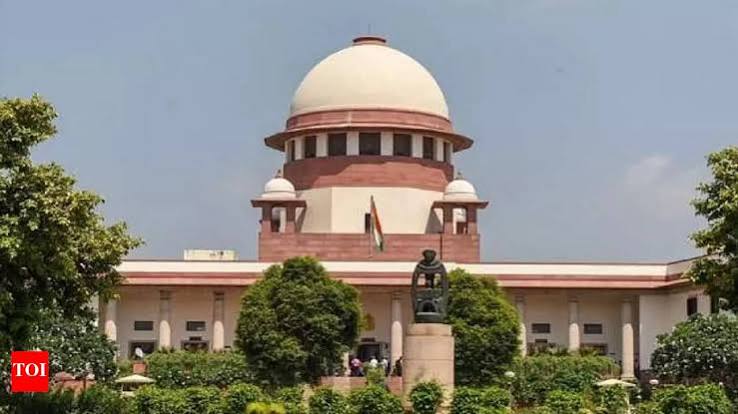
NEW DELHI: The Supreme Court builder buyer agreement dispute has gained fresh attention after the Union government approached the Supreme Court seeking an early hearing of a long-pending petition concerning allegedly one-sided property agreements. The application was filed on Tuesday, November 17, 2026, by the Ministry of Housing and Urban Affairs (MoHUA), seeking an early hearing of a petition that has remained pending since 2020.
The petition seeks greater uniformity in agreements between builders and homebuyers, as well as between real estate agents and buyers. The government has highlighted differences in the Agreement for Sale Rules across states and Union Territories, arguing that the issue requires timely judicial consideration.
The development could have wider implications for homebuyer rights India, particularly regarding contractual fairness, transparency and consumer protection in the property market.
According to The Indian Express, the Centre’s application follows recent discussions between government officials and a homebuyers’ organisation about making the Real Estate (Regulation and Development) Act, 2016, more effective.
Why The Centre Wants An Early Supreme Court Hearing
The petition was filed by advocate Ashwini Kumar Upadhyay in 2020 and was last heard by the Supreme Court on December 20, 2024.
In its latest application, the Ministry of Housing and Urban Affairs highlighted the work already undertaken to examine existing contractual arrangements and differences in rules governing property transactions across states and Union Territories.
The application also referred to a status report submitted by the court-appointed amicus curiae, advocate Devashish Bharucha. The report followed a comparative examination of relevant provisions and practices across different states and Union Territories.
The ministry stated that an exercise concerning the Agreement for Sale (AFS) had also been undertaken in coordination with the amicus curiae.
The government believes that variations in the existing Agreement for Sale Rules underline the need for greater uniformity and consistency in the regulatory framework.
However, the Centre’s request for an early hearing does not mean that the Supreme Court has already approved a new nationwide agreement or directed builders to immediately change their existing contracts.
The next significant development will depend on the court’s consideration of the pending petition.
What Are One-Sided Builder-Buyer Agreements?
A builder-buyer agreement establishes the contractual relationship between a property developer and a person purchasing a residential or commercial unit.
It generally covers important matters such as payment schedules, possession deadlines, construction obligations, cancellation conditions, additional charges and compensation in case of delays.
Problems arise when contractual provisions disproportionately favour developers while placing significant financial and legal responsibilities on buyers.
For example, an agreement may impose substantial penalties on buyers for delayed payments while providing limited compensation when a developer fails to deliver the property within the agreed timeline.
Other potential areas of concern include unilateral changes to project specifications, cancellation provisions, possession conditions and restrictions affecting buyers’ legal remedies.
Such arrangements can create an unequal contractual relationship, particularly because individual buyers often have limited bargaining power when purchasing properties from large developers.
The Supreme Court builder buyer agreement petition seeks to address these wider concerns through more consistent contractual protections.
How RERA Could Influence Homebuyer Protection
The Real Estate (Regulation and Development) Act, 2016, commonly known as RERA, was introduced to improve transparency and accountability in the real estate sector.
The legislation established a regulatory framework for property development, project registration, disclosure requirements and mechanisms for addressing disputes between developers and buyers.
Section 13 of the Act also restricts developers from accepting more than 10 per cent of the property cost as an advance or application fee without first entering into a written agreement for sale and registering it.
The agreement is expected to specify important terms, including the proposed possession date, payment arrangements and obligations of both parties.
However, differences in the rules notified by individual states and Union Territories have remained an important concern.
A more consistent framework could help buyers understand their contractual rights and obligations before committing substantial amounts of money towards a property.
The debate over homebuyer rights India also involves questions about which government department should take primary responsibility for consumer protection in the real estate sector.
Homebuyers’ Forum Seeks Changes To RERA Framework
The Centre’s latest move comes amid a separate push by the Forum for People’s Collective Efforts (FPCE), a homebuyers’ organisation, for changes to the existing RERA framework.
The organisation wrote to Prime Minister Narendra Modi on October 26, 2026, suggesting that the Agreement for Sale should receive statutory backing by being included in a schedule to the 2016 legislation.
At present, the Agreement for Sale forms part of the rules framed under the Act. The proposed change seeks to give the document a stronger statutory foundation.
Cabinet Secretary T V Somanathan responded to the organisation’s letter on November 2, acknowledging its suggestions and stating that they would be examined.
On November 12, an FPCE delegation also met officials from the Cabinet Secretariat to discuss possible reforms.
One of the organisation’s central suggestions was to separate the promotion and development of real estate from the protection of homebuyers.
The forum proposed shifting consumer protection responsibilities away from the Ministry of Housing and Urban Affairs towards the Department of Consumer Affairs.
In a statement issued on November 15, FPCE said it had submitted a compilation of representations made since 2018, arguing that several concerns raised by homebuyers remained unresolved.
These proposals represent the organisation’s recommendations and should not be confused with government-approved amendments to RERA.
What Could Change For Property Buyers?
If the Supreme Court considers the petition and examines the differences in existing state-level rules, the proceedings could influence how builder-buyer agreements are structured across the country.
Greater uniformity could make contractual obligations easier to understand and reduce differences in protections available to buyers in different states.
It could also encourage clearer provisions concerning possession deadlines, payment defaults, cancellation conditions and developer responsibilities.
For buyers, the most important potential benefit would be greater clarity before signing property agreements.
However, the extent of any changes will depend on the court’s eventual directions and any subsequent legislative or regulatory action by the government.
The current development does not automatically invalidate existing builder-buyer agreements or guarantee compensation to buyers facing disputes with developers.
Individual complaints will continue to depend on the applicable laws, contractual provisions and decisions of the relevant consumer or regulatory authorities.
What Happens Next In The Supreme Court Case?
The immediate development is the Centre’s request for an early hearing of the petition pending since 2020.
The ministry has placed its position before the Supreme Court, highlighting the comparative examination of state-level rules and the work undertaken on the Agreement for Sale.
The court’s next steps will determine how the petition progresses and whether the issues raised require further examination.
For millions of property buyers, the larger question is whether India can establish a more balanced contractual framework that protects purchasers without creating unnecessary inconsistencies across the real estate sector.
The Supreme Court builder buyer agreement proceedings could therefore become an important part of the wider discussion about improving homebuyer rights India and strengthening consumer protection under RERA.
For now, buyers should understand that the Centre’s application is a request for an early hearing, not a final judicial decision granting new rights or imposing fresh obligations on developers.